
The Scarborough Land Trust has been on a roll lately, acquiring the long-sought-after Benjamin Farm on Pleasant Hill Road in late December and more recently adding another 40 acres at the Willey Recreation Area on Tenney Lane, which abuts the Benjamin Farm.
The trust received about 26 acres of land outright from the town, along with another 13 acres that the town put into a conservation easement to be managed by the land trust. “We are pleased to work with the town to conserve a large part of the Willey Recreation Area,” said Paul Austin, president of the trust. “This property abuts Benjamin Farm, creating valuable connectivity among conservation parcels that benefits wildlife and water quality.”
The Willey Recreation Area has some development, including ball fields and footpaths, but also includes undeveloped woods, meadows, substantial wetlands and a habitat restoration project for the endangered New England cottontail rabbit. Putting the 40 acres into conservation was a requirement of the Wentworth School project, which otherwise would have involved $200,000 in wetland mitigation.
By working with the land trust to permanently protect most of the Willey property, the town avoided having to pay that large mitigation fee, according to a press release issued by the trust. Since its inception the land trust has protected more than 1,300 acres of open space all across Scarborough.
At 50 square miles, Scarborough is one of the largest towns in southern Maine. It’s been the fastest-growing municipality in the state, as well, which is one reason the land trust works so hard to permanently conserve land to not only protect wildlife, but to ensure the public also has access to open space well into the future.
Being able to purchase the Benjamin Farm, which happened with unprecedented support from the community, has put the land trust on the map as never before. In fact, Kathy Mills, executive director of the trust, said, “2014 was big year for us.”
Mills said that it was the first time the land trust has raised half-a-million dollars in the community for a project – and it only took 10 months. She said the surge of support is partly due to Benjamin Farm’s location on a well-traveled road.
Founded by a group of community volunteers in 1977, the land trust has also purchased and continue to conserve the Libby River Farm, Fuller Farm, Sewell Woods and the 434-acre Broadturn Farm, which is home to one of the largest organic farms in the Greater Portland area.
In addition to conserving the 135-acre Benjamin Farm property, the land trust has completed several other projects in recent years, including a partnership with the Friends of the Scarborough Marsh to conserve 3 acres of land off Roundabout Lane adding to the protected area of the state’s largest saltwater marsh.
In 2014, the land trust also worked with the Portland Museum of Art and the Prouts Neck Association to conserve half an acre of land around the iconic Winslow Homer Studio. And three years ago the land trust purchased 156 acres of land in Warren Woods, a parcel along the Nonesuch River that will be used to create public hiking trails.
The Scarborough Land Trust is one organization that remains steadfast in its mission of conserving undeveloped properties for public access, wildlife habitat and natural resource protection, according to Warren Whitney, land trust program coordinator for the Maine Coast Heritage Trust.
What sets Scarborough apart from other communities in Maine, is the fact that it’s the only town in the state whose residents have passed three separate land bonds with “overwhelming support” for various conservation projects, Mills said.
“As Scarborough was growing rapidly in recent years, citizens spoke loudly and clearly that land conservation was just as important to them as economic development,” she said, adding that the town land bond fund has “been a critical piece” of the land trust’s recent land purchases.
Along with Mills, the land trust also employs a part-time database manager and, with the help of grant funding, is in the process of seeking a part-time stewardship coordinator.
“With the purchases of large parcels like Warren Woods and Benjamin Farm, the land trust is growing to keep up with community interest and needs of our properties,” Mills said.
Mills predicts in the next 10 to 20 years the Scarborough Land Trust will continue to be a leader in land conservation in Maine.
See the February issue of the Sun Monthly magazine, which covers Scarborough, Old Orchard Beach, Saco and Biddeford, for the full story on the impact of the local land trust. Staff writer Kate Irish Collins contributed to this story.
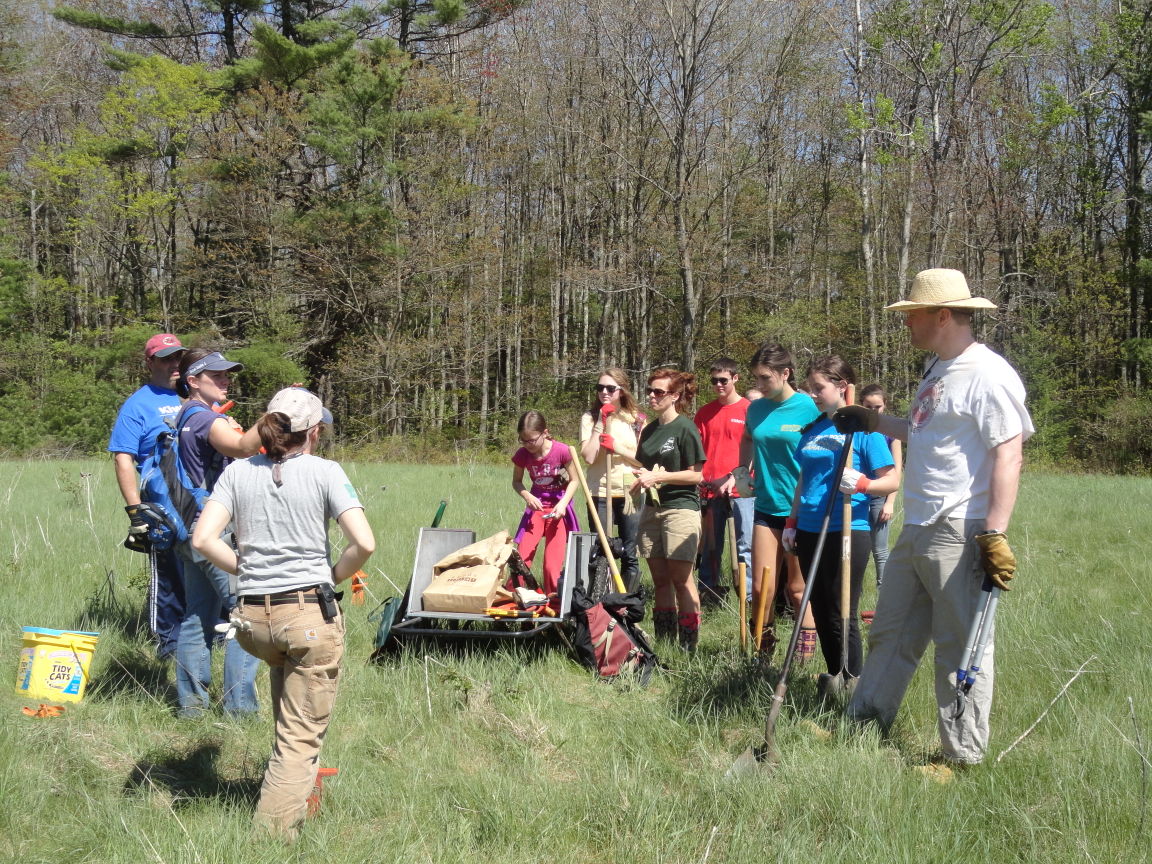 A work party at the Libby River Farm in Scarborough helps care for the property, which is owned and operated by the Scarborough Land Trust. Like most of the other properties conserved by the trust, the Libby River Farm is open to the public and boasts a walking trail. Courtesy photo
Comments are no longer available on this story