
CAPE ELIZABETH – Cape Elizabeth farmers Austin and Mary Ellen Chadd are appealing a decision by the town’s code enforcement officer to deny them a permit for a small greenhouse on residential property they own at 191 Fowler Road.
The Zoning Board of Appeals is scheduled to meet on the issue on Tuesday, March 25, at 7 p.m., and several people who support farming in Cape Elizabeth, including members of the Cape Farm Alliance, plan to be in attendance to speak in support of the Chadds.
While the Chadds already have several greenhouses on the 12 acres of farmland they lease at 317 Fowler Road, the permit denied by Code Enforcement Officer Brian McDougal was for the first one to go up on their 1.4-acre residential property.
McDougal has said that since the couple intends to sell the produce grown in the greenhouse, they must go to the Planning Board for approval, instead of simply requesting a building permit from the town.
But Austin Chadd says that stance goes against a town ordinance, which specifically states that a greenhouse 2,000 square feet or smaller only requires a permit.
He designed his proposed new greenhouse to be 26-by-76-feet, which is just under the 2,000-square-foot limit. And, he said, it shouldn’t matter that the produce he plans to grow would be sold for profit.
If any of his neighbors would be allowed to put up such a greenhouse, he should be able to, as well, Chadd said this week. He said the produce grown in the greenhouse would not be sold on site and so McDougal should not be calling the facility a non-residential use.
Chadd said by requiring him to go through the Planning Board, McDougal is not only making the process of approval more difficult than it needs to be, but more expensive, as well. Chadd said it would cost him $300 to go through a full site plan review.
In addition, at a Planning Board workshop in early December, Chadd said the board members seemed to be concerned about non-issues, such as noise levels from the fan in the greenhouse and light pollution, when he did have any plans to light up the structure.
Chadd also said that agriculture is an allowed use in every zone in Cape Elizabeth, except for the business center zone, and although he wants to “respect my neighbors and the neighborhood,” he sees no difference between his greenhouse and one that someone else might put up to grow flowers.
“I don’t want to turn this into a circus, or have the issue be politicized,” Chadd said this week. “I only want to put up a hoop house, and I am not going to sell produce from the greenhouse door.”
But McDougal sees the situation differently and said he specifically informed the Chadds when they were considering buying their residential lot that “they would need to go to the Planning Board for site plan review in order to use the property for their produce business.”
So when the couple applied for a building permit on Feb. 3, he first confirmed that it would be used to grow produce for sale before denying the request.
For McDougal, the request to build a greenhouse on the residential land is “proposing a change of use on the property, and this requires Planning Board approval.”
He said it would be up to the Zoning Board of Appeals to determine who is right. McDougal expects the board to take a vote on the issue following the hearing next week.
Although as a member of the Cape Farm Alliance Town Councilor Caitlin Jordan is supportive of the Chadds, following a workshop of the Town Council on Monday, she said she would not be speaking out at the Zoning Board of Appeals meeting next week.
Initially, Jordan told the Current, “as an executive member of the (alliance), I feel it is my duty to advocate for the farms of Cape Elizabeth.”
However, during Monday’s workshop, Town Manager Mike McGovern said the council reached the conclusion that it would be “awkward for a councilor to represent someone before a quasi-judicial board (of the town) when they are involved in the appointment process for that board.”
In addition, McGovern said the council felt it would be better for an individual councilor to bring questions regarding the administrative decisions of a department head before the full Town Council as a policy matter.
In all, he said, “The consensus was that if a councilor appears as a representative of another party before the Zoning Board, they should not concurrently be involved in decisions regarding appointments to the board. The council also asked the town manager to research how other communities have dealt with similar circumstances.”
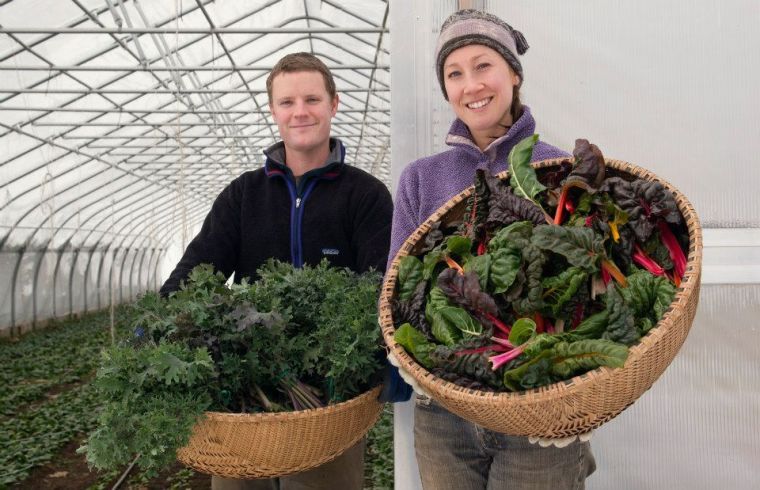 Austin and Mary Ellen Chadd operate the Green Spark Organic Farm on Fowler Road in Cape Elizabeth.
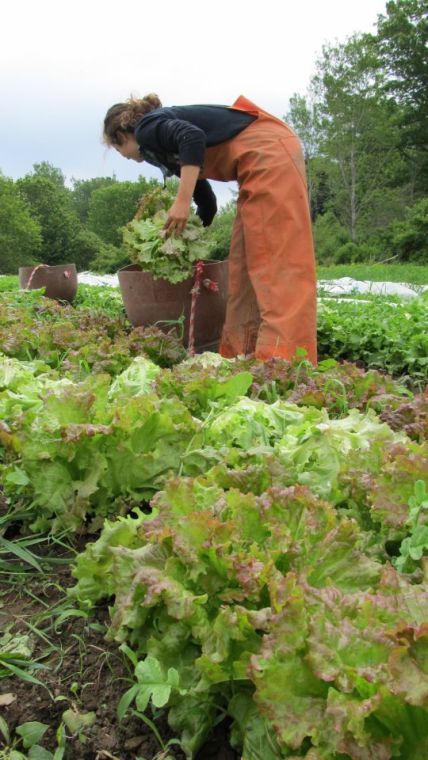 At the Green Spark Organic Farm in Cape Elizabeth, Mary Ellen Chadd works in the vegetable garden.
Comments are no longer available on this story