

The Bath-based maritime museum is setting up to tell the histories of the state’s Indigenous and Black communities with a brand new exhibition.
Visitors to the Maine Maritime Museum will see the art pieces and historical items at the “Re|Sounding” exhibition starting on Saturday, Nov. 15, featuring contemporary art pieces and historical objects from the museum’s archive and local historical societies.
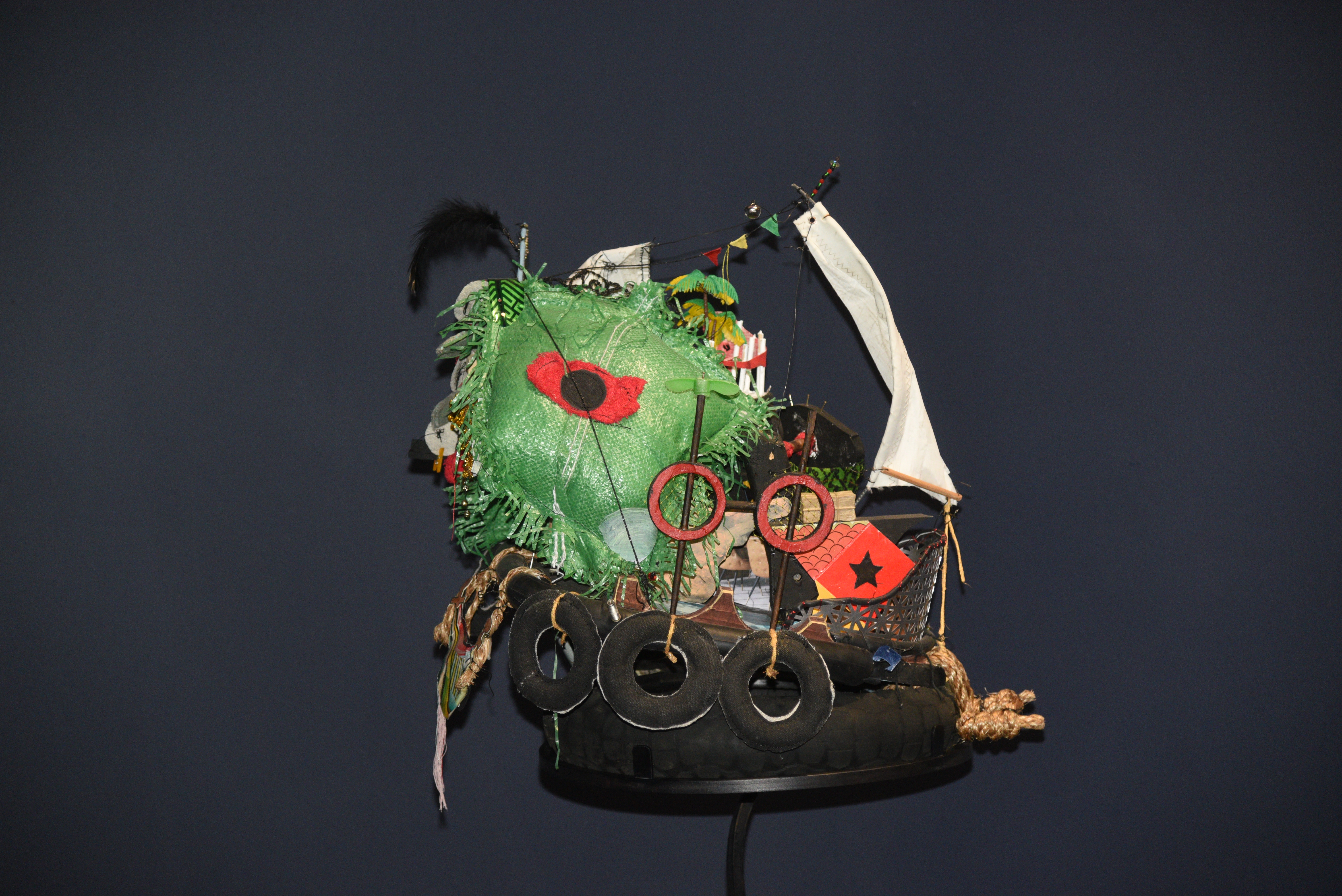
The contemporary artwork on display for “Re|Sounding” includes the work of James Eric Francis Sr., Nyugen E. Smith, Daniel Minter, Summer Tate, Malene Djenaba Barnett, Jennifer Neptune, Jason Pardilla, Antonio Rocha and Gabriel Frey.
“We felt artists were the best route to convey a lot of complexity that these histories uncover,” Sarah Timm, head of education for the Portland Museum of Art, said in an interview.
One centerpiece of “Re|Sounding” is the “Aputamkon” canoe built in Patten in 2024. Across from the exhibit will be the oldest Wabanaki birch-bark canoe, named “Barnes,” with both boats being nearly identical to symbolize 300 years of craftsmanship, Timm said. The museum will lend out “Aputamkon” for use and display a placard in the “Re|Sounding” exhibition to show its location.
Some of the historical objects on display will be archival documents from the Maine Maritime Museum’s collection, with one being a logbook of the Francis Ann, which was likely a slave ship, along with school books from Malaga Island. The island is a public preserve and historical site once home to a mixed-race fishing community forcibly removed in 1912.
Luke Gates-Milardo, director of exhibits and learning at Maine Maritime Museum, and Timm began meeting with an advisory committee for the exhibition centered on Black history and culture last year. Later, it expanded to include the histories of Indigenous people, and Francis Sr., the exhibit artist who is also the Penobscot Nation’s director of cultural and historic preservation, joined the advisory board.
The museum worked with Francis to find artists of the Penobscot, Passamaquoddy and other Wabanaki tribes living in the area to help connect the past to the present.
Francis helped connect the museum culturally to Indigenous communities like basket and canoe makers. For “Re|Sounding,” Francis is drawing a map only of the waterways in Maine to show how often Indigenous people used the waterways for hunting, fishing and traveling.
“What we have learned through the advisory council process and working with artists is that it’s crucial to not necessarily put everything in the museum’s voice but for the exhibit to be a stepping back and an opening up for the museum to listen to stories, new voices, and allow those voices to guide future exhibits,” Gates-Milardo said in an interview.
Portland-based Indigo Arts Alliance’s Executive Director Jordia Benjamin helped curate a short list of artists for the Maine Maritime Museum to draw on. Timms and Gates-Milardo helped choose the work of artists, hitting on the themes of the African diaspora, which refers to the dispersion of a people, language or culture formerly concentrated in one place, and the impacts on future generations.

Comments are not available on this story. Read more about why we allow commenting on some stories and not on others.
We believe it's important to offer commenting on certain stories as a benefit to our readers. At its best, our comments sections can be a productive platform for readers to engage with our journalism, offer thoughts on coverage and issues, and drive conversation in a respectful, solutions-based way. It's a form of open discourse that can be useful to our community, public officials, journalists and others.
We do not enable comments on everything — exceptions include most crime stories, and coverage involving personal tragedy or sensitive issues that invite personal attacks instead of thoughtful discussion.
You can read more here about our commenting policy and terms of use. More information is also found on our FAQs.
Show less