

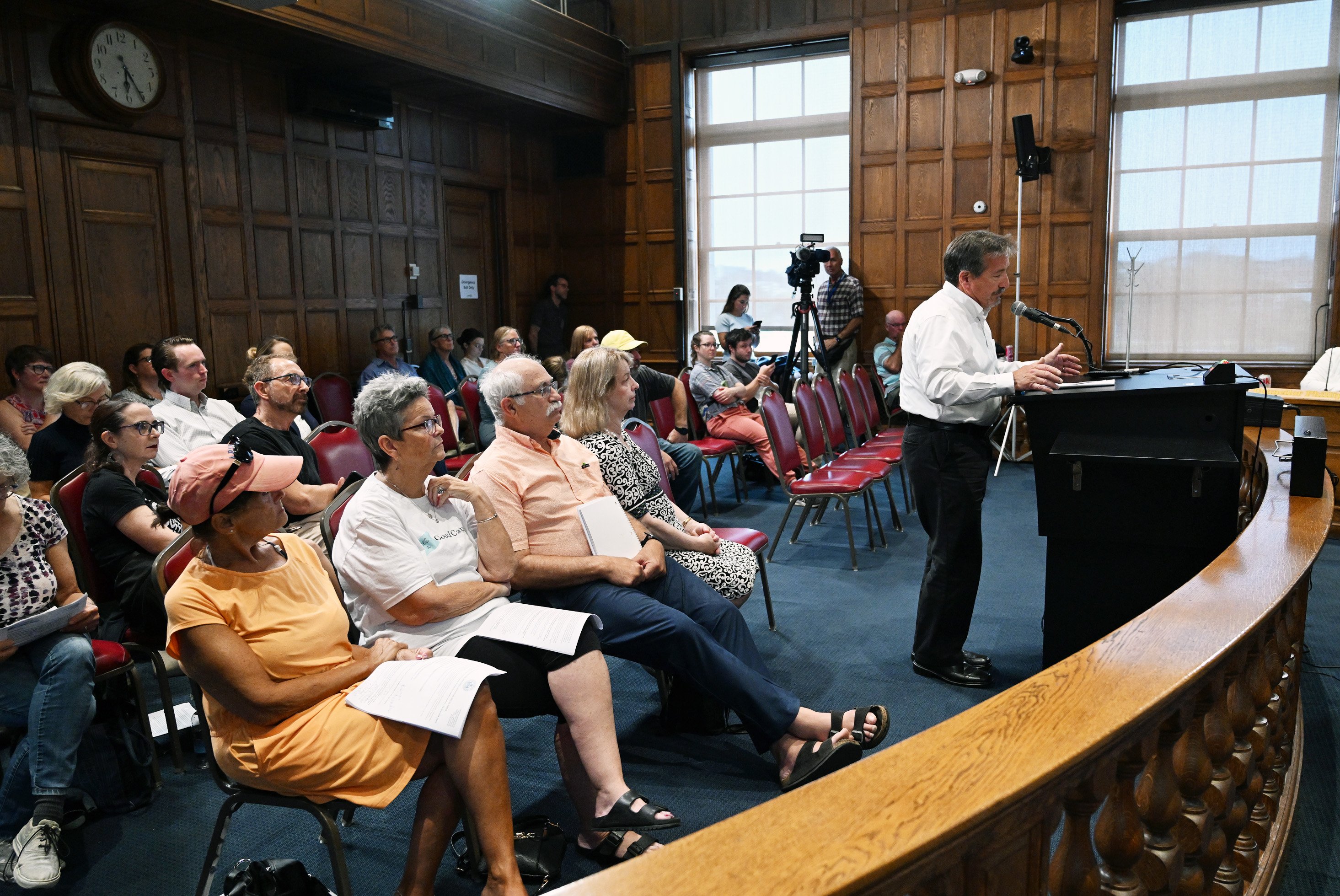
Portland voters will decide Tuesday whether to raise the city’s minimum wage to $19 an hour by 2028 under a referendum placed on the ballot by the City Council this summer.
Question A asks voters whether the minimum wage should be raised from the current $15.50 an hour to $16.75 in 2026, $17.75 in 2027 and $19 in 2028, followed by annual adjustments tied to inflation.
The proposal builds on previous efforts to increase the wage floor in the city. In 2020, voters approved a referendum that gradually raised the minimum wage to $15 an hour by 2024.
In 2022, a proposal to increase the minimum wage to $18 per hour was voted down at the ballot box. That measure also included a proposal that would have eliminated the sub-minimum wage for tipped workers.
In the summer of 2024, a proposal similar to the one that made the ballot this year was shot down by city councilors who voiced concerns about its economic impact.
If raised to $19, Portland’s minimum wage would be one of the highest in the country.
VARYING PERSPECTIVES
Supporters of Question A say the current wage has not kept pace with Portland’s cost of living, which is already high and constantly increasing.
Buddy Moore, 35, a cook at Flatbread Company who earns just above minimum wage, said many of his co-workers struggle to get by. He supports the referendum, noting that the higher pay could improve quality of life and economic participation.
“Once I started making close to a livable wage, I finally had a chance to not have to choose between paying my student loans or paying my rent or eating,” Moore said. “It doesn’t just help workers by giving them more money — it helps them afford to live happy lives and have more freedom.”
Opponents of the proposed increase, including some business owners and nonprofit operators, say a $19 minimum wage would increase their operating costs to an unsustainable level, reduce their ability to employ enough workers, and possibly push some businesses to move outside the city.
Tamara Gallagher, owner of The Growing Tree Childcare, said higher wages could force her to increase tuition and make child care, already a significant expense for many parents, even more unaffordable.
“These child care workers absolutely deserve $20 an hour or more — they are the hardest-working people out there. But it has to come from somewhere,” Gallagher said. “No one can pay it. Parents can’t afford it, and we can’t afford it. So where does it come from?”
Gallagher said her day care now enrolls only half as many children as it did a year ago.
“Most parents are staying home. I’ve had openings for a long time,” she said. “If Portland does this, why would a family pay $300 more a month for day care here when they can go across the bridge (to South Portland) and pay less?”
In August, the City Council voted 5-4 to send the proposed wage increase to voters after debate over whether wage policy should be determined locally or at the state level.
ECONOMIC IMPACT
An analysis of the proposal by the Maine Center for Economic Policy, a left-leaning think tank, estimates that more than 15,000 workers — about 1 in 5 people employed in Portland — would receive raises if the measure passes.
The average affected worker would earn nearly $2,100 more per year, resulting in an estimated $32 million in additional annual wages citywide, according to the MECEP analysis.
MECEP projects that the proposed $19 wage would equal about 60% of Portland’s projected 2028 median hourly wage of $31.60, a level considered sustainable and below thresholds typically linked to job losses.
The analysis found that women, workers of color and younger employees would benefit most if the minimum wage is increased. About 23% of female workers would see wage increases compared with 18% of men, while 27% of workers of color would benefit compared to 20% of white, non-Hispanic workers. Nearly 40% of workers under age 25 and 22% of those over 65 would also see gains.
Industries such as food service, retail and entertainment — where low-wage work is most common — would experience the largest impacts, according to the analysis.
But MECEP cautioned that child care and adult-care providers could face challenges if higher wages are not matched by increased state support. Without additional funding, some local providers may struggle to meet higher payroll costs — mirroring what many business owners like Gallagher have said.
According to the Economic Policy Institute, a left-leaning think tank that tracks minimum wage data nationwide, the current highest minimum wage in the country is $21.16 in Burien, Washington. Several other municipalities in that area — including Seattle, the suburban cities Renton, SeaTac and Tukwila, and all of King County — have their own minimum wages north of $20 per hour.
Election Day is Tuesday. Portlanders can find their polling places via the state’s website.
Maine offers same-day voter registration, so even those who are not yet registered to vote can go in person Tuesday to register and vote.

We invite you to add your comments. We encourage a thoughtful exchange of ideas and information on this website. By joining the conversation, you are agreeing to our commenting policy and terms of use. More information is found on our FAQs. You can update your screen name on the member's center.
Comments are managed by our staff during regular business hours Monday through Friday as well as limited hours on Saturday and Sunday. Comments held for moderation outside of those hours may take longer to approve.
Join the Conversation
Please sign into your Press Herald account to participate in conversations below. If you do not have an account, you can register or subscribe. Questions? Please see our FAQs.