
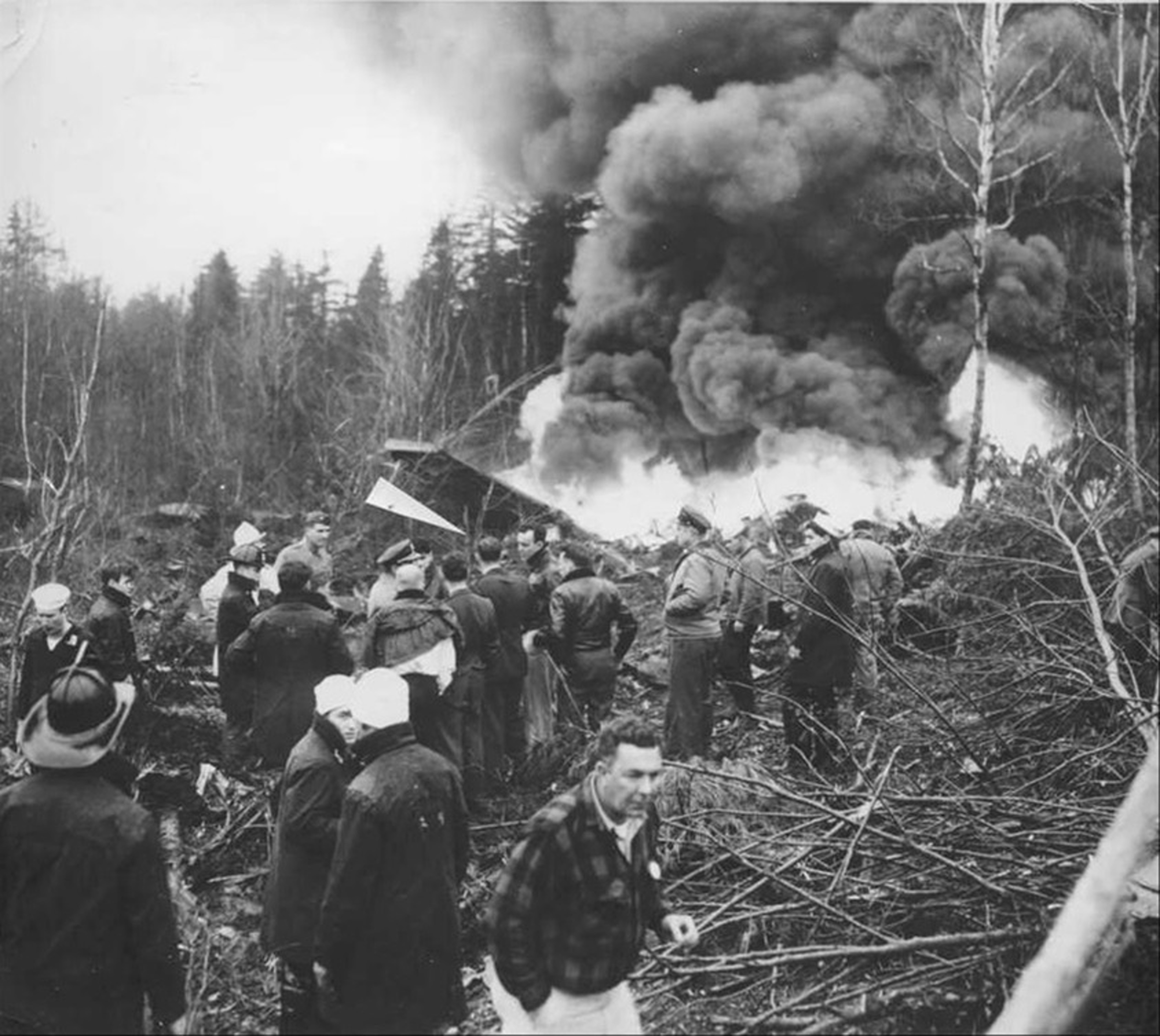
At the height of the Korean War, a U.S. naval anti-submarine patrol aircraft crashed while attempting to land on a newly built runway at the Brunswick Naval Air Station. When it was over, six out of 10 crewmen were dead and the disaster became one of Maine’s deadliest.
On Monday, April 14, 1952, 10 men belonging to Patrol Squadron 26 (VP26) boarded their “P2-V Neptune twin-engine patrol bomber … for a routine training flight” to Quonset Point Naval Air Station in Rhode Island “to begin a week [of] anti-submarine maneuvers.”
Although “rain had fallen intermittently all day” and there was a limited “flying ceiling [of] 500-600 feet,” the mission pilot, Lt. JG, Thomas Pole, lifted the P2V off just before 11 a.m.
Within minutes, it was clear something was seriously wrong. “One of the bomber’s engines went dead” and Pole quickly turned “his crippled ship back” toward Brunswick.
“Pole feathered his propeller, cut power to the disabled engine, [and] radioed to the tower … [that] he would make an emergency landing.” As the plane approached the runway, Pole “made a pass but was unable to land.”
Pole then “attempted to gain altitude… to clear the trees,” just as the second engine “cut-out.” Suddenly the aircraft “lost altitude and plunged into the trees … at the edge of the big field … near route 24.”
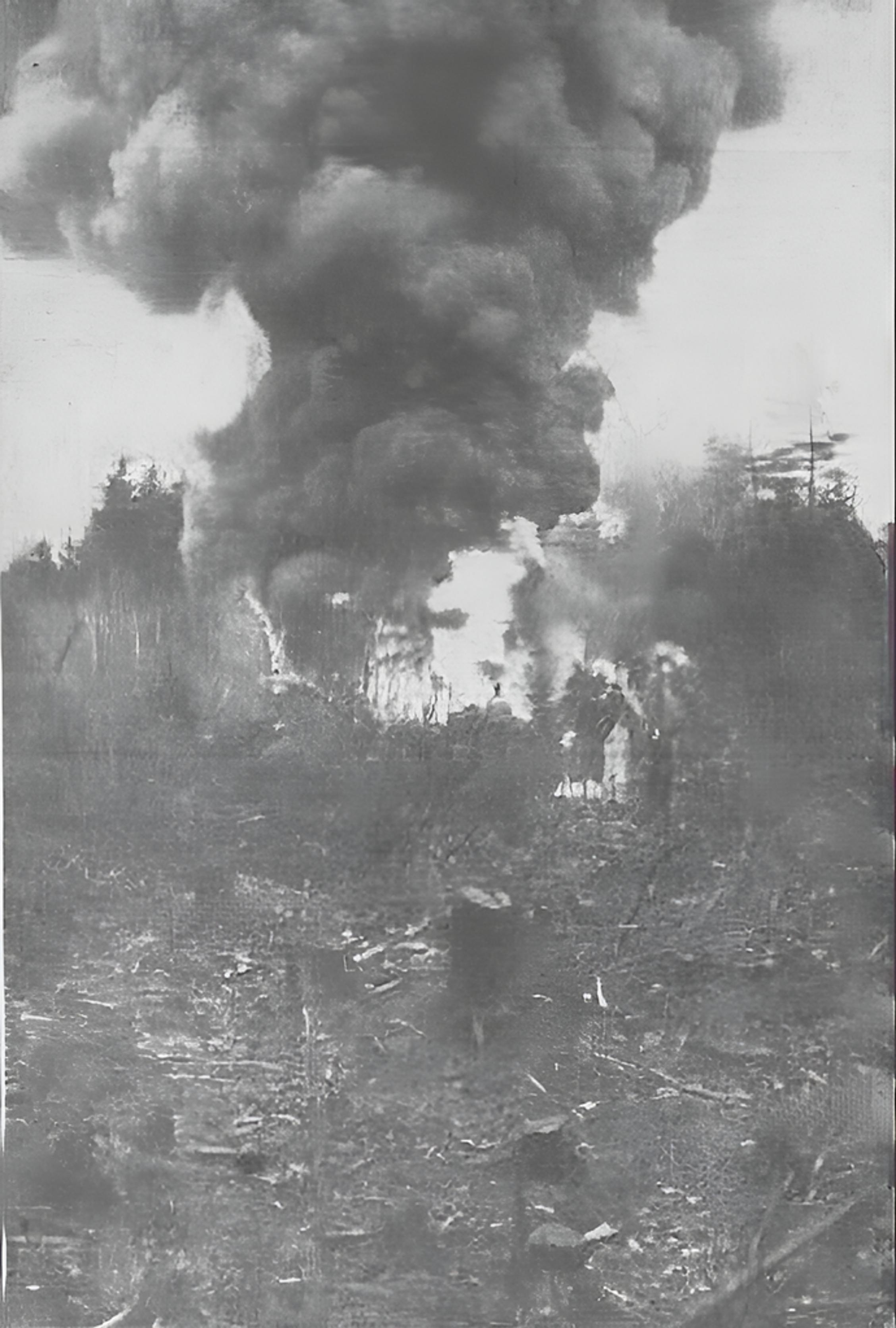
When the P2V crashed, “the tail-section of the bomber was shorn-away,” and five of the crewmen were trapped inside the aft compartment. A fireball immediately arose from the crash site as “1,200 gallons of gasoline” exploded and burned.
Immediately, the control tower summoned emergency crews from the Naval Air Station as well as police, fire and ambulance crews from Brunswick.
When rescuers arrived, they found little access to the crash site, where Pole was out of the burning plane and trying to save the lives of his crewmen.
“Two ambulances got partway into the scene, over a muddy wood-road, but two fire trucks from the airbase became mired behind them.” First responders ran through the woods only to face a wall of twisted wreckage and searing flames.
“Finally, a bulldozer cleared a path into the woods” towing one of the fire trucks into the scene. “Water was then pumped in from the highway” and firefighters began to battle the fuel-fed blaze.
When rescuers finally reached the trapped victims, the grizzly truth was realized: “5 of the crewmen” never escaped the tail-section and “were burned to death” by the immense flames. Yet, the remaining five — who were in the front section of the aircraft — were injured but survived.
One of the survivors, LTJG Frederick Sachse — the flight’s co-pilot — was critically burned, but Pole successfully pulled Sachse out before flames completely engulfed the mangled fuselage.
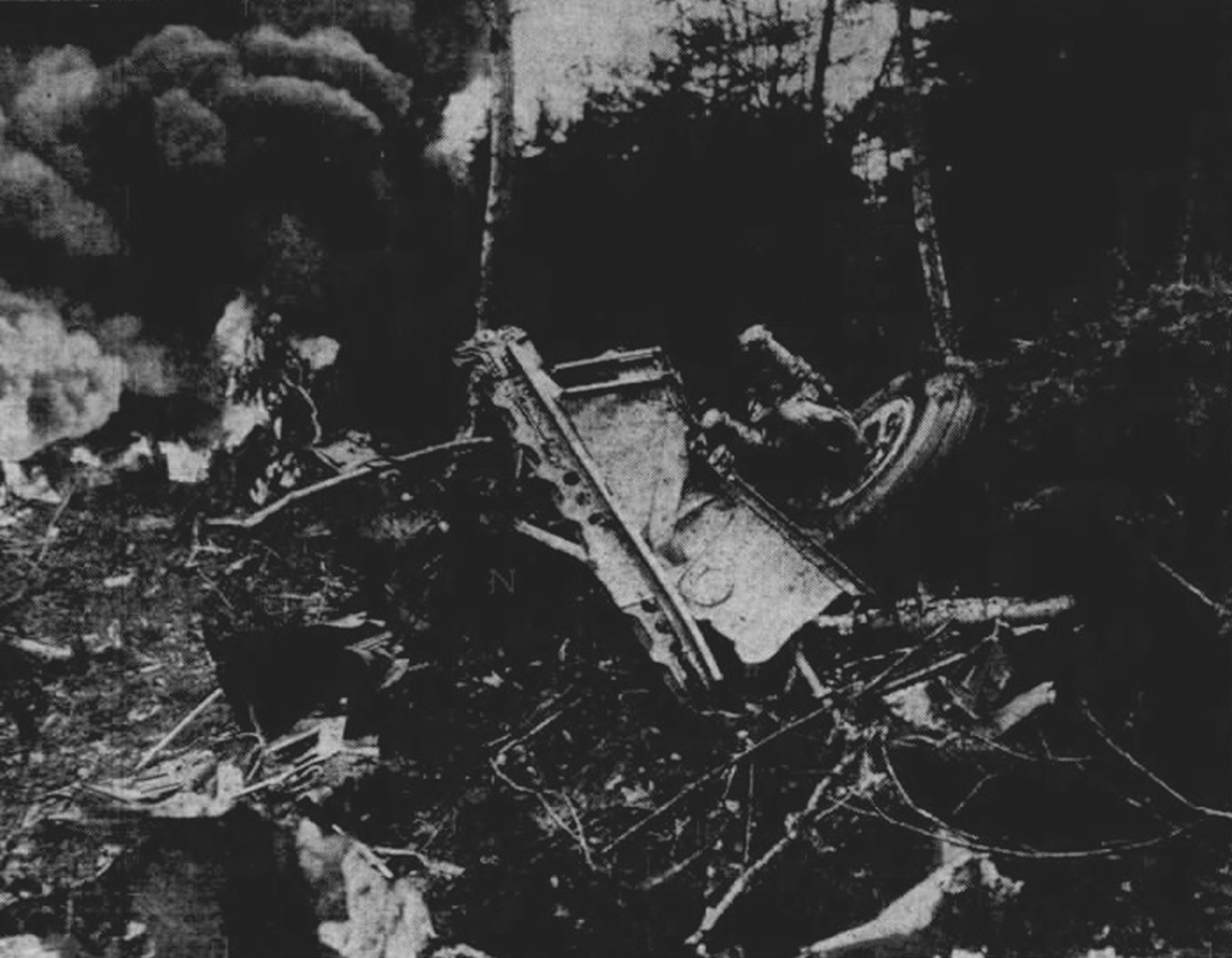
As firefighters struggled to control the flames, survivors of the crash “were taken to the base infirmary.” Catholic priests were rushed to the scene from Brunswick and Topsham “to deliver last rites” to the dead.
Once the flames were extinguished the gruesome job of removing the charred bodies of the five trapped crewmen was underway. The bodies “were taken to Stetson’s Funeral Home” in Brunswick.
Once the victims were “prepared for shipment home … an honor guard accompanied the caskets to the railroad station in Brunswick,” where each man was transported home “with a one-man military escort.”
As funerals were being held in New York, California, Alabama and Ohio for the dead of the P2V crash, Lt. Frederick Sachse still battled for his life in Brunswick. But “eleven days after the crash,” Sachse died from his injuries and his remains were escorted to his home in Ann Arbor, Michigan.
When the plane crashed at the south end of the Brunswick Naval Air Station runway, the accident became the third deadliest air disaster in Maine history since the loss of a B-17 “Flying Fortress” crashed near Rangeley on July 11, 1944, killing all 10 of her crewmen.
On that same day, an Army Air-Corp bomber with two pilots onboard, crashed while attempting to land in fog at the Portland Airport. The bomber slammed into the landing strip, sped along the ground and careened off the runway.
When the wreckage crashed back down on the ground, it slammed down into the Red Bank housing development in South Portland. Seventeen died, including the two pilots and 15 civilian residents at Red Bank.
The crash at South Portland still holds the record as the deadliest air disaster in Maine history, while the deaths at Rangeley and Brunswick follow.
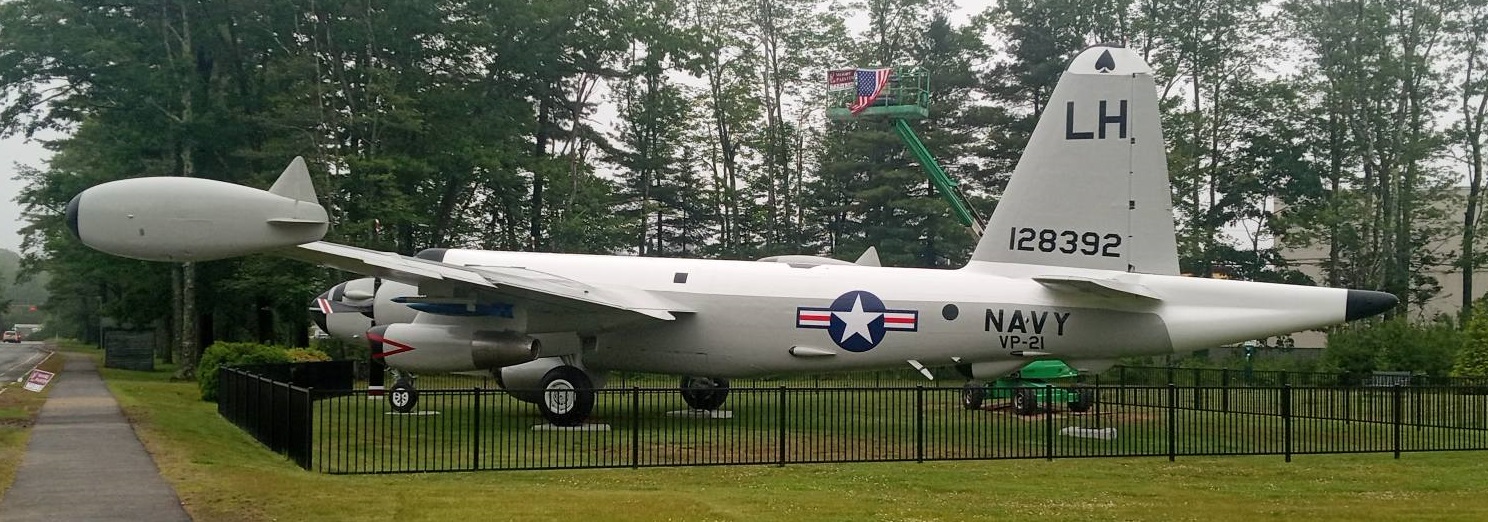
Today, a recently refurbished P2V Neptune stands at the entrance to the former Brunswick Naval Air Station, as it has since 1970. And now, the nearly forgotten catastrophic loss of these six Navy crewmen are remembered in the memorial pages of our Stories from Maine.
Historian Lori-Suzanne Dell has authored five books on Maine history and administers the popular “Stories From Maine” page on Facebook, YouTube and Instagram.
You must be logged in to post a comment.