

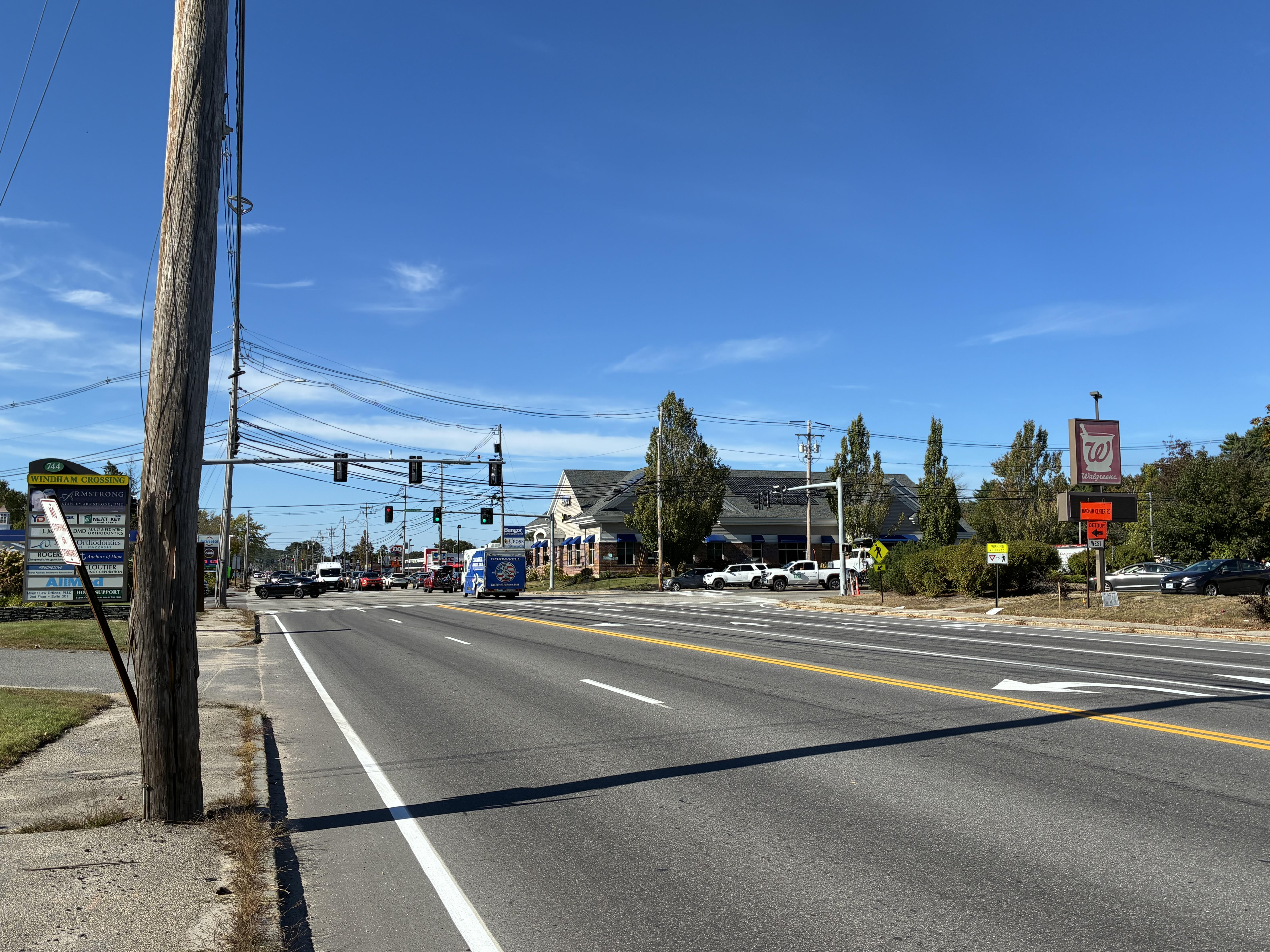
Windham recently sent a letter to both the governor’s office and state legislators expressing opposition to a recently passed law town officials believe strips away local control over housing development.
The bill in question, L.D. 1829, “An Act to Build Housing for Maine Families and Attract Workers to Maine Businesses by Amending the Laws Governing Municipal Land Use Decisions,” places several restrictions on municipal laws concerning housing and growth in order to address Maine’s affordable housing shortage. The bill was passed by the state Legislature and signed into law by Gov. Janet Mills on June 20, and will take effect on July 1 of next year.
Critics of L.D. 1829 say it takes away control from municipalities over development within growth zones. Windham currently has four growth zones: North Windham, South Windham, Windham Center, and a residential growth zone in the area of Falmouth Road, alongside Route 202.
Town Manager Robert Burns said his biggest issue with the bill was that it stripped the town’s ability to enact a growth ordinance, and that it would no longer be able to cap the number of dwelling units permitted within the growth zones.
In the letter to the governor’s office, the Windham Town Council said it had amended the comprehensive plan in accordance with a previous piece of legislation, L.D. 2003, to identify designated growth areas where housing would have fewer restrictions. The letter states that Windham has been issuing an average of 130 housing units a year over the past decade, and currently has 650 units planned in North Windham alone by 2028.
“Windham is doing its part to solve the housing crisis while at the same time balancing the desires and needs of its citizens who want to retain areas of rural character,” the council wrote. “This law works against this goal in many ways.”
William Reiner, vice chair of Windham Town Council, expressed concern about L.D. 1829’s reductions to lot size requirements and density. In an email to Lakes Region Now, he wrote that in the north and south zones, which have both sewer and public water, the housing densities could become as low as one dwelling unit per 2,500 square feet.
While acknowledging there may be little impact on these growth areas as sewer capacity may soon be maxed out, he said the town was hoping to build on commercial development in the north zone, and that the town might have to allow increased residential density in a way that adversely affects its resources.
Recent polling on growth shows that more than 70% of Windham residents are concerned about the rate of growth, with an additional 50% having concerns about the type of growth.
Both Burns and Reiner said Windham had recently revised its growth ordinance in a way that would fit with the state’s guidelines on growth. The most recent revisions to the ordinance allow one dwelling unit per permit and limit multifamily units to 75 per year. Previously, there were no specified maximum number of dwelling units that could be built with one permit, with the 650 units to be built in North Windham only requiring around 30 permits. With L.D. 1829, prohibiting municipalities from limiting growth rate in growth areas, Reiner said the ordinance has “once again become mute” in those areas.
The council finished its letter by requesting that the Legislature either repeal L.D. 1829 or amend it to include more input from towns and municipalities. Reiner said that Maine, which is home to vast expanses of undeveloped land, has no need to cram an increased amount of residential capacity into small growth areas. He worried that if L.D. 1829 was allowed to take effect in full, it would lead to designated growth areas in small towns “simply (resembling) cities such as Portland.”

We invite you to add your comments. We encourage a thoughtful exchange of ideas and information on this website. By joining the conversation, you are agreeing to our commenting policy and terms of use. More information is found on our FAQs. You can update your screen name on the member's center.
Comments are managed by our staff during regular business hours Monday through Friday as well as limited hours on Saturday and Sunday. Comments held for moderation outside of those hours may take longer to approve.
Join the Conversation
Please sign into your Press Herald account to participate in conversations below. If you do not have an account, you can register or subscribe. Questions? Please see our FAQs.