
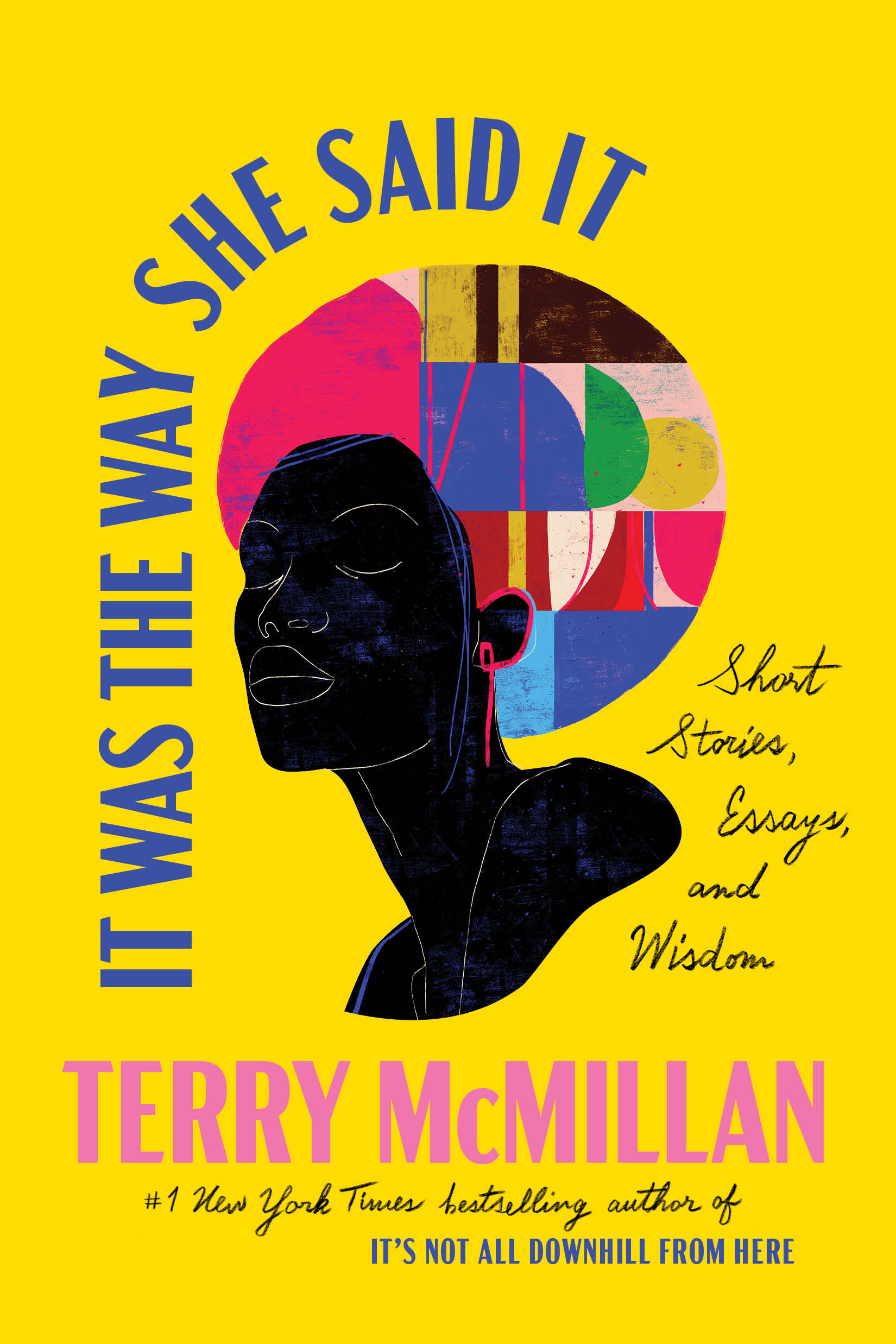
Before “Waiting to Exhale” and “How Stella Got Her Groove Back” became literary and Hollywood sensations, Terry McMillan was Terri McMillan, a young student at the University of California at Berkeley majoring in journalism. Her superpower, even then, was her voice: direct, unapologetic, down to earth.
She was, in the words of her creative writing teacher Ishmael Reed, “effervescent. Bubbling over with energy. Hip.” In the foreword to McMillan’s new book, “It Was the Way She Said It,” Reed notes that McMillan was one of three Black women on the New York Times Best Sellers list in 1992, but unlike the other two — Toni Morrison and Alice Walker — McMillan did not win a Pulitzer. McMillan “wrote just as well,” Reed argues, even if “the arbiters of Black fiction” did not find her work worthy of that prize. She was “the people’s choice.” Given her unvarnished depiction of domestic life and relationships, Reed notes, McMillan “could well be called the professor of intimacy.”
McMillan’s new book shows the author at the top of her game. It also reveals the making of an artist. It’s a collection of work spanning 50 years that includes early fiction as well as essays, speeches, sketches and commentary. The book’s editor, Kristine Bell, curated the collection to show how McMillan evolved “toward becoming an author who, despite record-breaking book sales, remains an underappreciated American voice.”
McMillan’s first novel, “Mama” — about a Black woman raising five children on her own after a divorce — won the Doubleday New Voices in Fiction award in 1986 and the American Book Award in 1987. The seed for the novel is the story “Mama, Take Another Step,” which was workshopped by the Harlem Writers Guild and meant to be part of a story collection that was never bought by a publisher. It appears for the first time in this new collection.
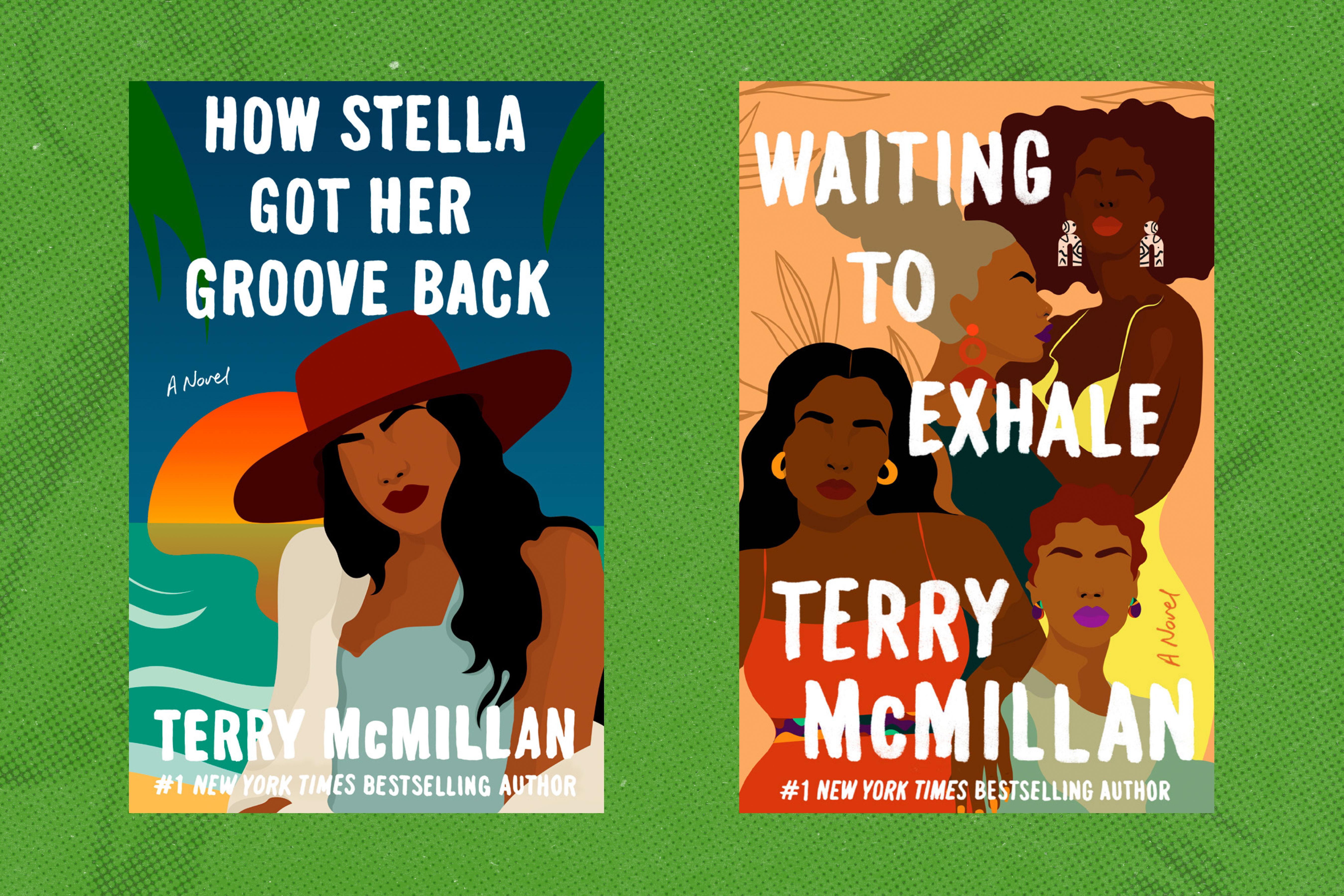
Themes in McMillan’s early fiction include class difference, power dynamics, betrayal, abortion and colorism. Women are at the center of these stories: Girlfriends who laugh, cry, rage and crumble. Women who disappoint you. Women who save you. Women who understand the miseries of birth control. Women who listen to stories about married men, younger men and the wonders of sex. They go to spas and wine parties. They smoke Newports, drink rum and complicate one another’s lives.
They also struggle. There’s anger, heartbreak, domestic abuse, fear and fortitude. Mildred, the main character in “Mama, Take Another Step,” for instance, “kept white lye in a brown bag under the kitchen sink; kept her butcher knives razor sharp and since the silverware drawer had no door on it anyway, they were easy for her to get to. She finally decided a .22 wouldn’t be a bad idea.” In an op-ed for the New York Times in 1994, reprinted here, McMillan wrote about O.J. Simpson, revealing that her mother was beaten by her father: “I grew up watching my mother run to the kitchen to get butcher knives and skillets to keep my father off of her.”
The language of McMillan’s work remains fresh. Her dialogue feels airlifted right out of real life. “Fiction is running reality through the lens of a lie,” McMillan has said. This collection contains a multitude of truths. “Let me tell you one thing, buster. You’re right!” exclaims a character in the 1986 story “Reconstruction.” “I mean look at this whole thing, it’s lopsided. You expect me to work, pay all the bills, cook, clean. … Don’t you think I get tired? I can’t do everything. You married a woman not a damn machine!”
While the selected nonfiction here — essays, speeches and editorials — lacks the blood of McMillan’s early fiction, it, too, is compelling. In pieces that first appeared in Essence, Real Simple and the New York Times, McMillan shares insights on Black Lives Matter, George Floyd and Rodney King. “I’m mad. Everybody should be mad. How did this trial ever manage to take place before a jury with no Blacks?” she wrote about the King verdict in 1992. The book also includes McMillan’s stellar short story “From Behind the Counter,” written at the request of journalist Nikole Hannah-Jones for “The 1619 Project.”
McMillan, 73, isn’t nearly done yet. Last year she partnered with Lifetime to produce “Terry McMillan Presents,” a slate of new movies featuring stars such as Taye Diggs and Lesley-Ann Brandt. Her new book includes snippets from a novel in the works, which would be her 11th. The title of her most recent novel, published in 2020, was prescient: “It’s Not All Downhill From Here.”
Lisa Page is co-editor of “We Wear the Mask: 15 True Stories of Passing in America.” She is an assistant professor of English and the director of creative writing at George Washington University.
You must be logged in to post a comment.