
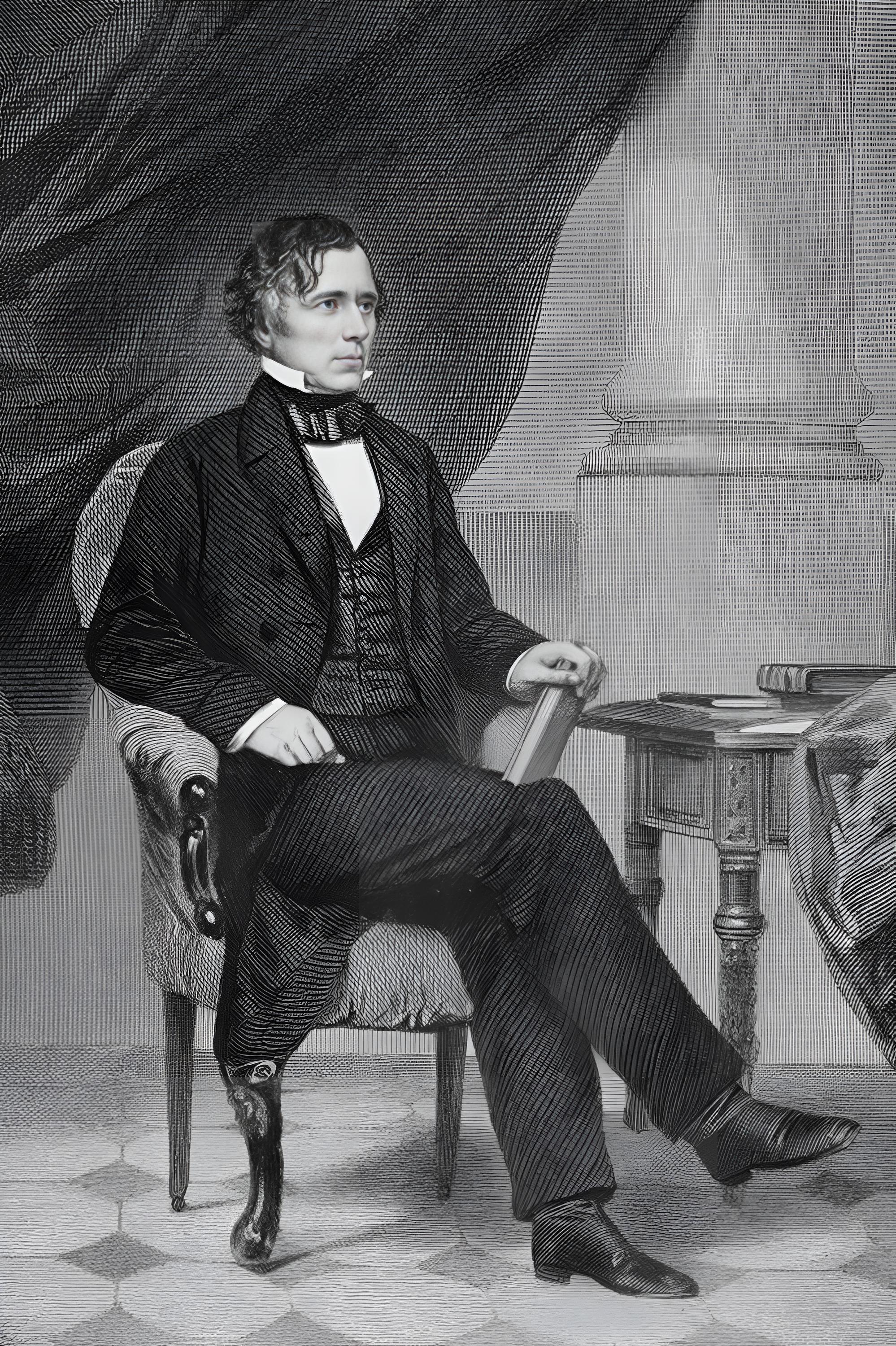
From his service in the Mexican-American War, to the halls of Congress, this man’s adult journey began in Brunswick, where he would form lifelong relationships — with soon-to-be-legendary friends — and begin a journey that would catapult him to the American presidency.
On Sept. 25, 1820, as the Missouri Compromise settled into place — creating the State of Maine — a 16-year-old Franklin Pierce arrived in Brunswick to begin the first leg of his secondary education at Bowdoin College.
“Vivacious, mirthful, slender, of a fair complexion with light hair” Franklin Pierce had a “bright and cheerful aspect … a kind of sunshine [of] radiance and warmth, [with] no shyness of disposition. Pierce [wore] a swallow-tail coat and … carried a small black cane.
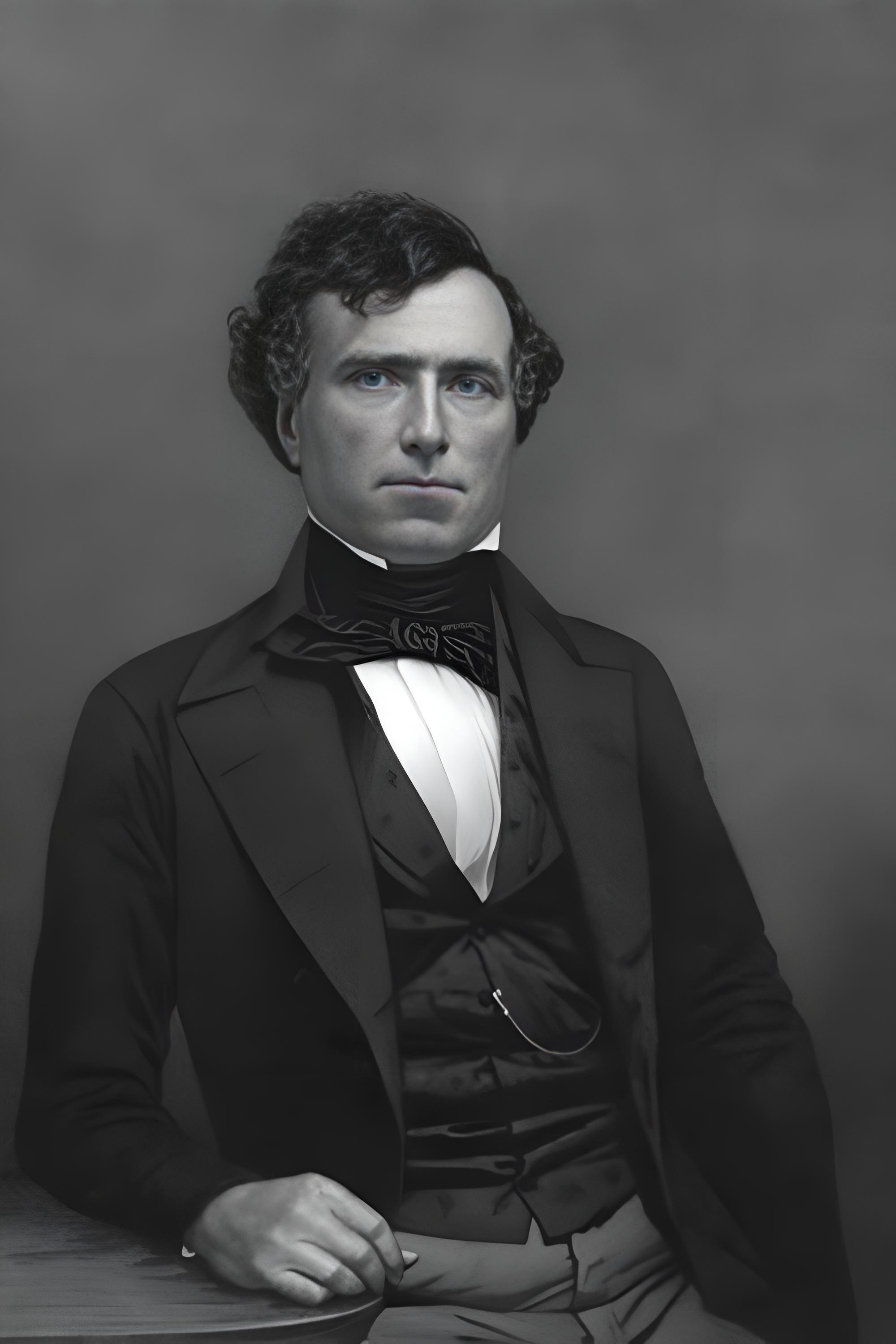
“One of 19 freshmen … Pierce’s class was small, but composed of individuals seriously intent on the duties and studies of their college life,” yet Franklin seemed distracted.
While fellow classmates, such as William Pitt Fessenden, Calvin Stowe and Zenas Caldwell, “were little inclined to neglect the opportunities” of their education, “Franklin enjoyed the social life at Bowdoin [while] his school work took second priority … [and] soon Pierce was last in his class.”
By “the summer of 1821,” as students returned to campus for the new academic year, sophomore Franklin Pierce boarded “a Mall-stage at Portland,” bound for Brunswick. “Among the passengers” of Bowdoin’s [newest] freshmen class were Jonathan Cilley, Alfred Mason, Horatio Bridge and Nathaniel Hawthorne, each all of whom would form a lifelong friendship with Pierce.
Franklin’s lack of attention to Bowdoin’s policies became evident as he was “repeatedly fined fo breaking college rules.” During his first two years at Bowdoin, “Pierce was fined 20 cents for … neglecting his forensics … 10 cents for neglecting his oration … and another 20 cents for neglecting his declamation.”
Then, in violation of Bowdoin’s smoking rule, “Pierce was fined for being seen on the streets with a ‘segar’ (cigar) in his mouth.”
Franklin wasn’t alone in his neglect of the college rules. “Pierce, John Appleton and [William Pitt] Fessenden were all fined 25 cents for playing … during study hours.” And Nathaniel Hawthorne was often fined “for playing cards for money.”
Even Maine’s future legendary poet “Henry Wadsworth Longfellow … [was fined] $2.10 for neglect of theme, and another dollar for absence from recitation.” One of the last fines ever
imposed on Franklin Pierce was when “the young lad was fined $3 for disturbing the class.”
Although “it may be doubted whether Pierce was distinguished for scholarship” during his first two years at Bowdoin, Pierce soon buckled-down and “appeared to grow more intent … evidently resolved to gain … elevation in his class.”
Pierce became chairman of the standing committee of the Athenaeum Society, honed his public speaking skills, excelled in Latin and organized an unofficial militia company called the Bowdoin Cadets.
In his off time, “Pierce was a great sportsman, and nothing suited him more than to hunt and fish. Pigeons and partridges were plentiful … and Pierce used to bag a great many” in the local woods near the campus.
“Pierce rarely went home during Bowdoin vacations, as he usually taught at those times. He taught school at Mere Point for eight weeks,” and in his final year at Bowdoin Pierce “spent several months teaching at Hebron Academy.
By September of 1824, Franklin Pierce’s past scholastic offenses were forgiven as he graduated as “a scholar and orator” from Bowdoin College. Pierce was ranked fifth in his class of 14 graduates and, according to Nathaniel Hawthorne, now “nothing could ruin Franklin Pierce.”
Pierce would maintain all of the friendships he made at Bowdoin College, and his relationship with future author Nathaniel Hawthorne would become legendary.
Franklin Pierce would go on to live a storied life. He led troops in the New Hampshire militia and in the United States Army during the Mexican-American War, rising to the rank of general, having served at the battles of Churubusco, Chapultepec and Mexico City, to name a few.
And Pierce entered politics, serving four years in the New Hampshire House of Representatives, four years in the United States Congress, and four years as New Hampshire’s U.S. Senator.
Then, in 1853, Franklin Pierce defeated Bowdoin College graduate John P. Hall in a landslide election to become the 14th President of the United States. As President, Pierce would go on to support the divisive Kansas-Nebraska Act of 1854 – which nullified the Missouri Compromise – and his presidency is seen by many as setting the stage for the Civil War by failing to deal with the expansion of slavery.
Today, although his presidency is still debated, Franklin Pierce remains a famous and celebrated son of Bowdoin, and his time in Brunswick serves as one of the more presidential of our Stories From Maine.
Historian Lori-Suzanne Dell has authored five books on Maine history and administers the popular “Stories From Maine” page on Facebook, YouTube and Instagram.
We invite you to add your comments. We encourage a thoughtful exchange of ideas and information on this website. By joining the conversation, you are agreeing to our commenting policy and terms of use. More information is found on our FAQs. You can update your screen name on the member's center.
Comments are managed by our staff during regular business hours Monday through Friday as well as limited hours on Saturday and Sunday. Comments held for moderation outside of those hours may take longer to approve.
Join the Conversation
Please sign into your Press Herald account to participate in conversations below. If you do not have an account, you can subscribe here. Questions? Please see our FAQs.