
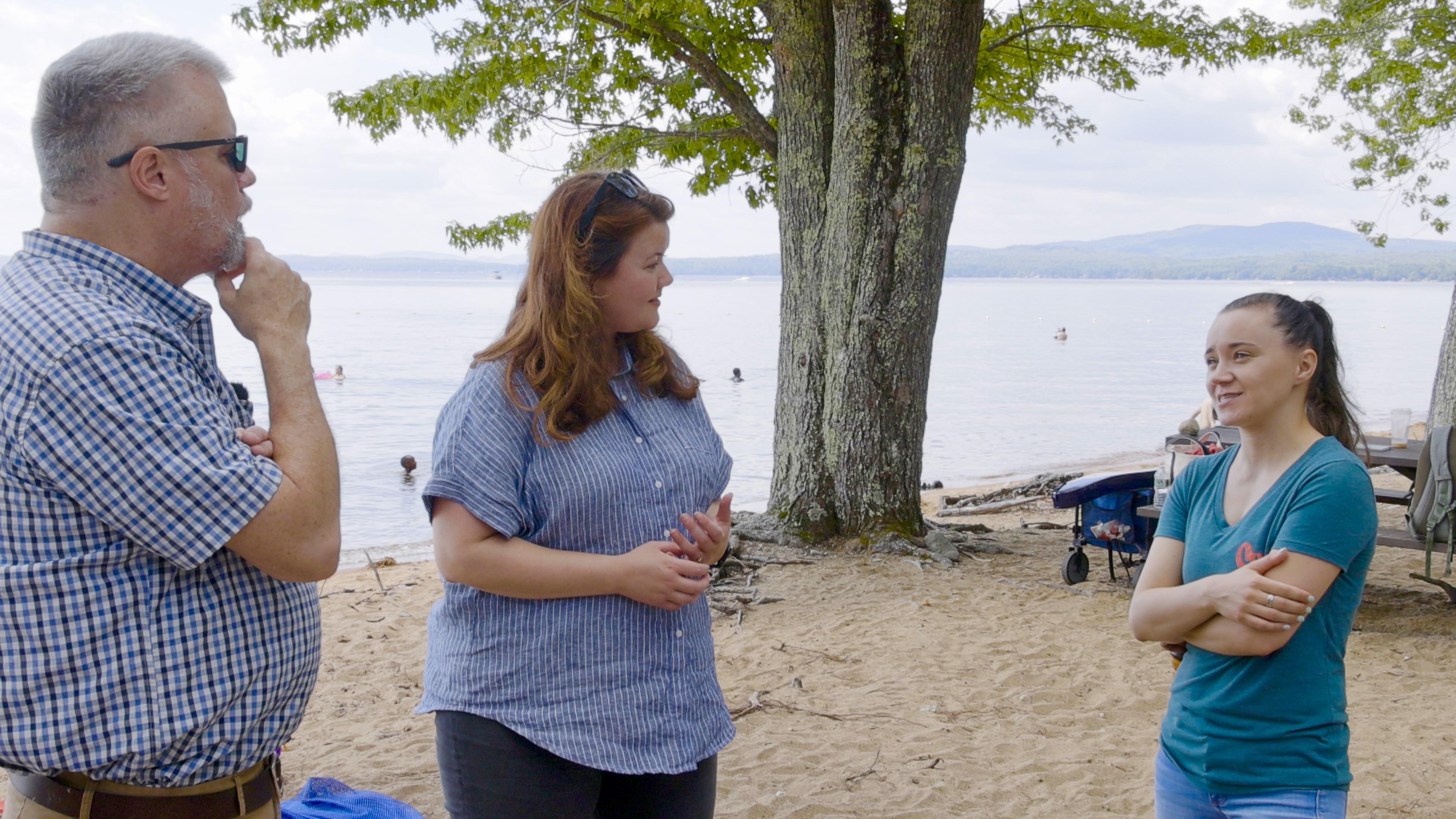
This summer, I launched my Support Kids, Support Maine Child Care Listening Tour because the gaps in our state’s early childhood education system are too serious — and too urgent — to address from behind a desk.
We launched this tour because Maine’s child care system is in crisis. Families are struggling to find affordable, high-quality care, and when they can, they’re often stuck on long waitlists. Providers are being asked to do more with less, and too many communities are losing talented educators to burnout and underpayment. These issues aren’t new, but the urgency has never been greater. Child care and early childhood education touch nearly every part of our economy and our daily lives. If we want lasting solutions, we need to listen to the people who are living these challenges every day: parents, educators and child care professionals. That’s exactly what this tour is about.
At Sebago Lake State Park earlier this month, I joined a group of children on a field trip with Space to Thrive, a nonprofit providing high-quality early childhood education in Windham and Raymond. As the kids explored the outdoors while laughing, swimming and enjoying the fleeting days of summer, I couldn’t help but feel hopeful. But as I spoke with their teachers and directors, the mood shifted. Hope gave way to concern — concern about whether they’d have enough staff to support growing demand, concern about funding, concern about burnout. That contrast between joy and strain has defined the first stops of my tour. And it’s why I’m spending the next several weeks traveling across Maine to meet directly with parents, early childhood educators and providers to hear firsthand about what’s working, what’s not and what they need to ensure child care thrives in Maine.
At Space to Thrive, Executive Director Hannah Marshall told us they’re expanding to serve 64 more children at their new location — a huge win for the community. But she was clear: They need consistent funding and long-term support if programs like hers are going to survive and grow. We can’t keep building on unstable ground.
From there, I headed to Family Focus in Brunswick, an organization that’s been serving our community for nearly 40 years. They care for children from 6 weeks old to age 12, and their team is deeply committed to the families they serve. But like so many others, they’re stretched thin. Originally designed as a half-day program, they’ve adapted to meet local needs by offering full day care and aftercare without the funding to support that shift.
Executive Director Laura Larson told me Family Focus losees about $15,000 a year just to keep their food program going. That’s money they absorb because it’s the right thing to do — but it’s also money they don’t have.
“If we’re committed to universal free school meals in Maine, we need to make sure implementation matches that promise at all levels of education,” she said.
We also spoke about workforce development, which continues to be one of the most urgent and complex challenges in the field. Right now, the pipeline for early childhood educators isn’t meeting the demand. Barriers to training, limited access to certification programs and the lack of basic benefits like health insurance and retirement are pushing talented people out of the field. It is also making it harder to attract the next generation. These professionals do incredible work; however, we see a cycle: Fewer educators means difficult workloads, which unfortunately leads to more turnover, leaving families on waitlists and programs unable to expand.
These visits have made one thing crystal clear: Our child care system is the foundation of our workforce and our economy. As Laura put it: “You’re not just paying for someone else’s child care. You’re allowing the nurses, teachers and essential workers your community relies on to go to work.” If we want the next generation to raise their kids in Maine, they need access to affordable, reliable child care that doesn’t force them to choose between staying home or staying employed. When families can’t find care, or can’t afford it, it ripples across the economy. Employers lose workers, small businesses struggle to stay staffed and communities lose out on the energy and talent of young families. Strengthening child care isn’t just a family issue; it’s an economic development strategy. If we’re serious about keeping Maine vibrant, growing and livable for young people, then we have to build a system that supports them in both raising a family and building a career.
The good news is, we don’t have to start from scratch. Communities are stepping up, providers are innovating and families are organizing. What they need now is for policy to meet them where they are and build with them — not around them. Without a holistic approach, providers are stuck trying to patch holes in a system that should be fully supporting them. That’s why I’m inviting families, providers and educators across Maine to share their stories through our tour survey at tinyurl.com/supportkidssupportmaine. Your feedback will directly shape legislation I bring forward in the next session to strengthen our early childhood system.
We still have several counties to visit before the tour wraps up in October, and I’m looking forward to every conversation ahead. Because if there’s one thing I know for sure, it’s this: When we support kids, we support Maine.
Let’s make sure our child care system reflects that truth — in policy, in funding and in action.
Mattie Daughtry represents State Senate District 23, Brunswick, Chebeague Island, Freeport, Harpswell, Pownal and part of Yarmouth in the Maine Senate. She also serves as Maine’s Senate president. She can be reached at Mattie.Daughtry@legislature.maine.gov or 207-287-1515.
We invite you to add your comments. We encourage a thoughtful exchange of ideas and information on this website. By joining the conversation, you are agreeing to our commenting policy and terms of use. More information is found on our FAQs. You can update your screen name on the member's center.
Comments are managed by our staff during regular business hours Monday through Friday as well as limited hours on Saturday and Sunday. Comments held for moderation outside of those hours may take longer to approve.
Join the Conversation
Please sign into your Press Herald account to participate in conversations below. If you do not have an account, you can register or subscribe. Questions? Please see our FAQs.