

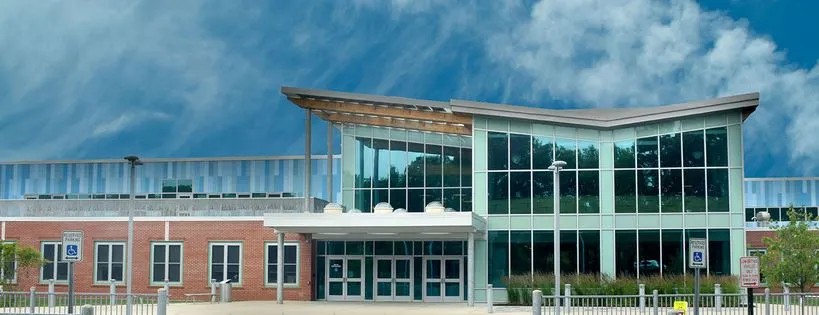
Falmouth Elementary School. (Courtesy of Falmouth Public Schools)
Looking for another school district? Read more: Portland | South Portland | Yarmouth | Scarborough | Falmouth | Cumberland, North Yarmouth | Brunswick | Topsham-area | Lakes Region
Falmouth students are sharpening their pencils and packing their backpacks for the first day of school.
The first day of school is Aug. 27 for grade 1-6 and 9. Kindergarten and grades 7, 8 and 10-12 begin on Aug. 28.
To help students and families get ready for day one, Falmouth’s new Superintendent Steve Nolan answers questions about changes to the year ahead:
(Responses have been edited for clarity.)
Any changes in academic calendar, school start times or bus routes students need to know about?
I don’t believe there are significant changes; however, I wasn’t here last year to understand the extent of any changes to the calendar, start times, or bus routes. Information about our calendar and bus routes can be found online.
Any changes in regard to student cell phone use or technology?
We now have separate networks for staff and students, and the student network is filtered to help students to better focus on academic work. Examples of sites that are blocked include: video services such as Netflix, Hulu, Disney and Amazon; social media such as Snapchat, Tik Tok, Facebook and X; artificial intelligence systems such as ChatGPT and gaming sites.
Are there any changes in school leadership from last year?
Newly hired staff include Superintendent Steve Nolan, Director of Finance and Operations Rafe Forland, Director of Special Education Brian Cavanaugh, Assistant Director of Special Education Kellie Battaglia, and high school Principal David Conrady.

Comments are not available on this story. Read more about why we allow commenting on some stories and not on others.
We believe it's important to offer commenting on certain stories as a benefit to our readers. At its best, our comments sections can be a productive platform for readers to engage with our journalism, offer thoughts on coverage and issues, and drive conversation in a respectful, solutions-based way. It's a form of open discourse that can be useful to our community, public officials, journalists and others.
We do not enable comments on everything — exceptions include most crime stories, and coverage involving personal tragedy or sensitive issues that invite personal attacks instead of thoughtful discussion.
You can read more here about our commenting policy and terms of use. More information is also found on our FAQs.
Show less