
It’s a quintessential Maine scene: a lobster boat cutting through morning mist toward the sunrise on the horizon, the hum of the vessel’s engine steadily thrumming. On the Knot Nau boat, the captain steering the wheel has had more than a decade of experience on the water—12 years, to be exact; but she’s still in high school.
“I love, love, love my job. I love it so much. It’s kind of therapeutic to me,” said Morgan, a sophomore at Region 10 Technical High School in Brunswick. “I come from a long line of really good work ethics, and having that work ethic is helpful, especially going into the workforce.”
Morgan is one of many Maine students already participating in the state’s workforce, using her time in school to kickstart her career. At Region 10, she participates in welding courses, gaining skills that she says will directly translate to the upkeep of her lobstering boat.
“This is my happy place,” Morgan said of Region 10.
The Maine Department of Education (DOE) is on a mission to bolster workforce development programs like this for high school students across the state, providing them exposure to a wider variety of career options post-graduation. This work is largely the result of COVID-era federal emergency relief funding. Through Gov. Janet Mills’ Maine Jobs and Recovery Plan, the Maine DOE expanded the Extended Learning Opportunities (ELO) program to reach 3,368 Maine students. ELO emphasizes community-based career exploration outside of the traditional classroom.

“We do Extended Learning Opportunities in this state because we care about young folks having a clearer sense of what they want to pursue after high school,” said Eliza Keniugsberg, Career Aspirations and ELO coordinator at Gorham High School.
For Maine students like Madison, a senior at Brewer High School who is pursuing a career in education, this program offers valuable insight.
“Most people go into college thinking about what degree they want to do, and then they end up changing it,” she said. “[ELO] really helps me to know that I actually do want to teach.”
The Maine Jobs and Recovery Plan also provided grants to Career and Technical Education (CTE) schools around the state to purchase new equipment. In Aroostook County, Caribou Tech Center used these funds to buy a John Deere tractor with advanced GPS capabilities. The hope is that having up-to-date technology will allow students to transition faster from school to a job in their field.
“95 percent of farmers [in Maine] have GPS, and a lot of them call me looking for help,” Caribou Tech Center agriculture instructor Scott Moore said. “They want kids who can jump on their tractors and go. Now that I have these tools [at school], I can get students jobs immediately on a farm.”

Moore’s program at Caribou Tech Center is quite popular among students, since agriculture is such an integral part of the Aroostook County community. Caribou Tech Center student Cameron, who was born and raised in the area, said he was drawn to the program because it allows him to be hands-on with the newest farming equipment.
“It’s a little bit of everything,” Cameron said. “I get to drive the bigger trucks and the tractors and learn about something that all of us have grown up around.”
The Maine DOE used similar federal emergency relief funding to establish the Teach Maine program, another workforce development initiative designed specifically to increase the number of educators in the state. It funded a new chemistry lab for STEM education majors at Thomas College, as well as a summer camp at the University of New England for aspiring teachers.
Additionally, the Maine DOE used that same funding to supplement early college programs like Aspirations, which allows high school students to earn college credits. In 2020, at the height of the pandemic, enrollment in these programs saw a tremendous increase. University of Maine System Chancellor Dannel P. Malloy called the early college program at that time a “lifeline” for schools.
All of these workforce initiatives, plus others like the Maine Solutionaries Project and efforts to expand Adult Education resources, have resulted in more than 2,000 community partnerships.
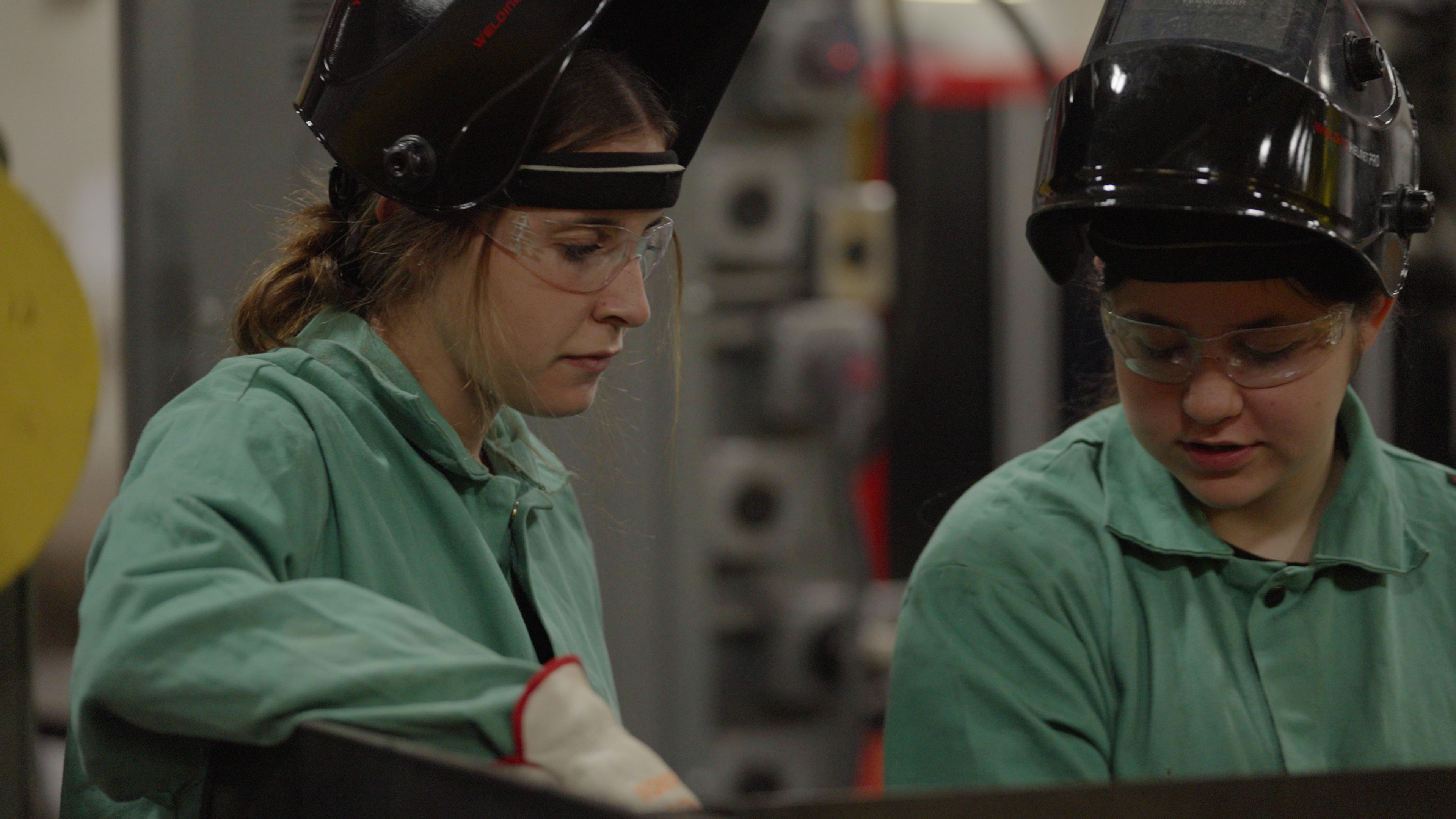
“When students forge strong community connections, they’re more likely to remain in Maine after graduation,” Maine DOE Commissioner Pender Makin said. “This both strengthens our workforce and deepens their ties to our state.”
For Morgan, her education at Region 10 is a big reason why she feels successful, both in the classroom and outside of it, while spending time on the Knot Nau.
“Run, don’t walk,” Morgan said as advice to other students considering joining a workforce development program. “It’s probably the best thing that’s going to happen to you.”
These programs are all a part of Maine’s Whole Student Pandemic Response. You can learn more about the Maine DOE’s efforts to bolster the state’s workforce, and how the department allocated COVID-era federal funding to do so, on the Maine DOE website

Comments are not available on this story. Read more about why we allow commenting on some stories and not on others.
We believe it's important to offer commenting on certain stories as a benefit to our readers. At its best, our comments sections can be a productive platform for readers to engage with our journalism, offer thoughts on coverage and issues, and drive conversation in a respectful, solutions-based way. It's a form of open discourse that can be useful to our community, public officials, journalists and others.
We do not enable comments on everything — exceptions include most crime stories, and coverage involving personal tragedy or sensitive issues that invite personal attacks instead of thoughtful discussion.
You can read more here about our commenting policy and terms of use. More information is also found on our FAQs.
Show less