
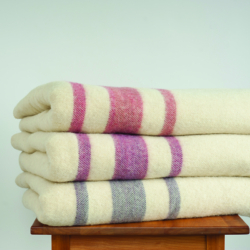
Maine Wool Blanket. Seacolors Yarnery is an 80-acre farm in Washington, Maine where owner Nanne Kennedy is very busy. In a video on her website, she says, “I prepare soil, I raise grass, I graze sheep, I dye wool and I make yarn, sweaters and blankets.” Everything she does is “bioregionally produced,” within a five-mile radius of the farm. Her sheep have superfine wool, which she processes using natural salts and acids. Considering the pasture to pillow process, these blankets and throws are quite a deal. $300 to $600 at getwool.com
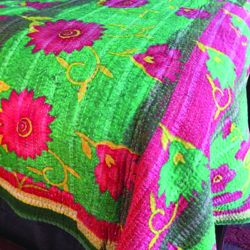
Kaantha Blankets and Throws. Boda Bazaar is a Portland-based, independent design and importing business that mostly sells textiles that are sustainably and fairly made in India. Kaantha is a type of embroidery often practiced by women in rural, Southeast Asia, recycling dhotis and saris to make one-of-a-kind quilts stacked with soft silks and rhythmic hand-stitching. Each product is unique, from its size to tiny spots, minor rips and non-aligned patterns. $75 to $225 at BodaBazaar.com
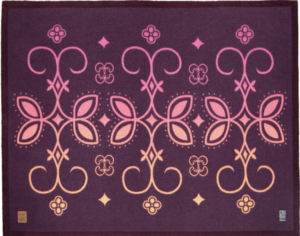 Remembrance Blanket. Passamaquoddy Two Spirit Master Basket Maker Geo Neptune designed this dawn-hued, limited-edition wool blanket with a motif based on the Wabanaki “tree of life” double curve, representing the circle of life and their creation story. Neptune used a mirrored style to illustrate the duality found within themself, within nature and within every person who sees this gorgeous blanket. Plus, it’s currently on sale. $176.80 at eighthgeneration.com
 Bethel Cotton Blanket. Monmouth-based Brahms Mount carries on New England’s textile traditions by using vintage, electric looms that the company has salvaged from old mill towns. These cotton, cable weave blankets are a timeless design in luxury stores around the world. $322 to $456 at brahmsmount.com
Comments are not available on this story. Read more about why we allow commenting on some stories and not on others.
We believe it's important to offer commenting on certain stories as a benefit to our readers. At its best, our comments sections can be a productive platform for readers to engage with our journalism, offer thoughts on coverage and issues, and drive conversation in a respectful, solutions-based way. It's a form of open discourse that can be useful to our community, public officials, journalists and others.
We do not enable comments on everything — exceptions include most crime stories, and coverage involving personal tragedy or sensitive issues that invite personal attacks instead of thoughtful discussion.
You can read more here about our commenting policy and terms of use. More information is also found on our FAQs.
Show less