
By MetroCreative
Risk factors are anything that affects the likelihood that individuals will get a certain disease. In regard to breast cancer, the American Breast Cancer Foundation notes that various factors, some that result from lifestyle choices and others that are not changeable, can increase a woman’s risk of developing breast cancer. Recognizing these risk factors can help women make any necessary changes and even highlight the importance of routine cancer screenings that can detect the presence of the disease in its earliest, most treatable stages.
Lifestyle-related risk factors
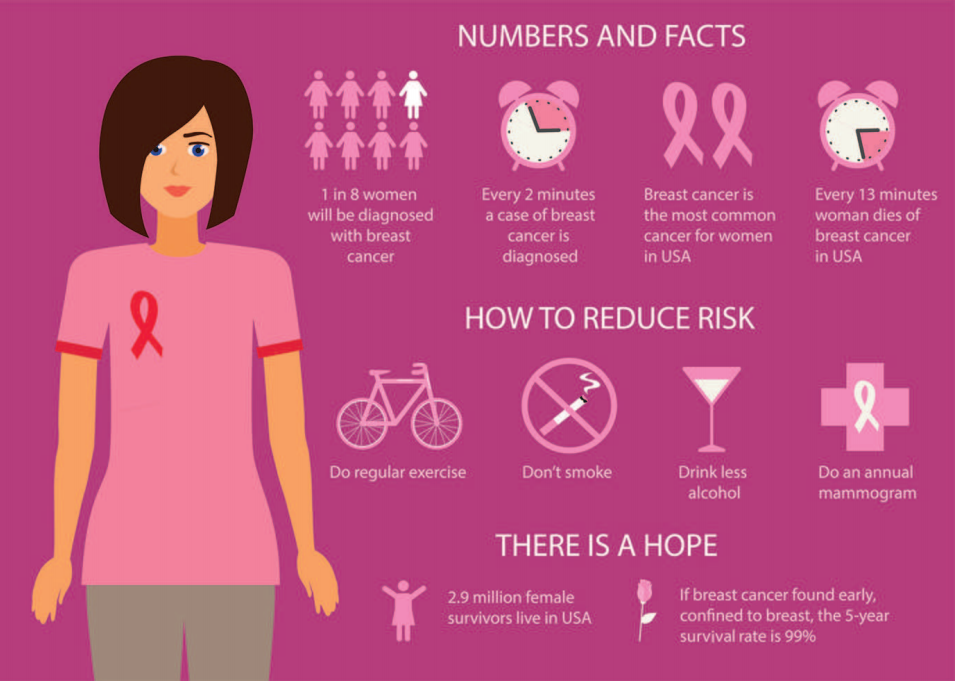
The ABCF notes that certain habits or behaviors can increase a woman’s risk for breast cancer. But the good news is that women who understand the link between certain habits or behaviors and breast cancer can avoid those behaviors to decrease their risk of developing the disease. According to Breastcancer.org, the following are some habits, behaviors or lifestyle choices that can increase a woman’s risk for breast cancer.
Alcohol consumption: Breastcancer.org notes that researchers have uncovered links between the consumption of alcoholic beverages and hormone-receptor-positive breast cancer. One study found that women who consume three alcoholic beverages per week have a 15 percent higher risk of developing breast cancer than women who don’t drink at all. And while research into the connection is limited, a 2009 study found a link between alcohol consumption and breast cancer recurrence.
Sedentary lifestyle: Exercise consumes and controls blood sugar and limits blood levels of insulin growth factor. That’s an important connection, as insulin growth factor can affect how breast cells grow and behave. A sedentary lifestyle also can increase a woman’s risk of being obese, which the ABCF notes is a risk factor for breast cancer among postmenopausal women.
Smoking: Smoking has long been linked to cancer, and Breastcancer.org notes that smoking has been linked to a higher risk of breast cancer in younger, premenopausal women.
Unchangeable risk factors
Unfortunately, many risk factors for breast cancer are beyond women’s control. For example, the ABCF notes that roughly two out of three invasive breast cancers occur in women age 55 and older. Women cannot change their ages, but recognizing the link between age and breast cancer risk is important, as such a recognition may compel more women 55 and older to prioritize cancer screening.
Gender and family history are two additional unchangeable risk factors for breast cancer. Women are much more likely to get breast cancer than men. In addition, Breastcancer.org notes that between 5 and 10 percent of breast cancers are believed to be caused by abnormal genes that are passed from parent to child.
Women are not helpless in the fight against breast cancer. Knowledge of breast cancer, including its various risk factors, is a great weapon against it as women look to reduce their risk of developing the disease.
Comments are not available on this story. Read more about why we allow commenting on some stories and not on others.
We believe it's important to offer commenting on certain stories as a benefit to our readers. At its best, our comments sections can be a productive platform for readers to engage with our journalism, offer thoughts on coverage and issues, and drive conversation in a respectful, solutions-based way. It's a form of open discourse that can be useful to our community, public officials, journalists and others.
We do not enable comments on everything — exceptions include most crime stories, and coverage involving personal tragedy or sensitive issues that invite personal attacks instead of thoughtful discussion.
You can read more here about our commenting policy and terms of use. More information is also found on our FAQs.
Show less