
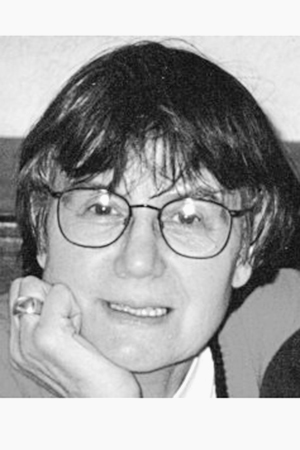
Yvonne Suzanne DaMeda
SOUTH PORTLAND – Yvonne Suzanne DaMeda, 79, died on March 11, 2020, at Maine Medical Center in Portland, following a long and courageous battle with Parkinson’s disease. She was born in Villeneuve-Le-Roi, France, to Albert DaMeda and Denise (Languedoc) DaMeda on Feb. 5,1941 and came to the United States as a young bride when she married Gerald Haynes.She earned a B.A. degree from Southern New Hampshire University and became an early childhood educator. After her children were grown, she moved to Mansfield, Mass., and later to Uxbridge, Mass., and was a teacher of French at Franklin Charter School. Following her retirement, she moved to Portland where she relished her role of mother, grandmother, gardener and chef and enjoyed sitting on her terrace soaking in the beauty of Casco Bay. She also took great pride in decorating her condo and had a wonderful eye for color, balance and shape. Yvonne was fluent in English and French and initiated a Cercle Francais in her condo building. She also composed poetry in both languages and was a published poet. During her later years, she studied Italian, the first language of her father.Yvonne is survived by her son, Albert Haynes of Portland, her daughter, Erica Haynes of Lebanon Conn.; two sisters, Jeannette Brege of Jacksonville, Fla. and Marcelle DaMeda of Montreal, Quebec; three grandchildren, Andre Decarmine of Lebanon Conn., G. Haynes and Catharine Haynes of Portland. She is also survived by several nieces and nephews and many, many friends. A memorial mass will be held on Saturday, May 16, 2020 at 10 a.m. at the Cathedral of the Immaculate Conception, 307 Congress Street, Portland. Arrangements are under the direction of the Conroy-Tully Walker Funeral Home, 1024 Broadway, South Portland, Maine. To view Yvonne’s memorial page, or to share an online condolence, please visit www.ConroyTullyWalker.comIn lieu of flowers, donations can be made toMaine Parkinson Society146 Parkway SBrewer, ME 04412
Comments are not available on this story. Read more about why we allow commenting on some stories and not on others.
We believe it's important to offer commenting on certain stories as a benefit to our readers. At its best, our comments sections can be a productive platform for readers to engage with our journalism, offer thoughts on coverage and issues, and drive conversation in a respectful, solutions-based way. It's a form of open discourse that can be useful to our community, public officials, journalists and others.
We do not enable comments on everything — exceptions include most crime stories, and coverage involving personal tragedy or sensitive issues that invite personal attacks instead of thoughtful discussion.
You can read more here about our commenting policy and terms of use. More information is also found on our FAQs.
Show less