
September is here and Windham children are back at school enjoying all the conveniences that today’s modern classrooms have to offer. Their warm, comfortable surroundings are a complete contrast to the schools attended by Windham students in the 18th and 19th centuries when one-room schoolhouses were the norm.
The history of Windham schools dates back to the mid-1700s when Mrs. William Chute, wife of the town’s first settler, traded tuition for shoemaking services from a local vendor. It is also said that class was held in the old Province Fort and lessons were informally taught in the homes of the first settlers. In 1772, a formal schoolhouse, the Anderson School named for one of the town’s founding families, was built on lower River Road near the Westbrook line.
By 1789, there were six school districts in Windham, each taking in a neighborhood as it became settled. It is unclear where school was held in each of these districts, but in 1798, a committee was chosen and money was designated for one school to be built in each district. By the end of that year, two more districts were added and eight one-room schoolhouses dotted the town.
For families at the time, these schools were more than just places where children went for an education, they were also used for social gatherings. Dances, community suppers, lectures and spelling bees provided social contacts outside the family unit to create extended families in themselves.
There were both schoolmasters and schoolmarms, but if a female teacher married, she had to quit as schoolmarm because her most important job then became taking care of her household.
Rural schools generally had two terms, the summer term from May until August and the winter term from November through April. Class was usually held from 8 a.m. to 4 p.m. and most children walked to their studies. Chores like milking the cows, feeding the chickens and pigs, and gathering eggs would need to be completed before making the trek the short distance to school.
The winter term was hardest on the students in one-room schoolhouses. Heat was provided by potbellied stoves that were often found in the center of the room. Students furthest from the stove would freeze while those sitting closest to it would roast throughout the day. Warm woolen socks were a necessity, but children’s feet would take a while to thaw, which would cause intense itching. There was a constant shuffling of feet under desks as the school day went along.
The Three Rs, “reading, writing and ‘rithmetic,” were stressed more than other subjects. By adding recitation, an important element of the reading lesson, teachers would sometimes call it the Four Rs. Because books and paper were scarce, memorization and oral drilling were necessary. While learning took place, good behavior and strict discipline were enforced and teachers punished children who misbehaved or did not follow the rules.
At the end of the term, children took an oral exam covering spelling and arithmetic problems and answered questions on various subjects. This helped teachers determine the next year’s level of study for each student.
Few of Windham’s one-room schools are still in existence today and most are under private ownership. The old Anderson School is now a ranch house on the lower River Road. The one-room schoolhouse has become a part of Windham’s distant past.
However, if you would like to experience what a one-room schoolhouse of the 19th century would have been like, visit The Village School on the Windham Historical Society Village Green behind the society headquarters on Windham Center Road. It is open to the public by appointment and will give you a glimpse into what schools were like in those bygone days. To pay a visit, call the Historical Society at 892-1433.
Haley Pal is a Windham resident and active member of the Windham Historical Society. She can be reached at haleypal@aol.com.
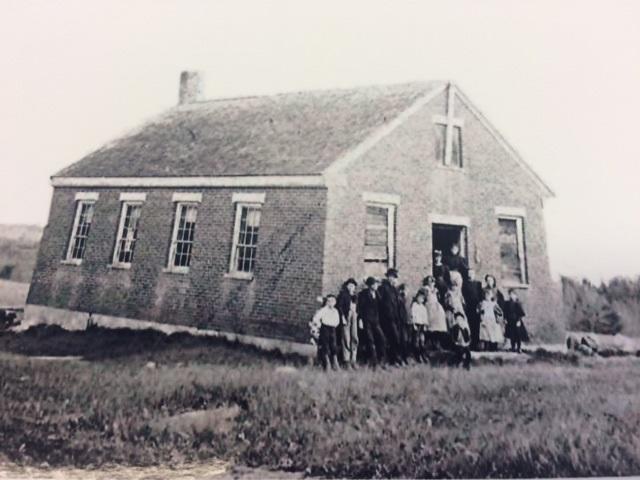
The Knight School, established in 1789, was the built for Windham’s District 6. Originally called the Amos Hawkes School, it was located on Pope Road.
Comments are no longer available on this story