
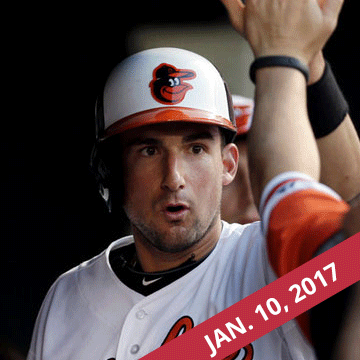
 Ryan Flaherty is one of only 77 Maine-born major league baseball players going back to 1872. He grew up in Portland and attended Deering High School, where he lettered in baseball, basketball and captained the football team. Flaherty excelled in baseball as a youngster with an assist from his father, Ed, the longtime baseball coach at the University of Southern Maine. Ryan was the 11-year-old batboy when the Huskies won the NCAA Division III championship in 1997.
By the time he was ready for college, Flaherty had been named Mr. Baseball in the state of Maine and ranked as the 141st prospect in the country by Baseball America. He landed at Vanderbilt University where he earned awards such as honorable mention Freshman All-American in 2006 and a second-team All-American in 2007. In 2008, he was selected 41st overall in the 2008 Major League Baseball Draft by the Chicago Cubs.
Flaherty played 322 games in the Cubs’ minor league system before being acquired by the Baltimore Orioles in December, 2011 in the Rule 5 Draft. He made the Opening Day roster and made his major league debut on April 7, 2012. Since then, Flaherty has become a versatile utility infielder with the occasional stint in the outfield. On August 20, 2016, he became the seventh position player to make a pitching appearance in Orioles history. He has a career .216 batting average, but has batted .281 in 11 postseason games. Describing Ryan’s value to the team, manager Buck Showalter said, “He’s always engaged in the competition. He’s just a baseball player. That’s the highest compliment I can give anyone.”
View video from the event below:
Video Recorded January 10, 2017

Glenn Jordan has been covering sports for The Portland Press Herald/Maine Sunday Telegram since 1994. When not holding a notepad, he finds time for checkers and pickleball.

Comments are not available on this story. Read more about why we allow commenting on some stories and not on others.
We believe it's important to offer commenting on certain stories as a benefit to our readers. At its best, our comments sections can be a productive platform for readers to engage with our journalism, offer thoughts on coverage and issues, and drive conversation in a respectful, solutions-based way. It's a form of open discourse that can be useful to our community, public officials, journalists and others.
We do not enable comments on everything — exceptions include most crime stories, and coverage involving personal tragedy or sensitive issues that invite personal attacks instead of thoughtful discussion.
You can read more here about our commenting policy and terms of use. More information is also found on our FAQs.
Show less