
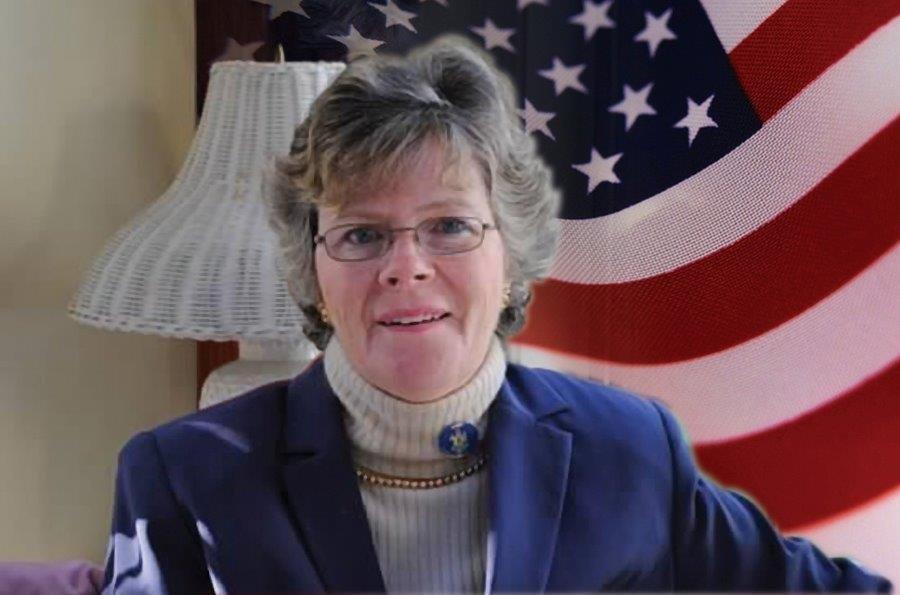
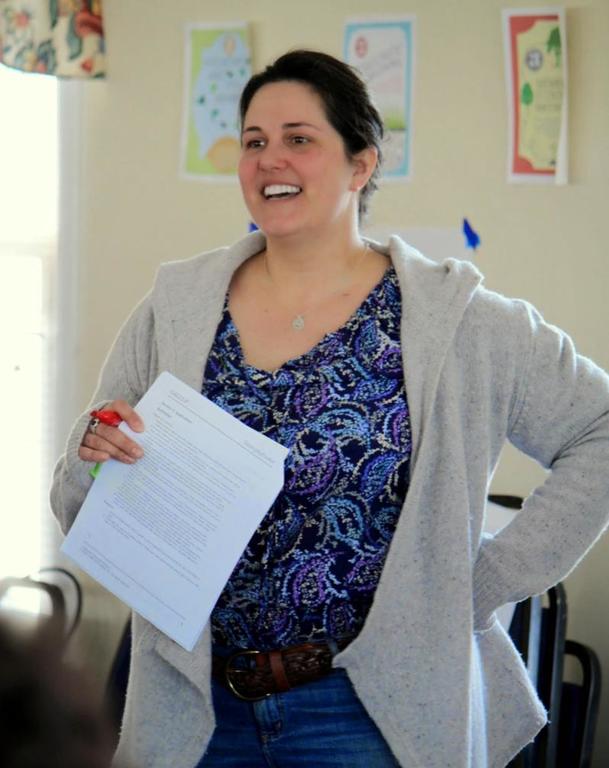
Sue Austin, a Republican incumbent from Gray, is running for re-election to Maine House District 67 against Rachel Lyn Rumson, a Democrat, also from Gray. District 67 covers Frye Island and parts of Gray, Casco and Raymond.
Austin, 68, is married with four grown children and 11 grandchildren. She has served four terms as a state representative, though not consecutively.
Rumson, 44, is an innkeeper at George-Perley House in Gray and a freelance program director for Cooperative Design Lab. She is a member of the Gray Planning Board and the Education Committee of the Maine Organic Farmers and Gardeners Association. She lives with her partner, Mike, and their son.
Austin said the biggest problems facing the Legislature are “the fundamental things we’ve needed to address for many years,” she said. One of those issues is over-regulation, particularly on business and education. Another is working toward being more positive and collaborative, she said.
The secession movements in Gray, and the Maine Narrow Gauge Railroad’s relocation efforts to Gray are important to Austin’s constituents, she said. She plans to act as a “conduit” between residents in the secession territories and the Legislature. She also said that if the Narrow Gauge Railroad hits a roadblock in its efforts to move to Gray, she would consider introducing legislation to help that get back on track.
In the face of high levels of opiate addiction across the state, Austin said the Legislature should review the effectiveness of current treatment methods and invest in the most effective. This way, she said, the Legislature can use limited funding in a “careful, pointed way.”
In response to the obscenity-laced voicemail left by Gov. Paul LePage for Rep. Drew Gattine-D Westbrook, in August, Austin said if a resolution is proposed in the next Legislature, she will read and consider the motion.
Austin said she will not be voting in favor of Question 1, to legalize marijuana for recreational purposes. As someone who served for more than a decade on the Maine School Administrative District 15 board and advocated for children’s health, she said voting to legalize the drug would be “completely contrarian to anything I helped to stand for for young people in school all those years.”
She said the opinion by Attorney General Janet Mills, who said Question 1 would make marijuana available to people under 21, “to me just clinched it.”
Question 2, to increase income tax on people with income $200,000 or greater by 3 percent to fund public K-12 education, does not have Austin’s support, she said. Austin said while she supports teachers and schools, she thinks Question 2 will hurt the state by discouraging higher-income professionals from moving to the state.
Austin does not support Question 3, to require background checks for private gun sales, because the proposed changes are “cumbersome, ineffective, and will hurt our sportsman and hunters, which are part of our Maine tradition.”
She is voting no on Question 4, to raise the minimum wage to $12 per hour from $7.50 per hour by 2020. Austin said the minimum wage increase “can’t be supported by the marketplace.” She also said eliminating the earned tip credit, as the bill proposes, would hurt wait staff and other tipped-workers.
Austin will not support Question 5, to introduce ranked-choice voting, because Mills’ opinion is that the bill is unconstitutional.
Ranked-choice voting would allow voters to rank candidates in order of preference. If no candidate wins by a majority, the last-place candidate would be eliminated and second- or third-choice votes would be taken into account until a candidate wins by a majority. Mills said it is unconstitutional because the constitution calls for candidates to win by a plurality, rather than a majority, of votes.
Austin will vote yes on Question 6, to appropriate $100 million in bonds for transportation projects, because transportation issues are “always at the forefront,” she said.
Austin said she will wait until closer to the election to make a decision about who she will support as a presidential candidate.
According to Rumson, the biggest problem facing the Legislature is that officials show “competitive behavior and not cooperative behavior. We need to collaborate to make politics work,” she said.
If elected, Rumson said she plans “to focus on systemic issues, and not party politics.”
When asked what issues are most important to constituents, Rumson said, “I talk about three things on the campaign trail: building the local economy, making education relevant, and protecting the environment. I have yet to meet someone who doesn’t value those things.”
In fighting opiate addiction in the state, Rumson said that “prescription drug restrictions need to happen, and they need to happen at the state level because the federal level is very influenced by big pharmaceuticals.”
Rumson said when addiction happens on a large scale, it’s because “our society doesn’t engage people, (and) then you’re going to have people trying to medicate themselves.” She said communities need to help people feel engaged, and “give dignity back to people who are suffering. We need to value their lives.”
When asked whether she would support legislative action against LePage, Rumson said she would consider it on a case-by-case basis.
Rumson said she will vote no on Question 1 because, if approved, it would encourage large companies from outside Maine to move to the state to grow weed, and Rumson said the practice is “not positive agriculture.”
Rumson she will support Question 2 because better education will “make the state a place people want to live.” However, she said she respects the argument that it will discourage people of a higher income bracket from moving to or staying in the state, which has been used by some people against the measure.
Rumson said she is voting yes on 3 to stop the trade of weapons on websites such as Facebook and Craigslist. She said, however, that she supports the right to carry a gun and “there need to be safeguards so families and friends are not overly burdened with expensive background checks for giving family heirlooms,” she said.
Question 4 has Rumson’s support, she said. She added that she would like to see a provision for working farms added so if the bill passes, “low-profit entities (such as farms) are not overburdened.”
Rumson supports Question 5, which she said will encourage more political participation. Maine has a strong independent voting base, she said, and the political system should reflect that.
She will “reluctantly” vote yes on Question 6 “because we really need to it,” she said. She said she is reluctant because the wear and tear on roads is largely caused by commercial vehicles, and “the taxpapyer pays.”
When asked who she would support as a presidential candidate, Rumson said she would “keep my vote private.”
Sue Austin
Rachel Lyn Rumson
Comments are no longer available on this story