
Not every job has duties both as exciting and daunting as “to love and serve people, love and serve God, help people connect to that which is sacred, and try to change the world.” But that’s exactly what the Rev. Emily Goodnow, the recently appointed pastor at the First Congregational Church in Bridgton, has taken on, she said.
A native of New Hampshire, Goodnow grew up attending the First Parish Church in Dover, and was ordained there in 2013.
Goodnow received a bachelor’s degree from Colby College, and a master of divinity degree from Yale University. In between, she worked in Bamako, Mali, with Save the Children and with Awne Be Se, a program she co-founded through Davis Projects for Peace. Those experiences, she said, were “hugely formative for who I am as a Christian, a pastor and a person.”
Prior to starting at Bridgton’s Congregational Church in mid-September, Goodnow served for two years as associate pastor of the First Congregational United Church of Christ in Salem, Oregon.
Goodnow was drawn to the Bridgton area in part for its natural beauty and her family close by, but “truly it was the church that brought me here,” she said. The congregation is made up of people who are “full of energy and life, who live out their faith in inspiring and sometimes even radical ways, and who have built community together in a way that is really life-changing to all involved,” she said.
The Lakes Region Weekly spoke with Goodnow about her inspiration as a pastor and what makes Bridgton’s Congregational Church stand out.
Q. What inspired you to pursue a career as a pastor?
A. I was called to ministry through joy, and I stay because of pain. My mom claims that when I was 12 I told her I had decided to be a pastor because it combines the things I loved most: God, people of all ages, worship, music, sacred story, poetry, creativity, the outdoors, service and community. I don’t remember this conversation, but do remember always feeling most alive doing things I would now call ministry; things like leading worship, caring for people in their last days, doing mission work and taking teens hiking to talk about nature and God. As I grew in my faith and waded further into the waters of ministry I found more joy, and also bore witness to deep pain as I served people experiencing grief, illness, addiction, depression, poverty, homelessness and violence. Some of these experiences shook me at my roots and further convinced me that we need people who are willing to show up at bedsides, gravesides, homeless shelters and city hall to minister to people in pain and to change the systems that keep us in cycles of poverty and oppression. I feel deeply called to be one of these people, and deeply grateful to get to do this work here in Bridgton now.
Q. What do you most want to preserve about the church community in Bridgton? What makes it a special place?
A. Two of our favorite sayings in the United Church of Christ (our denomination) are: “Whoever you are, wherever you are on your faith journey, you are welcome here” and “God is still speaking.” I think this church embodies both of these ideas. We have a rich history of welcome and acceptance of all people, and a commitment to a still-speaking God, by which I mean that we aren’t afraid of asking faith questions, and putting our sacred text in conversation with our real, lived experiences of God and our lives. This church’s values of welcome and inclusion, study and spiritual practice, children, music, mission, worship, community, prayer and justice are written into the fabric of who they are. Whatever we do going forward, these values will remain strong.
Q. What are some of the challenges facing the Congregational Church?
A. I think the whole world is asking interesting questions about what it means to be a Christian and what it means to be a church in 2016: How do we honor tradition while embracing new ideas and creativity? When our cultural narratives are all about consumerism and competition, how do we maintain counter-cultural space that can really keep love at the center? And when we’re all so busy and there are a thousand demands on our time, how do we prioritize spiritual life, renewal, Sabbath and time to be in community? These are challenges, and also opportunities to examine who we are and how we’re living.
Q. What’s your favorite story from the Bible and why?
A. I love the story in Genesis (32:22-31) where Jacob wrestles with the unnamed being who many scholars interpret to be an angel or God. I love this story because I love the invitation to be in such a real relationship with God that we’re not afraid to push back and wrestle, to ask for what we need, and to let ourselves be changed completely by this encounter with the divine. I also love the acknowledgement that such wrestling leaves its mark, and Jacob limps afterward. My biggest faith questions and times of wrestling with God have left a mark on me, too.
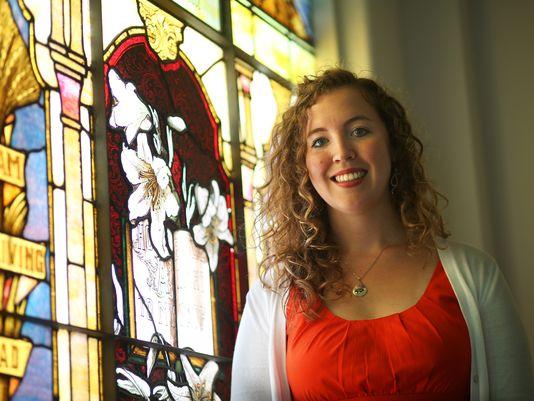
Emily Goodnow
Comments are no longer available on this story