
Browntail moth infestation continues to be a problem in coastal areas of Freeport, the Maine Forest Service has advised the town. It’s hardly news, as the caterpillars, whose hairs can cause severe rashes when they come in contact with people, have been plaguing the midcoast area for several years now.
Still, the Maine Forest Service wants Freeport residents to know how to combat the plague. For a third straight year, forest entomologist Charlene Donahue of the Department of Agriculture, Conservation and Forestry will address the problem of browntail moth caterpillar infestation in Freeport. Donahue will speak on Sept. 14 at the Freeport Community Library, from 6-7 p.m.
The Maine Forest Service projects high levels of browntail moth caterpillars will continue in Freeport through 2017. Donahue was not available to comment on the issue last week, but colleague Colleen Teerling, also an entomologist, indicated that browntail moths aren’t leaving Freeport anytime soon.
“This is one of the insects where the numbers rise and fall,” Teerling said. “In recent years, the numbers have been rising and rising in (midcoast) areas. There’s likely to be a problem next year, bigger than this year.”
Donahue will inform the public on how to identify browntail moth caterpillars and their overwintering webs, how to prepare for and control browntail moth caterpillars and precautions residents can take in affected areas.
Johanna Hanselman, general assistance administrator in Freeport, said that coastal sections of Freeport experienced a browntail moth infestation this spring, and the town wants to get this information out to residents.
“Once they’re wintered, it’s too late to take the necessary precautions,” Hanselman said. “Donahue will focus on identifying browntail moth webs, and prevention.”
Teerling advises people to monitor trees on their property for webs in early winter, when the leaves have fallen. Oak trees are prime targets for the moths.
“It is a tree problem,” she said. “It can cause defoliation with trees. Don’t wait for spring. Don’t wait for there to be a bigger problem. Contact your arborist in the winter if you can see there’s going to be a problem. The caterpillars are actually hatching right now, and they’re beginning to feed.”
Teerling said that the Maine Forest Service monitors suspected problem areas in January, February and March.
“The caterpillars are out in May to mid-June, but the hairs are still floating around after that. The problem can last until the end of July. Freeport has been bad for a lot of years. Now they’re expanding northward.”
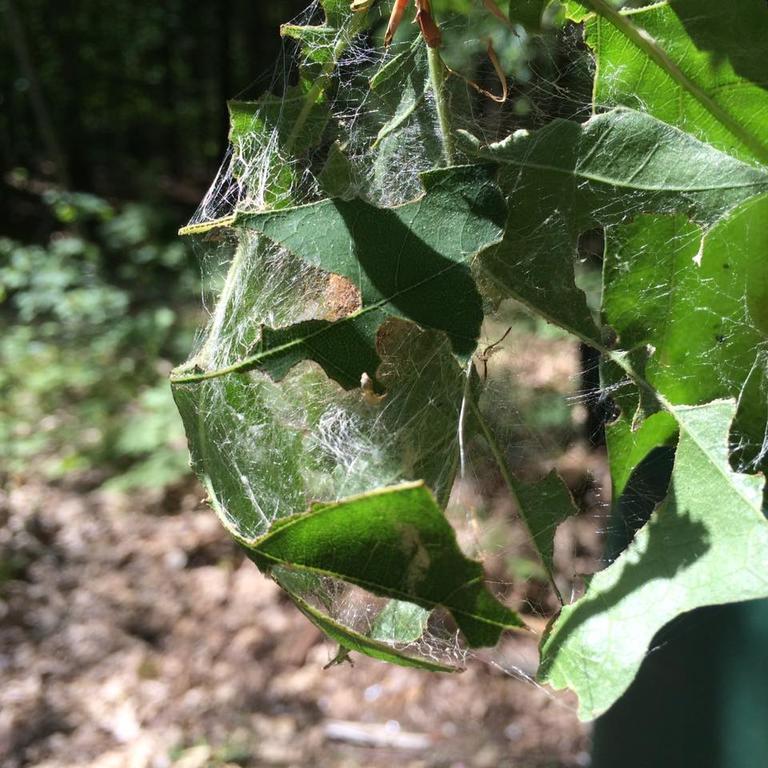
Oak leaves infested by browntail moths.
Comments are no longer available on this story