
Sappi Fine Paper in Westbrook has agreed to establish eel passage at Eel Weir Hydroelectric Dam in Windham by March 2017, following a settlement between the paper mill company and Friends of Sebago Lake, a citizen environmental group.
The mill applied on Feb. 25 to the Maine Department of Environmental Protection for an extension to the March 2017 deadline for establishing eel passage at the dam. The deadline was set when the dam license was reissued two years prior by the Federal Energy Regulatory Commission. The DEP approved an extension so that Sappi could conduct studies to find eels. However, the Friends of Sebago Lake appealed that decision.
A settlement between Sappi and the Friends of Sebago Lake keeps Sappi with the original deadline to implement eel passage. The Friends of Sebago Lake has agreed not challenge Sappi’s extension to deadline establishing upstream fish passage at Saccarappa dam in Westbrook. The Department of Environmental Protection recently approved a one-year extension of the deadline to establish passage at Saccarappa until May 1, 2018.
As grounds for extending the deadline, Sappi’s hydro manager, Brad Goulet, explained at a public hearing on the application in December that there were no eels were spotted during a three-day study of eel patterns in July 2015.
Without the guidance provided by the study, the paper company will establish an eel ladder for passage on the east side of the dam, in part due to the level of water flow.
The study required Sappi to observe Eel Weir Dam just downstream of the structure on three nights in July 2015. The eel-watchers searched the waters with flashlights. The study was developed in collaboration with the Department of Marine Resources.
Sappi wasn’t denying the presence of eels generally in the Presumpscot River, Goulet said at the meeting, but maintained that in order to establish eel passage, the company would need to know what area of the dam the eels naturally migrate to. Because there were no eels at the time of the study, he said, the company could not make an informed decision about where to implement eel passage.
When they failed to locate eels at the site, Sappi requested they be allowed to search for eels once every three years, starting in the summer of 2018. The decision to wait three years in between studies was also approved by the Department of Marine Resources.
In an appeal filed June 1, Friends of Sebago contended that the study the paper company based its decision on was insufficient. For this reason, Friends of Sebago said it intended to conduct its own eel study in July 2016.
Doug Watts, a member of Friends of Sebago, said the group rallied to have eel passage implemented as soon as possible because it’s important for environmental health.
“It needs to be there,” he said. Without eel passage, “it’s incredibly difficult for the eels to get (to Long Lake),” he said, although they are able to wiggle through cracks in the dam.
Gail Wippelhauser, scientist at the Maine Department of Marine Resources, said in December the study to determine eel patterns was sufficient and delaying the implementation of eel passage would not be a serious detriment to the aquatic life.
Watts said the agreement between Friends of Sebago and Sappi “is a very positive movement forward. It shows we can work together.”
He said he hopes “this type of agreement can be a model for dealing with other issues in the watershed.”
John Williams, Sappi consultant, said in an email the company “hope(s) that the settlement will result in a new, more collaborative relationship with Friends of Sebago Lake.”
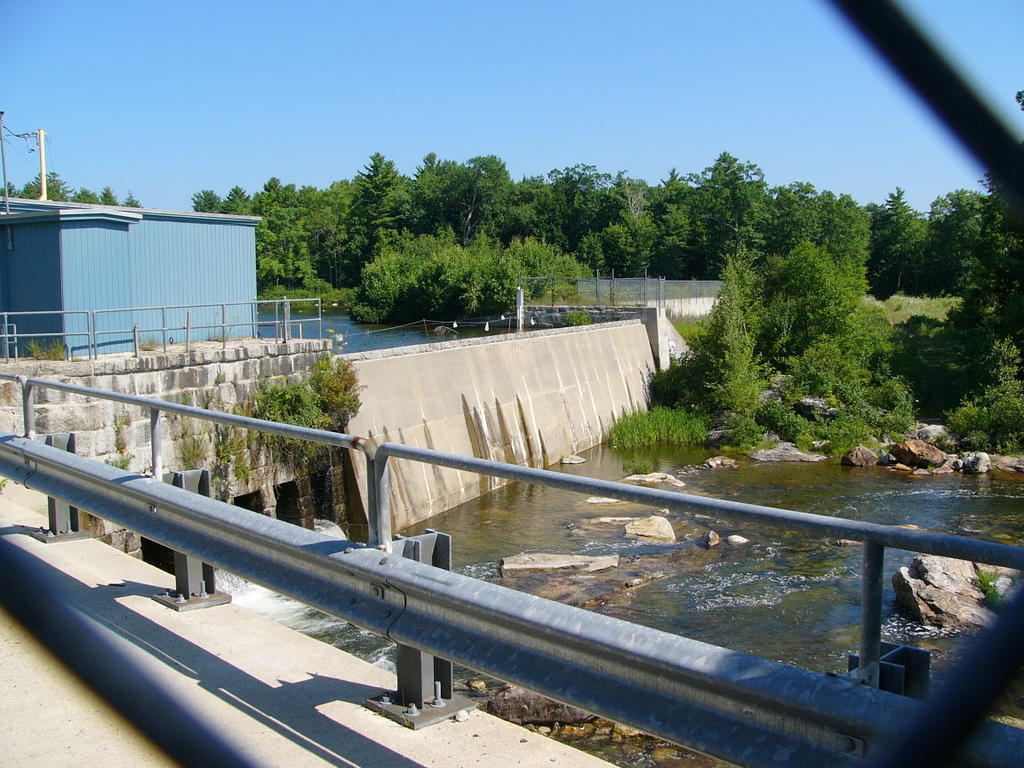
Westbrook-based Sappi Fine Paper will implement upstream eel passage at the Eel Weir Hydroelectric Project in Windham, above, following a settlement with the Friends of Sebago Lake.
Comments are no longer available on this story