
Many of the goals and visions for the town may be the same, but Windham is taking a new approach to writing its comprehensive plan by making it more accessible and user friendly.
The comprehensive plan establishes the town’s vision for the future and outlines a path to that future, according to Ben Smith, Windham’s town planner. Since the town wrote its 2003 comprehensive plan, a 200-plus page document detailing all of the town’s goals, there has been “a shift in thinking on what makes a good plan,” said Smith.
“Whether it’s accessible and understandable, and how much is implemented” is what counts, he said.
The draft of the new comprehensive plan, finalized earlier this summer, is 116 pages long thus far. However, just looking at the first few pages – where the goals and vision for the town are distilled into a few bullet points and graphics – can give someone a good working knowledge of what the plan hopes to accomplish.
The comprehensive plan’s primary function is as a land-use plan, Smith said, which for Windham means steering development to designated growth areas and away from the rural zones.
In shifting the focus of the plan to its overarching themes, rather than planning the minutia of every goal, Smith said the town and Comprehensive Plan Review Team hope the plan will be more readily implemented than the document finalized in 2003.
According to figures provided by Smith, roughly 11 percent of the town’s goals from the 2003 comprehensive plan have been fully implemented and 30 percent have been partially implemented.
To effectively implement the goals of the comprehensive plan going forward, “the town decision-makers need to own it,” Smith said, and integrate the plan into the council’s regular business and goal-setting.
“We can’t let people forget about it,” Smith said.
The new comprehensive plan is distilled into four major goals and “core values” that are more easily disseminated among and remembered. The town has created a graphic that illustrates four of the plan’s major goals: developing North Windham; concentrating growth in the growth areas of the South Windham Village, North Windham and Windham Center; preserving rural Windham; and further developing the town’s access to recreation. In one effort to promote the plan among residents, the graphic has been printed on recyclable bags that have been distributed in the community at events such as Summerfest, held in June.
These goals and six “core values” listed in the draft plan emerged from the town’s community vision work during 2014 and 2015. This work involved a community-wide survey mailed to each business and residence in the fall of 2014, as well as multiple brainstorming sessions and public hearings, according to Smith.
While the comprehensive plan is primarily a land use plan, “the town has the chance to make it its own,” Smith said, to reflect the desires of the community.
Smith said this visioning work is the best substitute for getting all of the community in the room at every council meeting. The plan can provide council members with a rationale for making decisions and assurance the community will support them.
Going forward, Smith said, the town and comprehensive plan committee are organizing meetings with community groups and with the general public. They will take public feedback on the plan and look to have a revised document in place by October, when they are organizing a large community meeting. Smith projects the finalized plan will be submitted to the council by the end of the year.
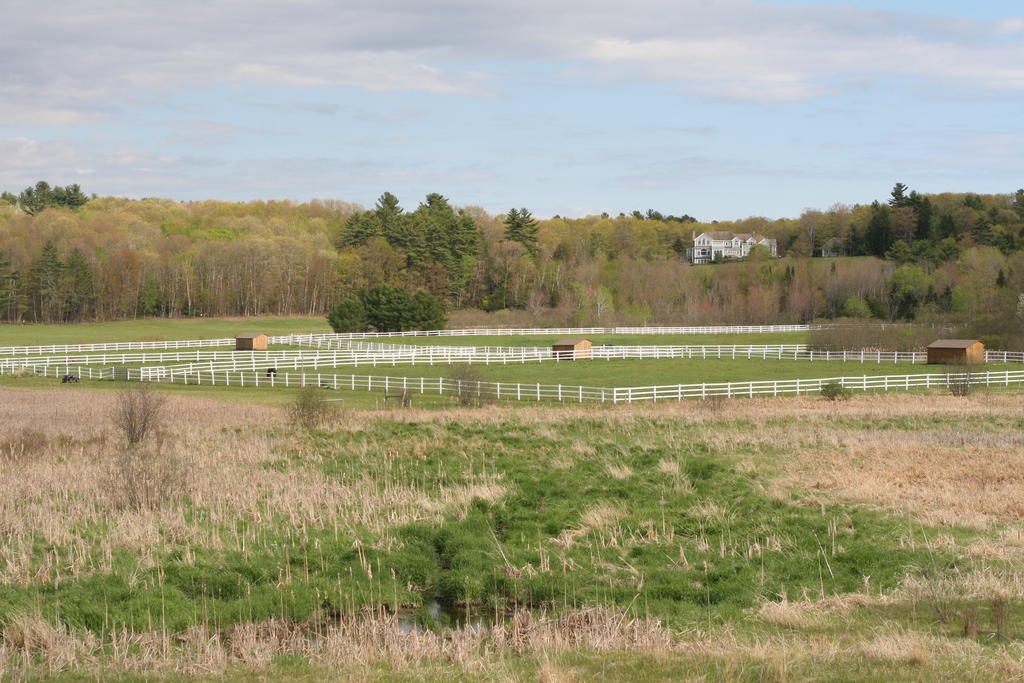
The Pringle Farm Wildlife Preserve, above, has views of Windham’s farmland along River Road and Windham Center Road. The draft of the town’s comprehensive plan, which is open for community input this summer, aims to preserve working farms like the one above.
Comments are no longer available on this story