
Thom Perkins, executive director of the Bridgton-based Loon Echo Land Trust, doesn’t mind commuting.
“I do a lot of thinking,” said Perkins, who lives in Intervale, N.H., “and I see some neat stuff. I’ve been avoiding Route 302, and finding roads of interest to go back and forth.”
Perkins, who has worked in nonprofit trails systems in New Hampshire for nearly 40 years and previously served as executive director of Jackson Ski Touring Foundation, was appointed director of Loon Echo in mid-April. He replaced Carrie Walia, director of the trust for eight years, who moved to Wisconsin with her family but stayed on at the trust until June 24 as senior advisor.
The land trust is a non-profit committed to land conservation in seven Lakes Region towns: Bridgton, Casco, Denmark, Naples, Harrison, Sebago and Raymond.
Perkins and the Loon Echo team closed a deal with Hancock Lumber Company last month for the purchase of the Raymond Community Forest, a 356-acre property east of Crescent Lake bisected by Conesca Road.
“With the support of a lot of people including Kevin Hancock, president of Hancock Lumber Company, the grant-makers, and all the people who donated their time and efforts, the Raymond Community Forest is now a fact,” Perkins said.
In early June, Raymond’s residents voted at their annual town meeting to approve $6,800 for the purchase of the forest. That sum, plus a $30,000 grant from the Open Space Institute helped the trust reach their fundraising goal of $680,000 and allowed for the purchase of the property.
Perkins, who plans to stay in New Hampshire but move to Center Conway in August, spoke with the Lakes Region Weekly about future plans for the Raymond Community Forest and about his job at Loon Echo.
Q. Now that the Raymond Community Forest has been purchased, what’s next for project?
A. We’ve completed a draft management plan, a forestry management plan and scientific studies, so we’re blending that together and right now in the process of finalizing the development of trails on the Pismer mountain side of the property. We’re planning to make those trails available to the public in early fall. Then at the same time we’re working on the development of locations for multi-purpose, multi-use trails on the lowland side of the property near Crescent Lake. Of course we’re being very sensitive to the forest community – there are rare endangered plants in the forest there on the mountain side, and vernal pools and other important land features – so we’re making sure those will stay protected when we do recreational planning and forestry planning.
Q. How did you get started in environmental work?
A. I was a child of the ’60s, and the environment has always been important to me. My previous job at the ski area was working with a lot of different landowners and treating their land well, while also trying to preserve land resources for the ski area. That work translates pretty well to what we do at Loon Echo Land Trust. It’s different in that the main focus is preservation of land at Loon Echo Land Trust, and there’s a recreation component, whereas the recreation component was the main focus of my previous work. But I’m able to offer a lot off the bat (at Loon Echo), like negotiations with landowners.
Q. What brought you to LELT?
A. I had retired from my work at the ski area, but after two years I felt there was more I had to offer. Loon Echo Land Trust had some needs and I thought it would be a nice thing to try to offer what I do to the organization, and do something of significance.
Q. Do you have any issues you want to tackle or big projects you want to take on as executive director?
A. There are several parcels of land that have been brought to us by owners interested in conservation. It’s a big process for the trust to acquire land: there’s an evaluation process, where it goes through several committees. Then if we’re going to purchase the land there’s a substantial fundraising time-frame. If the land is donated it eases things up somewhat.
With its partnering communities, Loon Echo Land Trust created a ‘community greenprint,’ which identifies special places that should be preserved, so if they are available they should be made a priority for conservation.
We approach the planning process for preserving land with a very long-term view, because when you preserve a piece of land, it’s preserved forever.
Q. How does it feel to know you’re preserving something forever?
A. It’s very satisfying. I tell volunteers ‘The trail you’re building today is something you should be proud of. It’s here for future generations and they may not know your name but they will see it and be grateful.’
Q. What do you do in your spare time?
A. I play music professionally: my wife and I have a group called Bennett and Perkins. We play acoustic Americana and Folk music and we both play guitar. Loon Echo Land Trust has a series of music performances on Hackers’ Hill, called Hacker’s Hill Acoustic Sunset, and we’re donating a concert for that on July 14.
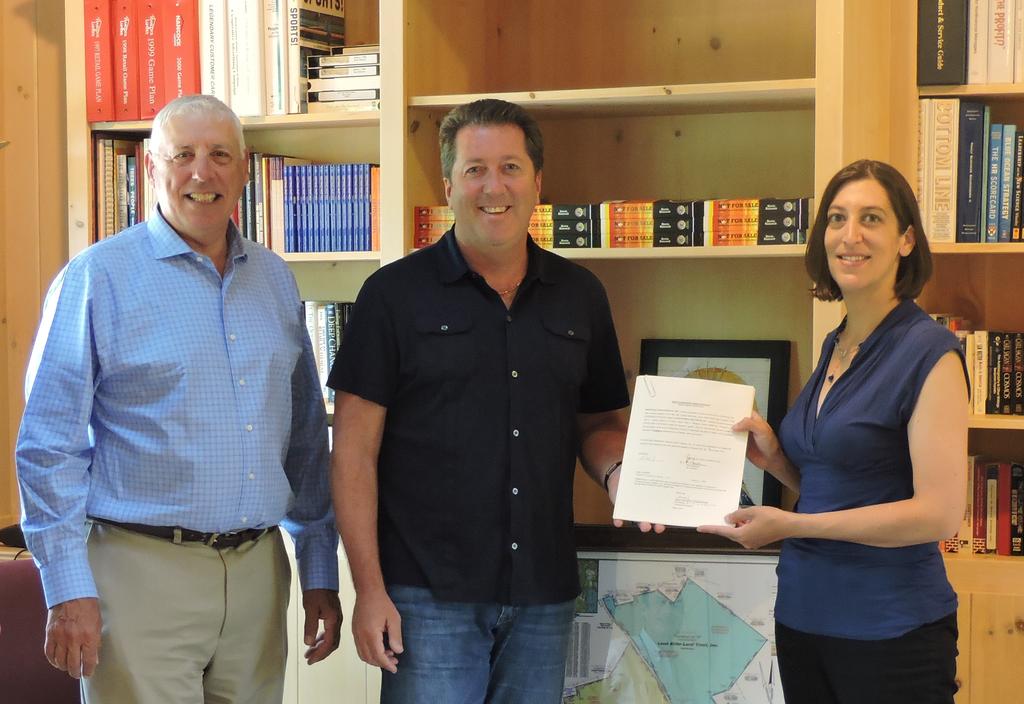
Executive Director Thom Perkins, left, stands with Kevin Hancock and Carrie Walia after signing the deed for Raymond Community Forest.
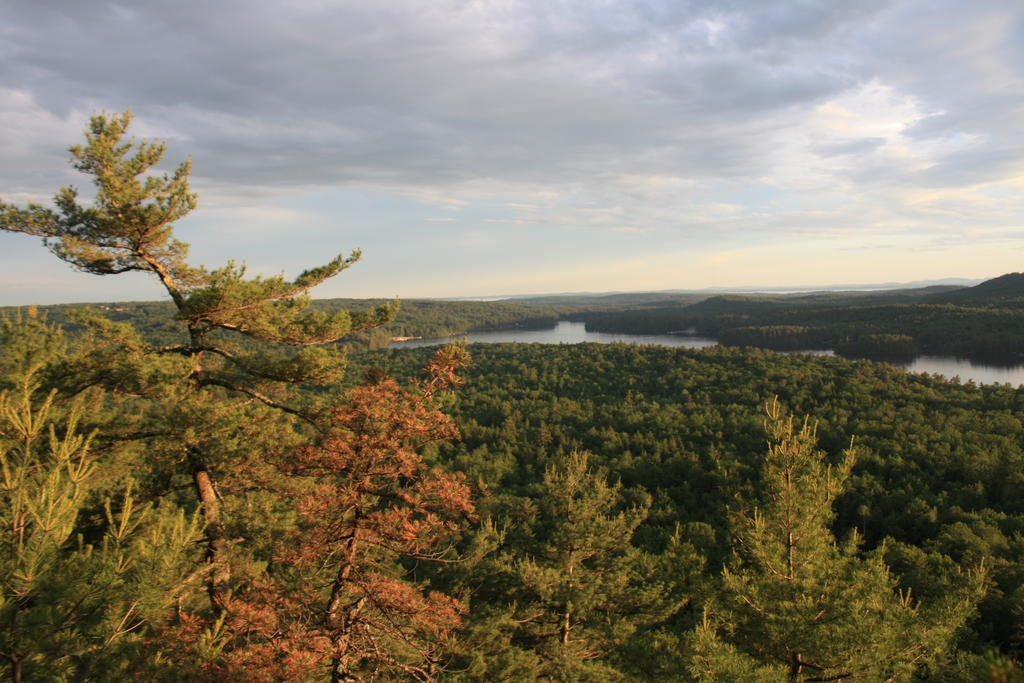
The Raymond Community Forest
The Loon Echo Land Trek
The Loon Echo Land Trust hosts its 16th annual “Trek” on Saturday, September 17, starting and finishing at the Shawnee Peak Ski Area. The Loon Echo Trek boasts the toughest 100-mile bike ride in Maine, and also offers 25, 60 and 80-mile routes for road cyclists. Hikers can choose between 4.5 and 6 miles routes along the ridge line of Pleasant Mountain, and Trekkers can choose to do it all with a hike and bike option.
A post-Trek party will be held at Shawnee featuring a taco bar, Allagash beer, massages from Richard Bader Physical Therapy and live music from local band Junco. More information and a link to registration can be found at loonechotrek.org. For more information about upcoming Loon Echo events, visit lelt.org, or call 207-647-4352.
Comments are no longer available on this story