
Walking through the Maine Correctional Center in South Windham – from the entrance at Mallison Falls Road to the Women’s Center at the opposite end of the facility, about a quarter mile away – is a trip through time and different models of incarceration.
“Most modern facilities now don’t look anything like this,” said Warden Scott Landry, while escorting a Lake Region Weekly reporter through a security gate that separates the administrative offices from another section of the main building.
Landry has worked with the Maine Department of Corrections for 15 years, and has overseen the correctional center on River Road since 2014. With the state, he is working on a $173 million proposal to renovate much of the prison, addressing safety and security concerns, structural deterioration in some of the center’s main buildings and overcrowding of inmates.
The large-scale proposal, which was first presented to the state about two years ago, has generated a considerable amount of state and local interest and was once again discussed in a legislative committee hearing earlier this week.
The department’s latest call is to shave roughly $20 million from the proposed cost, Landry said, although whether this is possible “remains to be seen.”
Joseph Fitzpatrick, the department’s commissioner, said the new plan decreases the footprint of the proposed campus by building additional stories on some of the administrative facilities, a move that will not compromise the security or safety of prisoner housing, he said.
Last week, Windham’s legislators testified in support of the proposed renovations for the prison, which they said will bring necessary improvements to a center plagued by water damage, crumbling masonry and outdated structures. Fitzpatrick said the architects working on the Windham prison’s redesign plan will present the new cost to the legislative committee on Wednesday, Feb. 17. The Legislature has the final say on funding any overhaul.
In reworking the proposed renovations for the center, Fitzpatrick said, the department is “careful not to compromise programming space, because the major mission of the center’s expansion is to provide more programming space and therapy options in the department of corrections.” Part of that new programming could include care of forensic patients from Riverview Psychiatric Center in Augusta, although the commissioner said the plans for renovation do not include a treatment center for these patients.
With the Windham prison slated for possible renovation, interest in the sprawling campus is high, especially from those concerned that forensic patients could be moved there. Besides state legislators recently taking a tour of the building, and public hearings publicizing possible renovation, the Windham Town Council, accompanied by prison staff, took part in a site walk in late January in an effort to understand the layout of the complex and structural issues facing the aging buildings.
The recent Lakes Region Weekly tour with Landry covered the history of the complex and the various programs that are housed there, as well as provided a telling glimpse into physical decay that state officials are aiming to address.
Prison layout
The prison – a collection of 15 mostly brick and stucco buildings – has been modified numerous times since it first broke ground in 1924. From the center’s entrance at Mallison Falls Road, the buildings are constructed in a loose line in a southerly direction, along a hilltop above the Presumpscot River.
The four buildings closest to the road, some of the center’s oldest facilities and built with bricks manufactured in Windham, include an administration and security building, a facility that includes housing and treatment for the substance-abuse program, a separate dorm that houses medium-custody male inmates, and the academic and vocational building. These four buildings, constructed in a circle around a small exercise yard, are separated from the rest of the facility by a white concrete wall a little more than one story high with a sliding, black door.
To the south of this gate is a long building that holds the cafeteria. To the west of the cafeteria, forming a semicircle on the perimeter of a small, grassy yard, are four dorms. These four buildings house the center’s sex offender program, medical services and provide additional housing for male inmates.
To the south of the four dorms is another building with medium-security housing for men, and, to the east, a separate multi-purpose building houses the intake program for the state’s prison system. After sentencing in the courts, every inmate is sent to the intake building before being placed in one of the state’s seven prisons.
The Women’s Center, the furthest structure extending south from Mallison Falls Road, is a stone-gray building with two long wings splitting off from the central section. The center was constructed in 2002, and illustrates “a more modern approach to corrections,” said Landry. With the exception of some women housed at the intake facility, all of the women at the correctional center are incarcerated at the Women’s Center.
Substance-abuse
A three-story building connected to the administration and security facility houses the prison’s substance-abuse program. Two areas of the building – one being the staff’s locker room – are not used due to deterioration. On the third floor of the building, an area of cells sits empty, except for boxes and manila envelopes of files stacked inside the cells. Landry said the cells are “not appropriate to incarcerate anyone,” due to their age. Their new role as ad hoc storage closets helps make up for a lack of office space, although Landry said it’s “not ideal.”
The substance-abuse facility is one of the few areas at the center where a dedicated room for treatment programs is in the same building as the housing unit. Landry said this is beneficial for the program, but the condition of the building is sorely lacking.
There aren’t enough showers per inmate, according to Landry, and in the cells, there’s not enough uncovered square feet per occupant. Moderating the building’s temperature is difficult, he said. In the summer the rooms are extremely hot, and in the winter, ice forms on the windows, Landry said, adding that the facility struggles to meet American Correctional Association standards.
Jack Hardon, a corrections officer who has worked at the center for years and remembers when it was a working farm, said the facility faces leaking and flooding from heavy rain and plumbing issues.
“We’d rather just take this facility offline,” he said.
The staircases – which are narrow and have limited sight lines – are another security and safety concern, Landry said.
“You want to be able to have an officer somewhere who can see everything that’s going on,” Landry said. “You don’t want close corners and areas where you can’t run a wire to put a camera in.”
Landry said the buildings are expensive to maintain “because they’re not energy efficient and they’re constantly having leaks and the masonry is coming apart. There are so many issues with these buildings that to get them to modern standards, renovating these buildings would cost more than starting over.”
Highest-security
Across the courtyard from the main building is the dorm for the highest-security inmates at the correctional center, a facility that was also built in the 1920s.
The building’s brick exterior has been covered with an off-white stucco, and a green sign above the door reads: “Security Building.” Most of the prisoners here are considered medium-custody, although there are close-custody (also known as maximum-custody) inmates and those serving a life sentence, some of whom had a conflict at the Maine State Prison and had to be moved. The inmates in this facility have “more behavioral concerns,” said Landry.
From the entrance to the dorm, two wings of the facility break off to the left and right. Each wing is a long and rectangular, with cells along the perimeter and picnic-style tables in the center. Both wings have a gate, and on the day of the tour, the gates were open. Two officers stood at the gates, monitoring the inmates as they walked around, talking.
The voices of the inmates and officers echoed off the concrete walls and reverberated throughout the building, creating a constant, low roar. Landry said in the evening, when nearly 100 inmates are in the dorm, it’s “so loud you can’t hear yourself think.”
The facility is outdated, Landry said, and doesn’t reflect the modern approach to incarceration, which is to focus on rehabilitation of inmates.
“You want to have functional programming space that’s close to where the offenders live,” Landry said. “Anytime you have to move the inmates it’s a security issue. You want staff right there who can work with them, manage them and get them into programs to deal with the issues that got them in here.”
Landry said the idea that prisoners sit in their cell all day is “kind of an old-school idea of prison. That’s not how facilities are run anymore. Inmates go to school, they have jobs. There’s all kinds of activity that goes on.”
Landry said the more modern approach to corrections is part of the effort to decrease recidivism, which, in criminal justice, describes a relapse into criminal behavior following punishment for a crime.
Many of the inmates’ daily activities take place in the academic and vocational education building. Inmates wash and dry massive amounts of laundry that the facility generates in a room that features four industrial washers and six industrial dryers. They also make graphic designs for a number of the state’s departments, including corrections, in a room with computers and a color printer. There is a library and a classroom in this building, where inmates can study to get their high school diploma equivalency. The focus is on developing new skills that may be marketable when the prisoners are released and return to the workforce.
Sex-offender program
On the other side of the gate, there are four dorms – long, one-floor buildings similar to a ranch-style home – built in a semicircle around a small courtyard. Landry said these dorms, built in the 1970s, were intended to be used for about 20 years.
These buildings, and all facilities built in the 1920s, would be demolished and replaced if proposed plans for renovating the correctional center are approved.
One of the dorms hosts an intensive program for sex offenders with long sentences. The program has been around for about 10 years and, according to Landry, is recognized nationally for its high success rate. About 30 inmates can be treated in this program at a time.
Landry said while this facility is not considered “modern,” it’s more functional than some of the older buildings. The dorm has a conference room where inmates can meet for programmed events, and staff are on site to work with prisoners.
The living quarters are tight, however. In a hallway without doors, five beds are crammed onto one side, but the common area has chairs with modest cushions, a TV and natural light.
Medium-security
Additional medium-security housing located to the south of the sex offender program can hold 85 inmates. The facility was built in 1989, and, according to Landry, illustrates how newer facilities are built to maximize security.
From an officer’s seat in the middle of the facility, a corrections officer can see down all four of the hallways. This means one officer can attend to double the amount of inmates in a more secure setting, Landry said, thereby eliminating some of the security issues related to visibility in the campus’ older facilities.
The building is useable, but “needs some renovation,” according to Landry, who said the cells house up to four inmates each, and the doors don’t lock. Landry said they house inmates who are “better behaved” in this dorm, but the lack of locks is a definite security problem, especially if there is a “management issue” on the floor, he said.
The Women’s Center
The Women’s Center, which houses 78 women, is further south of the medium-security housing. All of the women’s needs can be met in this unit, which allows for “sight and sound” separation of women and men. This is considered crucial for the prisoners’ safety, Landry said.
The women’s facility is designed so that one officer can see all hallways when standing at her desk in the center of the facility – similar to the medium-security facility built in 1989. The Women’s Center was built in 2002, and, other than the police officer in the center of the building, looks a little like a college dorm. There’s a dining hall, a “day area” with cushioned chairs and natural light, a room for programming and continuing education, and a room with sewing machines where the women do embroidery and alter clothing. There are no bars on the windows, and the Women’s Center seal – a dove breaking free of a chain – is painted on the wall.
Although the facility is relatively new, it can no longer house all of the women at the center, due to an increase in the number of women facing incarceration in recent years. About 50 overflow women are housed in an area of the center’s intake facility, disrupting the sight and sound separation between men and women, Landry said.
In the women’s center, program staff, including case workers, unit managers, substance abuse counselors and nurses, are all on the floor where the inmates live.
The facility “feels more like a living space than a box,” Landry said.
He said while some people may not see this as important, it’s in fact crucial to reducing recidivism and combating the mental health issues many of the women face.
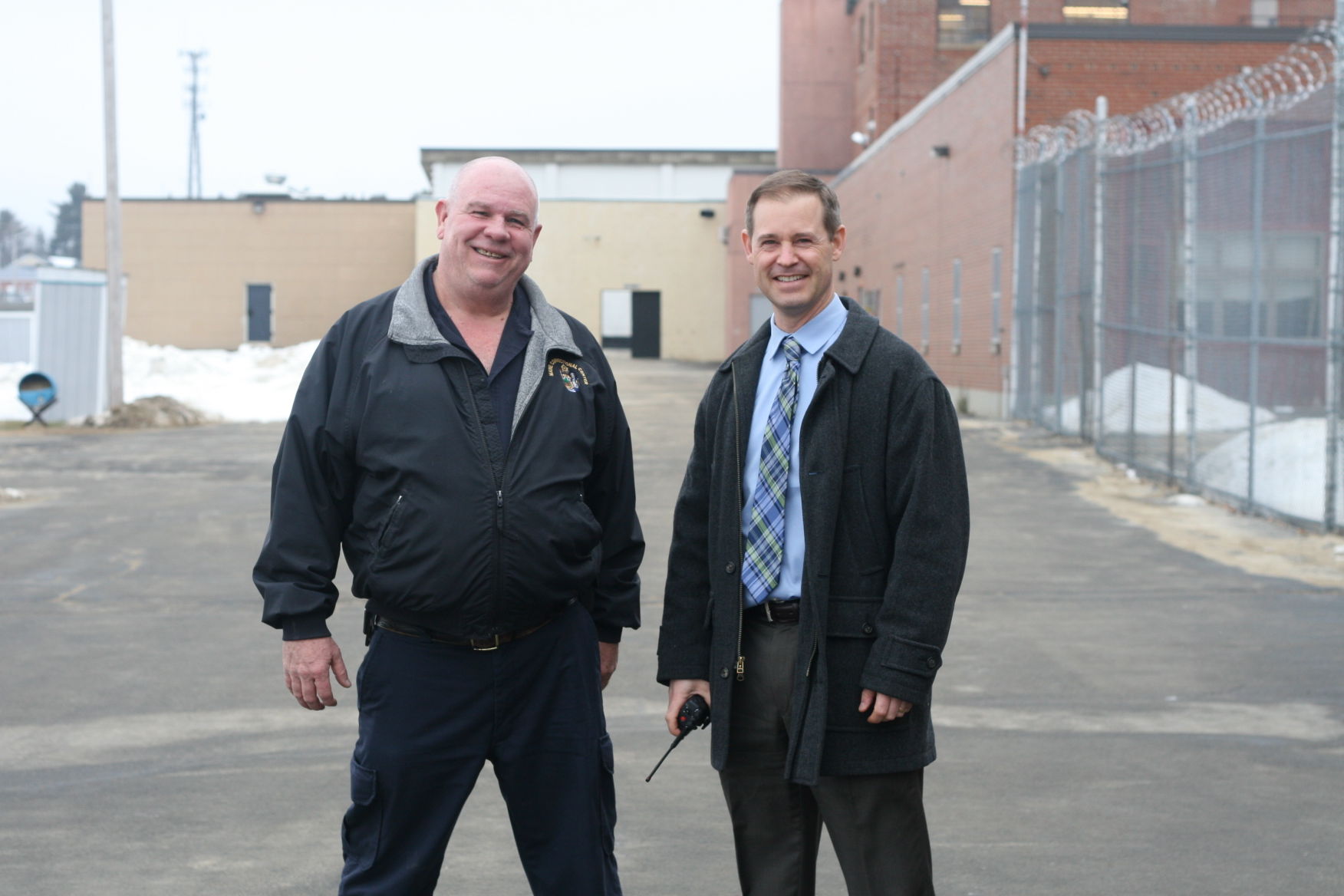 Jack Hardon, left, an officer at the center, and Warden Scott Landry, right, giving a tour of Windham’s correctional center.
 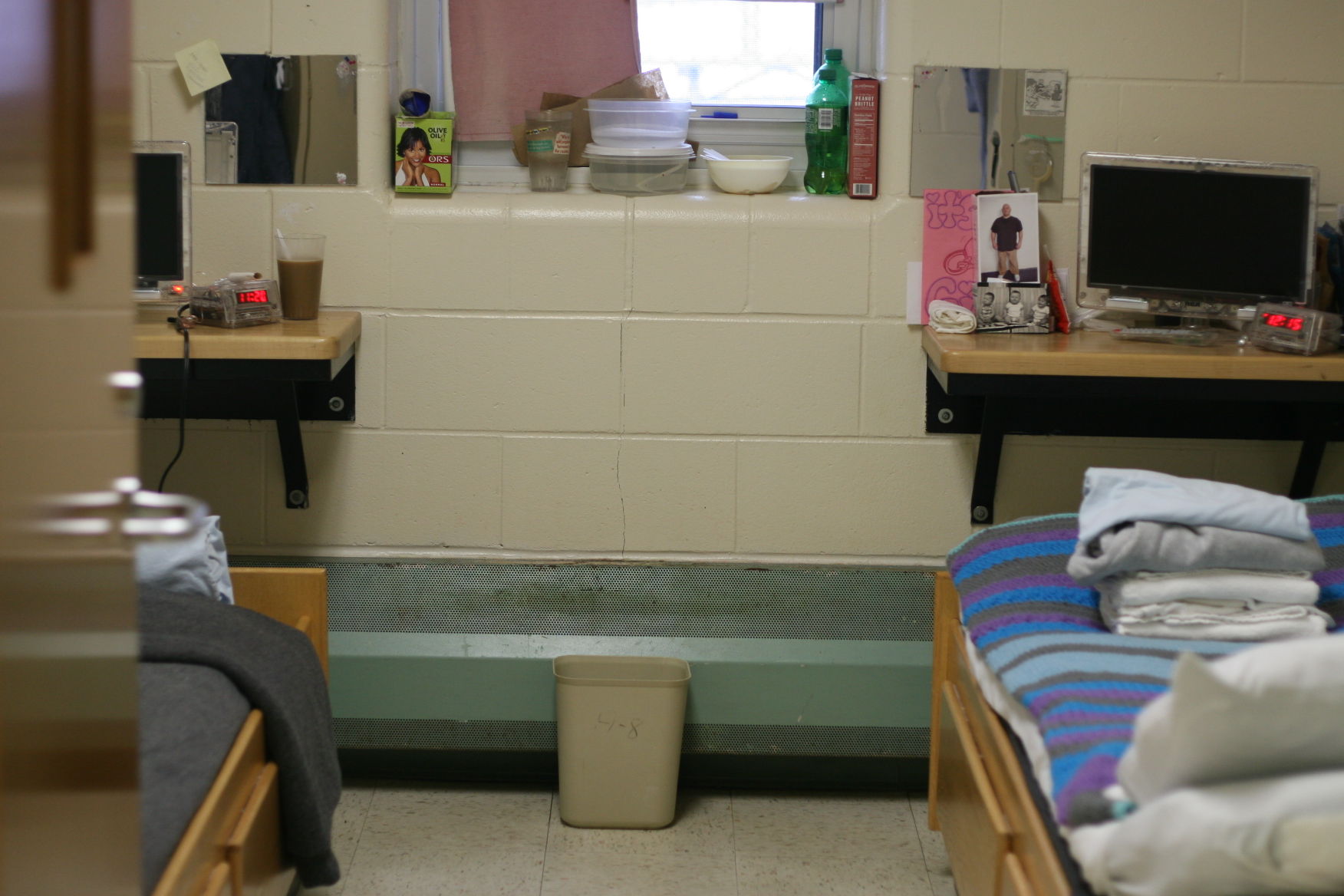 A cell in the Women’s Center shows “a more modern approach to corrections,” Warden Scott Landry said. The small televisions pictured are available for inmates to purchase, he said.
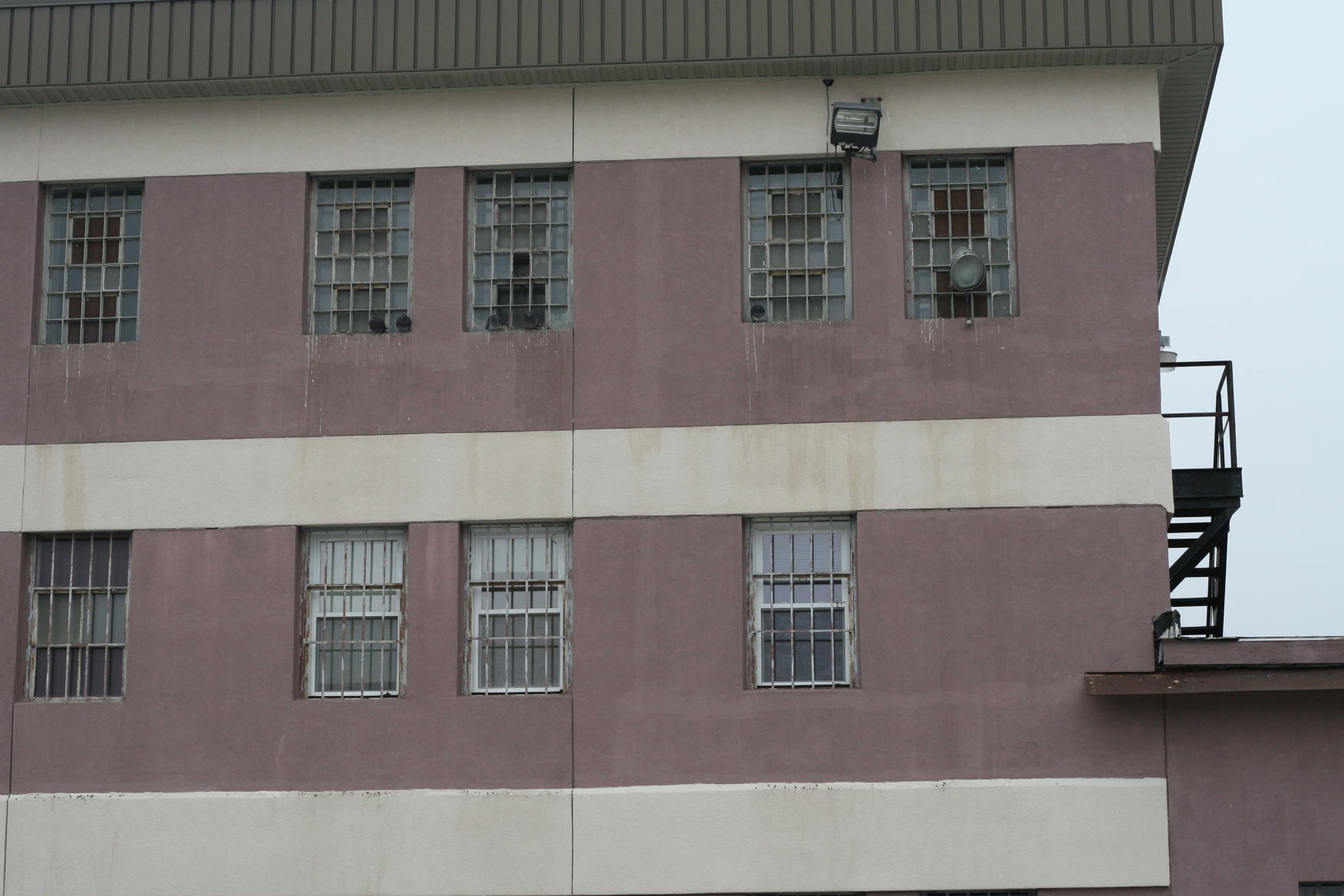 In one of the center’s oldest facilities, an area of the third-floor has been taken off-line. According to Warden Scott Landry, the pigeons shown above can crawl through the deteriorating windows and become trapped in the facility.
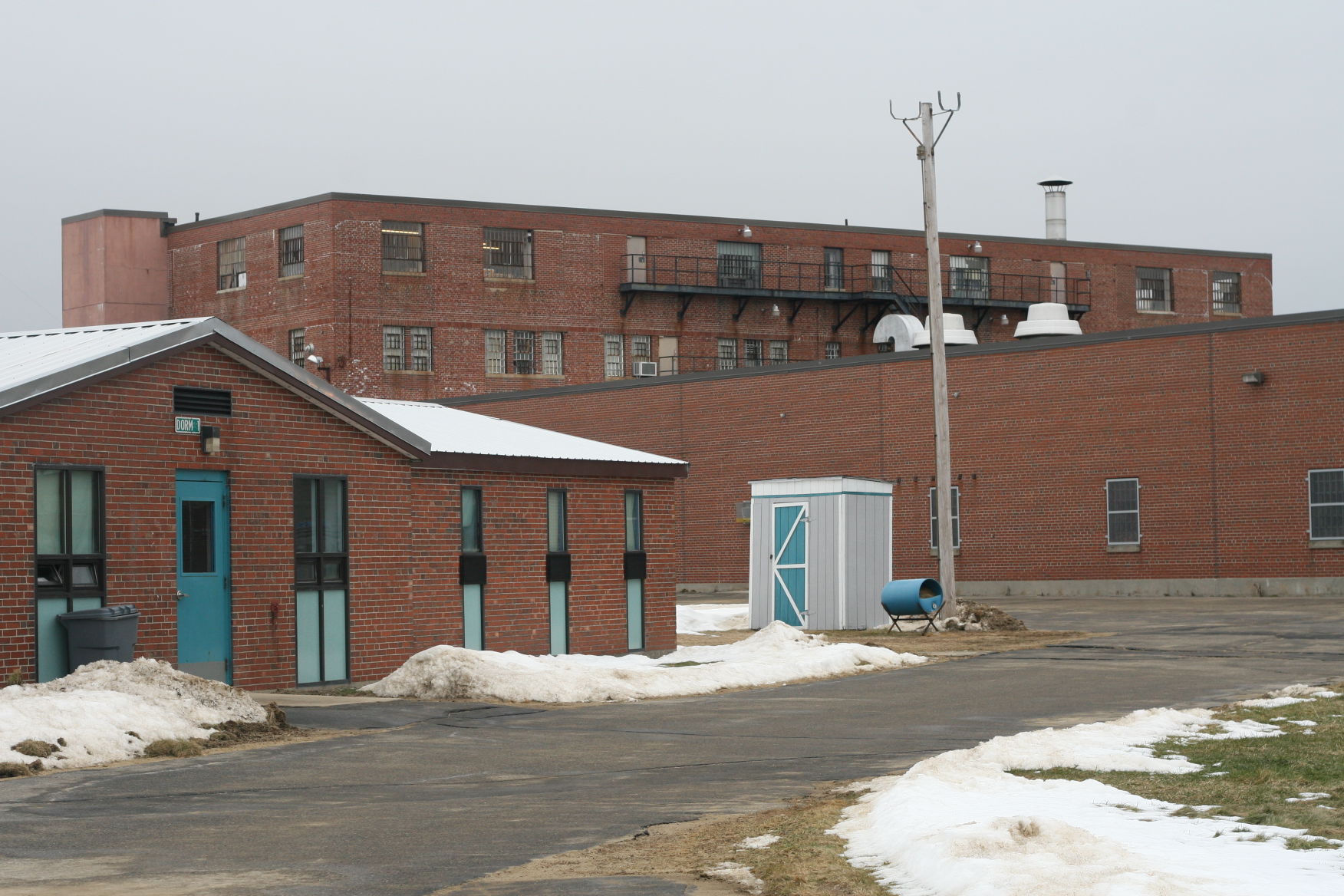 A dorm at the Maine Correctional Center in Windham houses 30 inmates on the waiting list for the sex offender program. Behind the dorm is the cafeteria building, and, beyond that, a three-story building that holds academic and vocational education services.
Comments are no longer available on this story