
The town of Sebago has begun the lengthy process of withdrawing from School Administrative District 61, which also includes Naples, Casco and Bridgton.
A petition requesting withdrawal from SAD 61 obtained about 340 signatures, almost 250 more than required, according to Denise Olsen, who serves as head of Friends of Sebago Elementary, as well as the town’s recreation director.
The withdrawal initiative was discussed at a school board meeting on Jan. 11. The proposal will be put to a public ballot vote on Tuesday, Feb. 2. The vote would authorize the town to file a petition with the school district and the Maine commissioner of education seeking withdrawal. It would also allow the town to spend up to $25,000 to hire a consultant to work on the withdrawal process. If it passes, a four-person town committee also would be formed to negotiate withdrawal with a committee from the district.
The request to withdraw follows a district-wide referendum in early December in which voters rejected a $9.6 million proposal to renovate the former Crooked River Elementary School in Casco. The ballot measure would have helped alleviate overcrowding at the Songo Lock Elementary School in Naples. The Songo Lock school, which was designed to house 380 children, has more than 450 children attending regularly.
While withdrawal supporters from Sebago have said the cost of the Crooked River project plays into why they want to split from the district, their primary reason is trying to maintain control of their local elementary school.
Friends of Sebago Elementary School is a group dedicated to the elementary school in Sebago, which educates 75 children. A post on the group’s Facebook page, dated Jan. 11, quoted Sebago resident Phil Lowe as saying that townspeople were able to “read between the lines” of the Crooked River project and deduce that the opening of Crooked River would eventually lead to the closing of Sebago Elementary.
Olsen said that in the spring of 2015, SAD 61 Superintendent Al Smith said if Crooked River Elementary were to re-open, he would make a recommendation to the district’s school board that Sebago Elementary be closed. Since then, the Friends of Sebago Elementary School has focused on preventing Sebago Elementary from closing, in part by rallying to shut down the recent $9.6 million proposal to renovate the Crooked River school in Casco.
According to Smith, the district has “not pursued, nor had any formal conversations, about closing Sebago Elementary.” The contentious Crooked River proposal contains no statement regarding the closure of the town’s school. Smith added, “the Crooked River project doesn’t have anything to do with Sebago Elementary. Some people in Sebago are linking them, but that’s not the case at the board or district level.”
Smith said he is disappointed by the withdrawal initiative.
“I don’t think it’s an educationally sound directive,” he said. “I’m concerned about the educational opportunities for those kids.”
Olsen said the group is in part using the withdrawal threat to get the attention of the district and attempt to renegotiate Sebago’s contract with SAD 61, which has not been amended since 1966, when the district was formed. Although Friends of Sebago is discussing the possibility of joining another district, Olsen said, “our primary goal is to renegotiate with our own district. The withdrawal process is a stepping stone for us to negotiate some security for our town.”
Olsen said she will not know the exact points of negotiation until a committee is formed to pursue the withdrawal, but they would include a lower cost for overhauling the Crooked River school, and a guarantee that the district would not shut down Sebago Elementary in the near future.
“Sebago Elementary is the center of our community. It’s what binds us together. That’s the reason behind us going through with this process,” Olsen said.
Olsen and her husband raised five children, now adults, who all attended Sebago Elementary and received a “great education,” she said. Olsen and her husband have a first-grader now and, Olsen said, “the idea of her having to travel all the way to Casco for an education, of her not being here with the teachers and the staff, it’s just heartbreaking.”
“This is not about stopping (the) Crooked River Elementary (project),” Olsen said. “I have a daughter who works in (the Songo Lock) school right now, and I know how crowded it is. But you still take care of your own before you take care of the rest. You’re not going to save your neighbor’s house and watch your own burn down.”
Ben Bowditch, a school board member from Sebago, said, “As a resident, I think the best outcome for the withdrawal process is the one that provides the best education for children. We haven’t determined what would bring that about. Closing Sebago Elementary is not a viable option, and from the standpoint of the town it’s never going to be a viable option.”
School board member Stan Buchanan, who represents Casco, said if Sebago were to leave the district, it would be a “bad move,” primarily for financial reasons.
Buchanan said the attention of the school board is primarily focused on alleviating crowding at Songo Lock Elementary. That the board may close Sebago Elementary is “entirely speculation,” he said.
School board member Nina Stoddard of Bridgton said the board is working to decrease the cost of renovating the Crooked River school.
Stoddard said she is opposed to Sebago withdrawing from the district.
“I believe we can have some kind of compromise,” she said, “so it’s in everyone’s best interest to stay in the district.”
Though SAD 61 formed decades before the state-mandated consolidation laws of 2007, Sebago must follow most of the steps required for withdrawal. Sebago is not alone in pursuing withdrawal from a school district. Since the state created a statute in January 2012 to allow municipalities to withdraw from their school district, 22 have taken such action, according to the state Department of Education website. Ten of those withdrawals took place in 2015.
Paula Gravelle, school finance coordinator at the Department of Education, said the withdrawal efforts in recent years may be due in part to the increasing costs of education.
“Towns think if they’re on their own they’ll be able to better manage the money,” she said.
Gravelle said this is “not necessarily the case in most places, and education suffers if towns go on their own.”
According to Gravelle, only a few schools have resolved conflicts with their district during the 22-step withdrawal process. Locally, discontented residents in Regional School Unit 14 (Windham-Raymond) and RSU 5 (Freeport, Durham and Pownal) have pursued withdrawal. While those efforts have stalled or been rejected by voters deep into the process, most towns throughout the state that pursue withdrawal eventually withdraw from the district, Grevelle said.
Withdrawal agreements must be voted on by residents and finalized by Nov. 30 in the year prior to withdrawal, according to the state website.
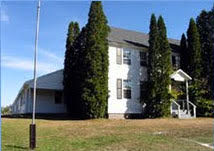 Sebago residents worried about losing Sebago Elementary School, above, are organizing a withdrawal effort from School Administrative District 61.
Comments are no longer available on this story