
In 30 years, the Cape Elizabeth Land Trust has preserved 29 properties totaling more than 660 acres.
As the Cape Elizabeth Land Trust celebrates its 30th birthday, the nationally accredited nonprofit continues to make its mark on the community.
The land trust, which is made up of more than 600 members, including more than 150 committed volunteers, is celebrating its 30th anniversary at Turkey Hill Farm in Cape Elizabeth on Saturday, Aug. 29. According to organizers, there is no admission fee for the family-friendly event and all are welcome, including non-Cape residents.
“We want to thank our community and the volunteers for their support,” said the land trust’s executive director, Chris Franklin. “Our success as an organization wouldn’t be nearly what it is today if it weren’t for the town support, the volunteer support and local businesses.”
The organic Turkey Hill Farm, located on Old Ocean House Road, was placed under a conservation easement with the land trust in 2009, and is one of 29 properties that the organization has preserved for public benefit since 1985.
According to Franklin, land trust properties total more than 660 acres, which is about 7 percent of the town’s total land. Though properties have been donated to the land trust, including Runaway Farm in the 1980s, the land trust purchased its first property of 5 acres around Great Pond, located near Route 77 and Fowler Road, for $150,000 in 1990, Franklin said.
“It’s just one of those spectacular places that’s always going to be a part of the local landscape,” said Franklin. “This property had been in the landowner’s family for generations. (She) felt it was a really special spot, which already had a trail on it that people loved to use. She really wanted it to be available for public use, so she sold it to us at a discount.”
Often, properties are donated or sold to the land trust at a discount because landowners are also interested in preserving the properties, said Franklin.
According to Franklin, the land trust’s mission is to permanently conserve and provide stewardship for properties cherished by the Cape Elizabeth community, from marshes to woodlands, farmlands and shorelands.
While the land trust owns about half of its properties outright, Franklin said, the other half, which includes 47 acres of Jordan Farm on Wells Road, are privately owned but are being preserved under a conservation easement that prevents the land from getting residentially or commercially developed.
Suzanne McGinn, a longtime volunteer and chairwoman of the land trust’s stewardship committee, said she became involved with the organization in 2003 after moving to Cape Elizabeth from the Midwest.
“I was amazed at all of the natural beauty that was here in Cape Elizabeth,” she said.
But she was also surprised to learn that at the time the town did not offer many environmental education programs for children, so she and another member, Lisa Gent, met with educators to encourage them to create a curriculum to complement what they were already teaching students in science.
Among other programs, “We were very successful in establishing a fourth-grade walk program in Robinson Woods,” she said. “We go in the woods with them three times a year. It’s been awesome.
“If you teach them about the environment, then they learn to appreciate the environment, and then hopefully they’ll become good stewards,” she said.
For McGinn, volunteering with the land trust is mainly about helping to preserve Cape Elizabeth’s rural character.
“I love what the land trust does,” she said. “I want to make sure that (Cape’s) special places are preserved in perpetuity.”
At the land trust headquarters on Ocean House Road on Monday, Franklin said the most important work is still ahead of the organization. He said while the organization has been “fortunate” to preserve some of the town’s most loved properties, it plans to “continue to acquire properties that complement one another” and establish a town-wide trail network.
The land trust has also partnered with the Cape Farm Alliance “to ensure that productive use of local farmland can continue to be a vital part of the community,” Franklin said. “We are starting to see a resurgence of interest in terms of young farmers moving back (to Cape). And the ability of this town to continue to be an agricultural producer is directly linked to the available land to do so.”
In the past 30 years the organization has raised about $5 million for land acquisition, through membership contributions, fundraisers like the annual Wet Paint Auction, and a Land Acquisition Fund. The largest parcel that the land trust has been able to preserve under a conservation easement is Town Farm, which is 150 acres. Robinson Woods I and II, which combined total 145 acres and provide more than 3 miles of well-maintained trails for public use off Shore Road, is the land trust’s second largest property. The land trust acquired the 63.6-acre Robinson Woods II, which encompasses 12 acres of fields, 5 acres of ponds and more than 20 acres of significant wetland habitat, in 2012.
“It’s our flagship property; it’s the one we are most proud of,” said Franklin. “It’s the most ecologically important, and is the most popular destination.”
But maintaining the land has not come without its challenges. Hinging on stipulations in the land trust’s Robinson Woods conservation easements, the land trust developed a new public access plan last spring that aimed to balance the public use of the parcel with the organization’s obligation to preserve the property’s natural features and ensure the safety of its visitors.
Users of the property, mainly dog walkers, criticized the plan, however, for its limitations on off-leash use. In response to incidents on the property involving unleashed dogs that bit, chased or attacked users, the land trust approved a new policy in May that allows off-leash use from sunrise to 10 a.m. at Robinson Woods II and from 4 p.m. to sunset at Robinson Woods I.
“Since I’ve been on the board, that was the most significant clash between different types of use of our property,” said Anne Carney, board president. “We went to great lengths to educate the public about conservation values of Robinson Woods and to work with the community to come up with a better access plan that would improve community access but respect the ecological values in Robinson Woods. It’s been a great result. Although it was a challenging process, it’s been a success from the perspective of increasing access and protecting Robinson Woods.”
“The work that we’ve been able to do in these first 30 years is going to be such an integral part of this community” going forward, said Franklin. “These properties are always going to be a part of the natural landscape in their natural state. They are preserved in perpetuity – forever.”
Fifteen years ago the land trust was mainly run by volunteers, but now the organization has two full-time staff members, including Franklin, a longtime Cape resident, and Willa Antczak, Waldoboro’s former planning and development manager, who has served as the land trust’s membership and development manager since summer 2014.
However, the land trust still relies heavily on volunteers, including Carney, who has served as the president of organization’s board of directors since winter 2014.
According to Carney, 22 people attended the first land trust meeting on Sept. 12, 1985, and many of those people are still land trust members. In addition to serving on the board, volunteers coordinate education programs, draft management plans and help maintain the properties through trail work and other cleanup efforts.
Last year, the land trust had 175 volunteers, said Franklin. While some spent 20 hours a week on various projects, others spent a few hours at an event organized by the land trust. He credits the volunteers for the land trust’s ability to function “at such a high level.”
“Support comes in a number of ways, but we are a membership organization and do rely on individual donations as the majority of (the land trust’s) income,” Franklin said.
Carney said every year eighth-grade students spend a few days performing trail work in Robinson Woods and other properties, including the Alewives Brook Trail, Hobstone Woods, and the 49-acre Dyer-Hutchinson property.
Like the other dedicated volunteers, the students “pour out their sweat and labor to help the community,” said Carney.
Franklin said at least 100 eighth-graders volunteer for 21?2 hours, which equals 250 hours of trail work during the course of three days.
“They are often the first boots on the ground,” Franklin added. “It actually has measurable impact on our ability to function as an organization.”
The land trust also hosts annual events, including the Paint for Preservation Wet Paint Auction Benefit, one of the organization’s major fundraisers. According to Carney, in addition to fundraisers and membership contributions, through the years the land trust has received financial support from the town, as well as a variety of grants for specific projects from the state’s Land for Maine’s Future program, the Maine Land Trust Excellence Program, and others. This year’s Wet Paint benefit on July 12 raised more than $60,000, which makes up 25 percent of the organization’s income, Franklin said.
“The paintings capture the fact there are so many spectacular places in this town that are worthy of celebrating,” said Franklin. “I think it generates a lot of enthusiasm and excitement because people are rightly proud of this town’s heritage.”
Alison Darling, another longtime volunteer who has been a member of the land trust board for six months, said she loves the land trust and what it stands for.
“I think the fact they are preserving land for future generations is such a great thing for own town to do,” Darling said.
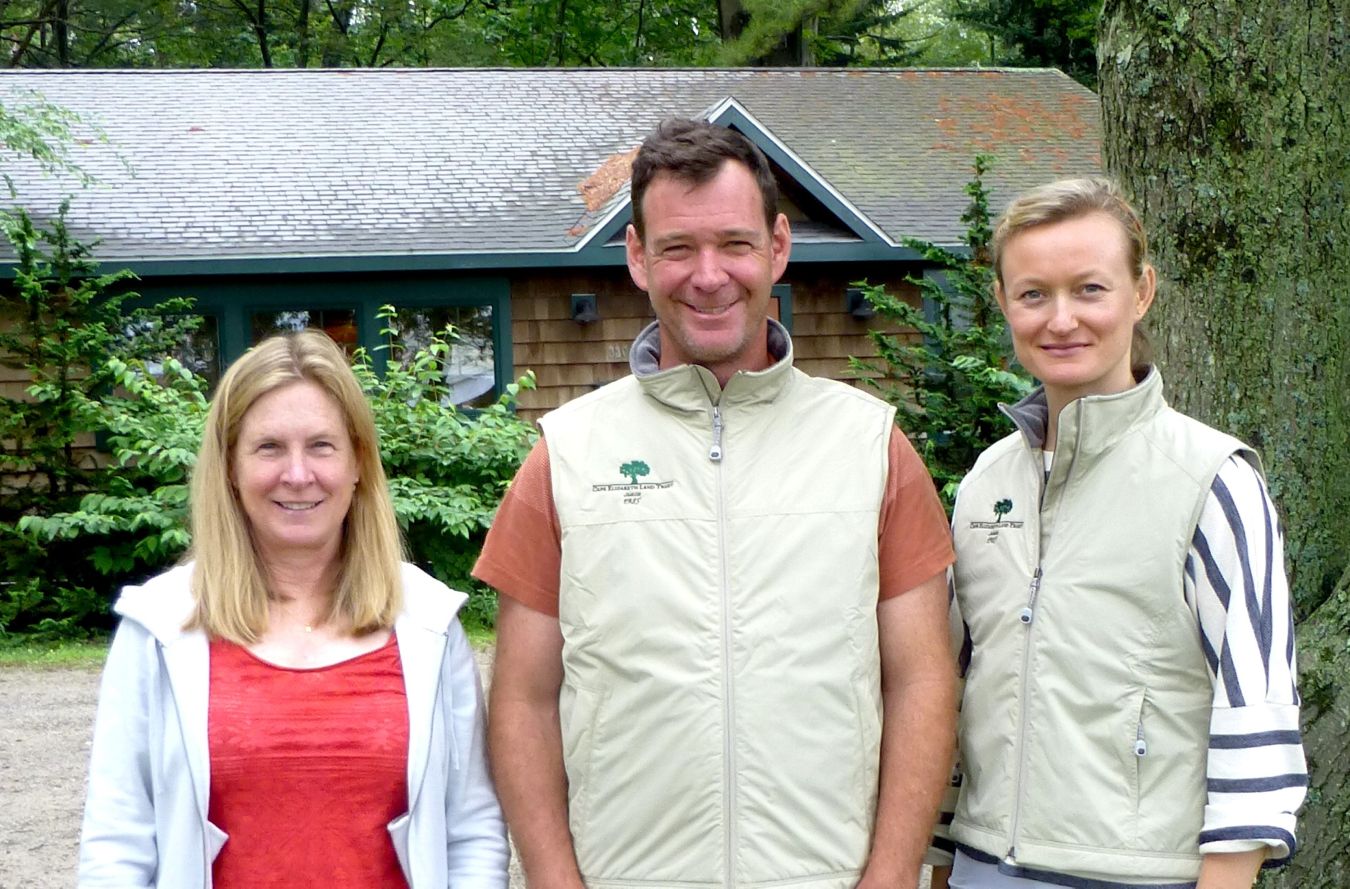 Cape Elizabeth Land Trust board president Anne Carney, left, executive director Chris Franklin, and membership and development manager Willa Antczak, stand in front of the group’s headquarters on Ocean House Road. This weekend marks the 30th anniversary of the trust.Staff photo by Kayla J. Collins
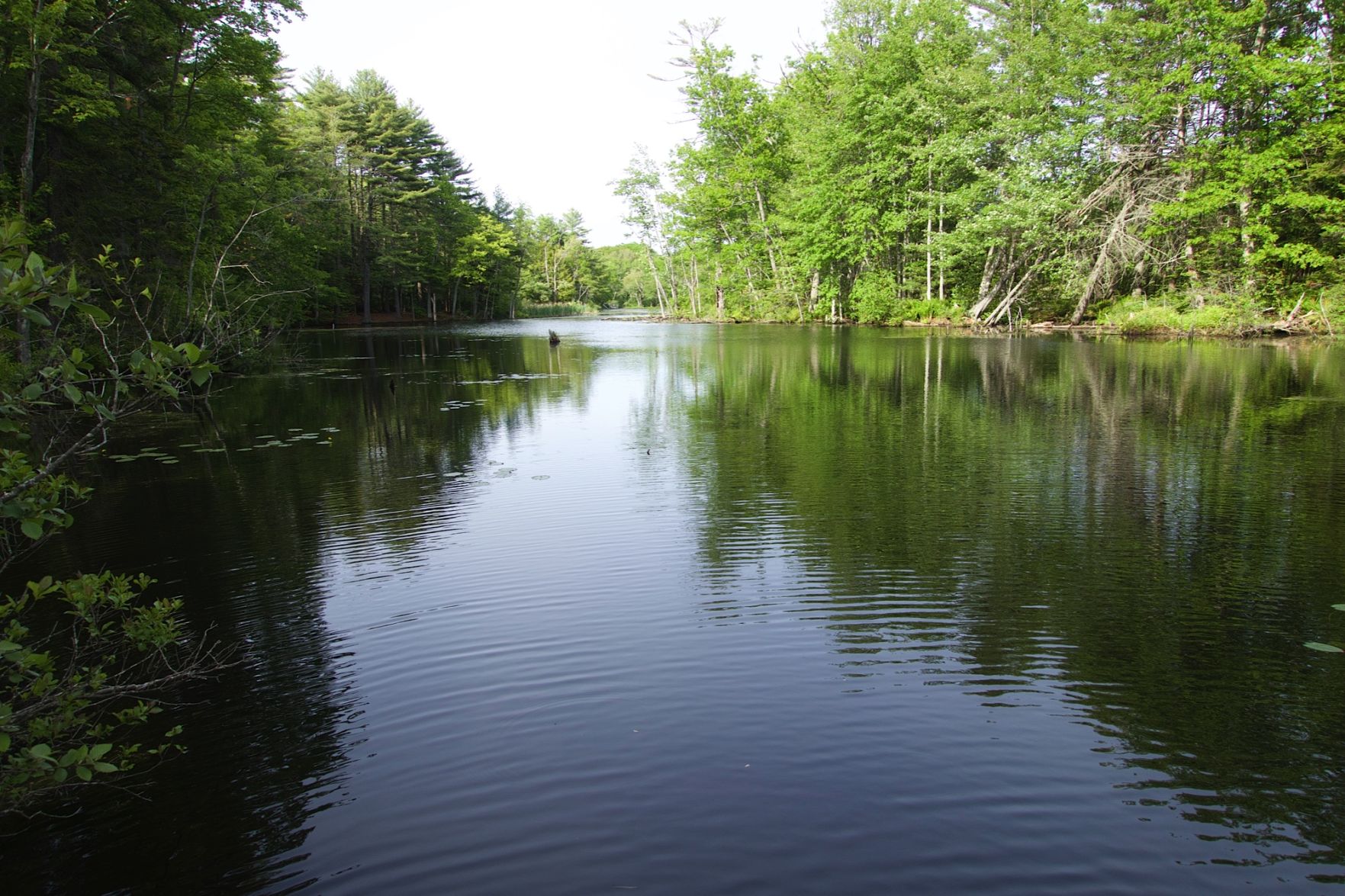 Robinson Woods II, which is 63.6 acres and connects to the 79-acre Robinson Woods I off Shore Road, comprises 12 acres of fields, 5 acres of ponds and more than 20 acres of wetland habitat. Courtesy photo
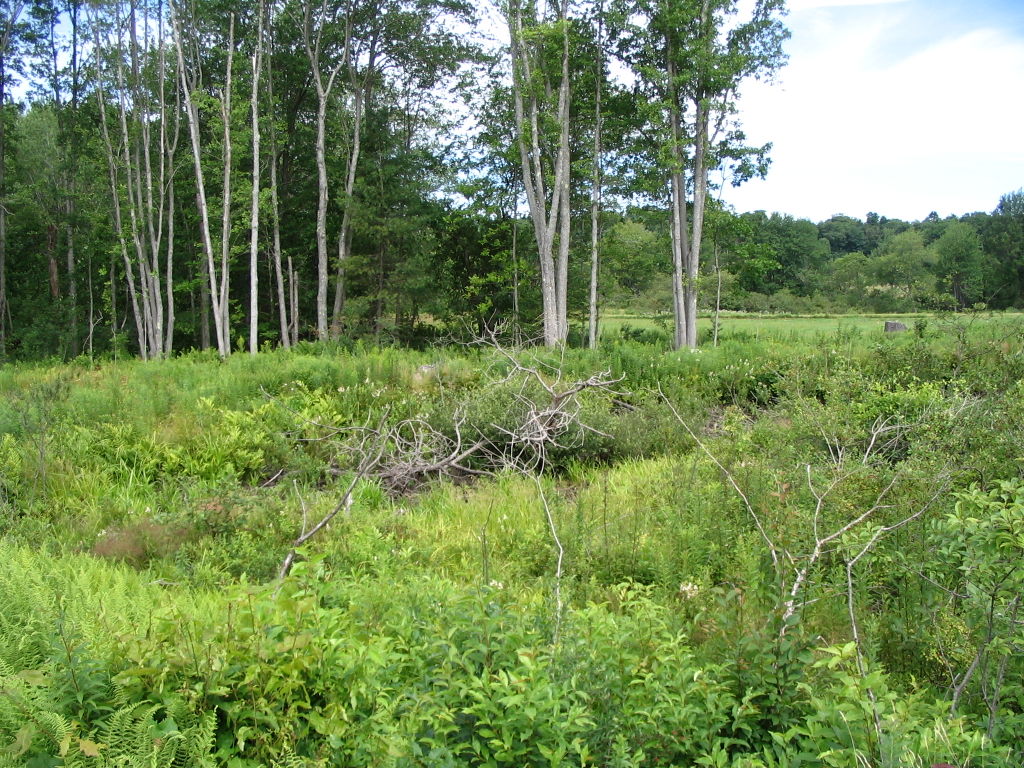 The 49-acre Dyer-Hutchinson parcel off Sawyer Road, which includes trails for walking, mountain biking, skiing or snowshoeing, is one of 29 properties that the land trust has preserved since 1985. Courtesy photo
 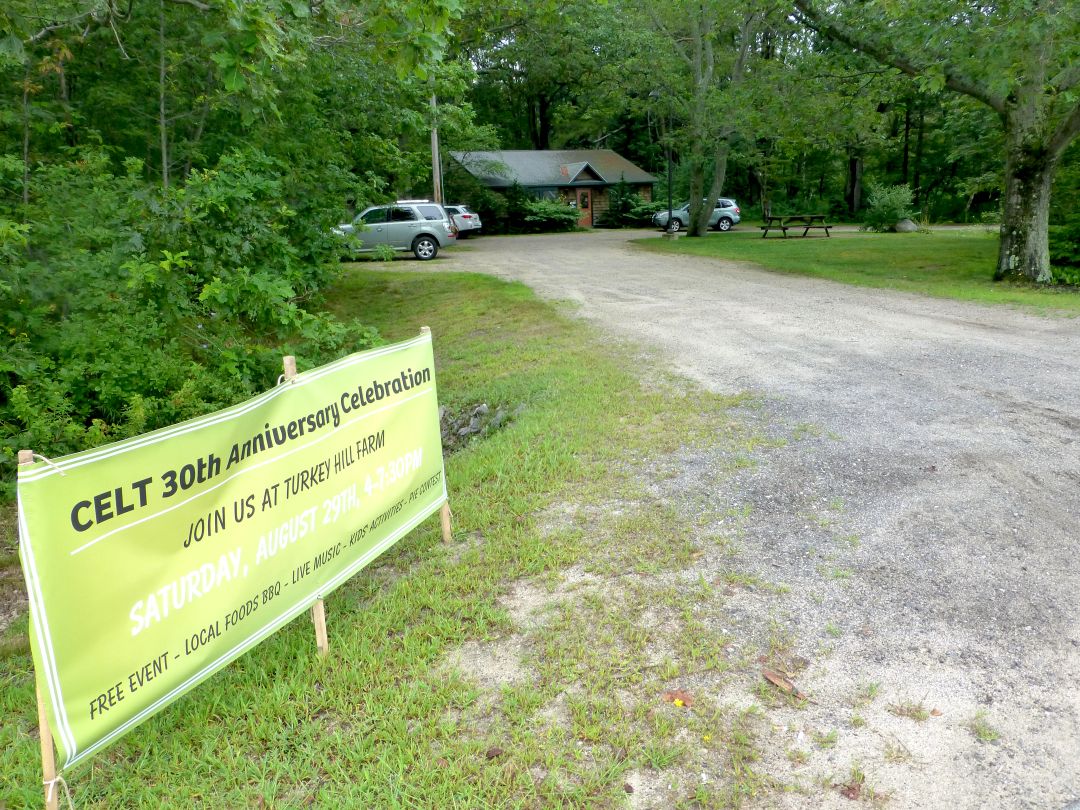 The Cape Elizabeth Land Trust headquarters is located on Ocean House Road across from Pond Cove Shopping area. The 600-member nonprofit is celebrating its 30th anniversary this weekend.Staff photo by Kayla J. Collins
Comments are no longer available on this story