
Westbrook crime novelist Brenda Buchanan, a former news reporter turned lawyer, grew up in a similar mill town in Massachusetts, and the setting of her first novel, “Quick Pivot,” might seem familiar to mill town natives.
Released in April, “Quick Pivot” is the first in a planned series following journalist Joe Gale, and takes place in the fictional town of Riverside, which Buchanan admits is a combination of northeast mill towns – home to shifting economies, resilient people and perhaps seedy underbellies. The first book was well received and two more are in the works. Buchanan will release the second in the Joe Gale series, “Cover Story,” in September.
Buchanan, 57, moved to Westbrook in 2007 after living for more than a decade on Peaks Island. By day, Buchanan is an attorney in Portland, focused on estate planning, probate and real estate. She somehow manages her time to be able to write daily. She said this week that when she’s not working or writing, she enjoys hiking, playing golf and traveling, as well as reading other crime writers.
Buchanan’s writing career began in journalism. She has an undergraduate degree in journalism from Northeastern University in Boston, where she graduated in 1980. During that time, she worked alternating semesters at the Boston Globe, and says covering fire and police news has influenced her fiction writing years later.
For her, the two worlds of news writing and fiction writing collided when she studied creative writing with Robert B. Parker, a national best-selling crime novelist.
“My timing was lucky, because he quit teaching to devote himself full time to writing his Spenser series around the time I graduated,” Buchanan said. “Many of his words came back to me 25 years later when I started writing fiction again. Parker said there were no shortcuts. He was right.”
After graduating, Buchanan moved to Maine and worked for six years at the York County Coast Star, covering local government and the courts. She then left journalism and went to the University of Maine School of Law, and has been a practicing lawyer for 25 years.
The American Journal spoke with Buchanan this week about her books, her work as an attorney, and crafting crimes and characters in Maine.
Q: How have your experiences as a reporter influenced the adventures of Joe Gale?
A: Being a newspaper reporter taught me how to write to deadline. It also cured me of any fear of the blank page. As you know, when you write for a newspaper – and this is as true for a weekly as it is for a daily – you have to write. There’s no time for writer’s block, or waiting for the muse.
As for how my personal history influences Joe’s adventures, I remember the adrenaline rush of being onto a good story. I also recall how frustrating it felt when people told me only half the story – the part that served their interests. The process of newsgathering and reporting has changed somewhat with technology, but the bottom line remains the same: Get it first, get it right. I love that Joe is the kind of reporter who put the dog in dogged. He’s aware his newspaper is struggling to survive, but he’s not about to throw in the towel because he believes to his bones that good local journalism matters.
Q: How does your work as an attorney affect your writing? Have any of your court cases made their way into a story?
A: Early in my legal career I did trial work. When I was a reporter, I covered some high-profile Maine cases, including some murder cases. Both those experiences informed the second book in the Joe Gale series, “Cover Story,” which will be released Sept. 28. In “Cover Story,” Joe covers the trial of a man charged with the murder of a politically well-connected DHHS caseworker. The trial takes place in Machias in the dead of winter. It doesn’t take long for Joe to figure out that what’s being said in the courtroom doesn’t always line up with the reality of what happened.
It was fun to write the trial scenes. I once tried a case – it was a civil case, not a murder trial – in the Superior Court in Machias, so I knew that particular setting first-hand. The challenge writing the court scenes was to maintain dramatic tension. If you’ve ever covered a trial you know that while there are moments of high drama, there’s also a lot of tedious testimony. I left the boring stuff out, of course.
Q: With a full-time job, how do you find the time to write?
A: I write every day. That, I think, is key. Weeknight evenings I work at home. On weekends I often work at my office (because no one is there) or at one of the local libraries. Sunday mornings in particular tend to be great writing time for me. I get up early, grab a coffee, and immerse myself fully until noon or 1 p.m.
Occasionally I take a few days off and go off somewhere to write. Last winter I borrowed the home of a friend who was in Florida in order to take a deep dive into the third book in the series. For three days I was all by myself, meaning I didn’t have to stop to eat or sleep, I didn’t have to talk to anybody. I wrote non-stop until the words stopped flowing. It was a wonderfully intense and productive time.
Q: How did living in Westbrook influence “Quick Pivot”? The mill town of Riverside has definite similarities to the ‘Brook.
A: I didn’t set “Quick Pivot” in the real Westbrook, because when I was first writing it, I was new to town and I didn’t want to get off on the wrong foot. (I can see the headline now: “Buchanan Moves to Town, Immediately Starts Killing People”).
I grew up in a paper mill town that has a certain similarity to Westbrook. I wanted to add elements of my hometown, and other mill towns I knew, so I invented Riverside. It was important to me to set “Quick Pivot” in a community where people survived the shattering loss of the town’s economic lifeblood. That allowed me to fill the book with survivors, people who know that life can turn on a dime so you’d better have friends and a good sense of humor. That sort of real-world setting offered me rich material.
Q: Tell me about your upcoming book, “Cover Story.” What was the inspiration for taking Gale Down East and into a fishing community?
A: Basically, I didn’t want Riverside to become the murder capital of Maine. (In crime writing circles this is called “the Cabot Cove Effect,” after the long-running TV series “Murder, She Wrote,” where someone in a tiny coastal village was always being knifed or poisoned or shot). The fact Joe covers crime and courts for a Portland newspaper allows me to send him to other parts of Maine. In the early years of my law practice, I lived in Hancock County and did a good bit of work in Washington County (Machias), so I was comfortable setting a story there. I’m glad I did it. The insular nature of a small town in an isolated part of the state creates challenges for Joe, because he has to figure out which sources are reliable and who is full of hot air. He’s also more or less on his own in an unfamiliar place in the middle of winter, so he has to rely on his own wits more than he would if the book were set in Riverside.
Q: How would you describe the reaction you’ve received from readers so far?
A: Reader reaction is the part of writing for which I was most unprepared. The support for “Quick Pivot” has been consistently enthusiastic and I am grateful to every single person who has contacted me about it, or come to a reading to talk with me about the story and the characters. Now that “Cover Story” is available for pre-order, I’ve been getting email and notes on Facebook and tweets on Twitter from people who are looking forward to Joe’s next journalistic adventure. I’ve met with readers at a number of local libraries and look forward to another round of readings this fall when “Cover Story” is released. The interaction with readers has been so much fun and incredibly gratifying.
Because my publisher (Carina Press) is an e-only imprint, readers need to have an e-reader to access my books. Many libraries lend them out, and I encourage people who don’t have an e-reader of their own to borrow one from their local library and see what they think.
Q: What have you been reading lately?
A: I read a lot of crime fiction. William Kent Krueger, Steve Hamilton and Steve Ulfelder are top-rank writers in my view. Bryan Gruley and Jan Burke write wonderful journalist protagonists, as do my Maine colleagues, Gerry Boyle and Maureen Milliken. I love Kate Flora’s Joe Burgess series, which is set in Portland. I look forward to Sarah Graves’ next Lizzie Snow book, set in Aroostook County. I could not put down “The Precipice,” Paul Doiron’s most recent book about murder on the Appalachian Trail. I can’t wait for Chris Holm’s newest thriller, “The Killing Kind,” which will be out in mid-September. Julia Spencer-Fleming, who was one of my classmates at Maine Law, is an amazing writer and a wonderful human being, as is Louise Penny, whose books are set in Quebec’s Eastern Townships.
Q: Are you already planning the third in the Joe Gale series?
A: I turned in my manuscript for Book No. 3 – “Truth Beat” – at the very end of July. I don’t have a publication date yet, but it will be sometime in the winter of 2016. “Truth Beat” finds Joe back in Riverside, covering two big stories at the same time – a series of prank bombs that suddenly turn dangerous and the suspicious death of a well-known Catholic priest.
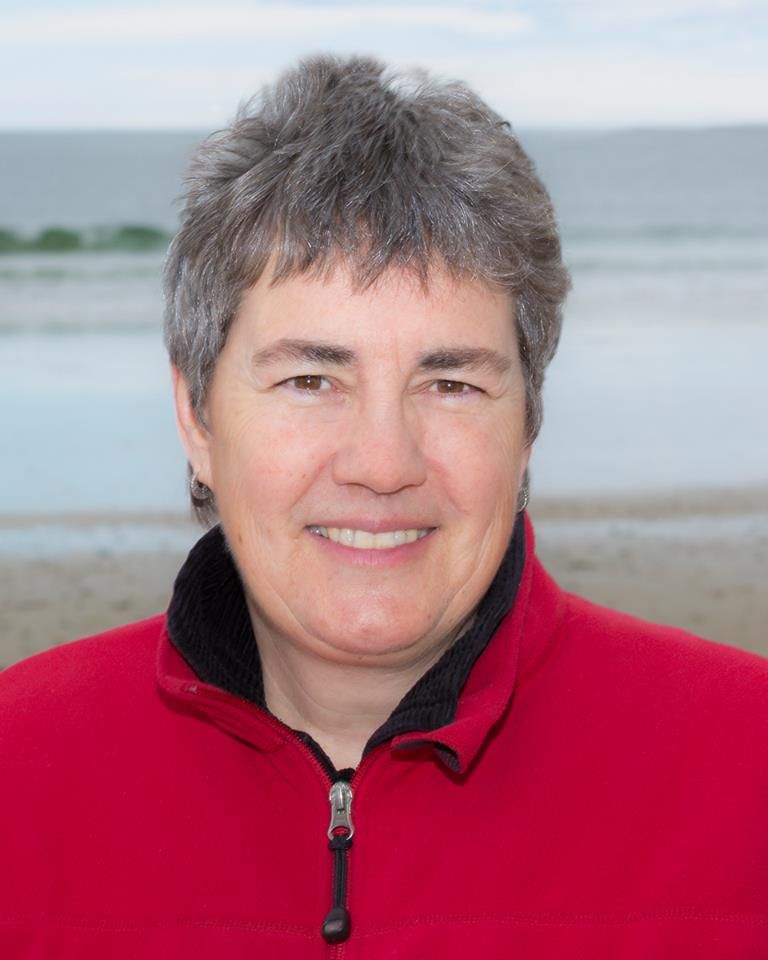 Brenda Buchanan
Comments are no longer available on this story