
As the sun beat down on the busy Portland Harbor Friday afternoon, dozens of recreational boaters were out enjoying the weather – until a 29-foot response boat manned by the U.S. Coast Guard suddenly pulled up next to them.
The boat, which was equipped with five armed Coast Guard members and a Portland police officer, cruised around the harbor this past weekend, stopping boat after boat, as part of an ongoing campaign to find drunk drivers and to raise awareness about the dangers of drinking while boating.
While the U.S. Coast Guard crew in South Portland didn’t arrest any impaired boaters, they performed many safety inspections during the 16 hours spent on the water Friday and Saturday, June 26 and 27. The effort was part of a national enforcement campaign, Operation Dry Water, which aims to reduce the number of boaters who operate under the influence of drugs or alcohol. And while the Coast Guard’s efforts to find impaired boaters lasts year-round, local departments ramped up enforcement this past weekend at the start of the busy summer boating season.
“If there is any reason to believe they might be drunk or intoxicated, we can do sobriety tests,” said Petty Officer 1st Class Michael Perry, moments before he and the crew from the U.S. Coast Guard based in South Portland, boarded its boat.
According to the campaign website, since 2009 the percentage of boating deaths nationwide caused by alcohol use has decreased from 19 to 16 percent, but alcohol continues to be the leading factor in recreational boating deaths.
Last weekend was the second time the Coast Guard unit from South Portland participated in Operation Dry Water. On Friday, officers stopped every boat they encountered in the area of the Maine State Pier to conduct an inspection and ensure that the boaters were following state and federal boating laws. The Coast Guard also spent the weekend ensuring that boaters had the proper safety equipment, such as life jackets or life rings.
“Sometimes on a smaller boat we may not send (a crew) over (to board the boat), but we will stay right alongside them and ask them to hold up a life jacket for everybody, or push the button on their horn to see that it works,” Perry said, as he navigated the boat.
The Operation Dry Water campaign was a chance to raise awareness of the dangers of drinking and boating, while preventing drunken boaters on the waterways. Thousands of law enforcement officials across the U.S. participated, including the Coast Guard, the Maine Warden Service, Maine Marine Patrol and local police departments. The National Association of State Boating Law Administrators, in partnership with the Coast Guard, launched Operation Dry Water six years ago.
Nationwide, it is illegal to operate a motor vehicle or boat with a blood alcohol content of .08 percent or greater. By increasing the number of officers on the water, the campaign seeks to reduce the number of accidents and deaths due to impaired boating every year.
“Our main focus is to educate the boaters. We are not looking to get numbers or violations,” said Perry. “It’s a concerted effort to prevent search and rescue cases in the future. The more safety boardings we do, we see a direct correlation of less search and rescue (missions.)”
Portland police Officer John Cunliff boarded the Coast Guard’s response boat Friday to assist the other officers in the event they needed to administer a sobriety test or help transport boaters to the police department.
“Based on the conclusion of those tests, I will give (the Coast Guard) the nod that the person is impaired, or not impaired,” Cunliff told the Current. “If they are found to be over the legal limit they will be summonsed to court.”
Cunliff, who has been a Portland police officer for more than nine years, said it was his first time participating in Operation Dry Water, but he thinks the effort is “a great idea.”
He wants people to understand that drinking and driving “is just as much of a risk, if not more so, on the water than it is on the street,” for several reasons, including the heightened difficulty of sea rescues.
Last year Perry and his crew performed 53 safety inspections during Operation Dry Water and found one safety concern involving a group of people canoeing around Peaks Island, where boating traffic is heavy.
“The weather inside the harbor was nice, but the seas were a little choppy for a canoe,” said Perry. “It’s an inherently dangerous (situation) to be out on the water, especially the ocean.”
“We will sometimes run into actual BUIs (boating under the influence),” said Nirel Etchart, a maritime enforcement specialist, who has been stationed in South Portland for two years. “Personally, I only ran into it twice, and that was down in Ocean City, Md.”
Due to Sunday’s rainstorm, the Coast Guard crew decided not to participate in the third day of the campaign this year, but it was still able to conduct 68 inspections. In addition to encountering about 10 safety violations, such as not carrying life jackets or fire extinguishers, it also issued 10 warnings for more minor offenses, such as failure to carry a whistle or horn in case of emergencies, said Perry.
According to Perry, this past weekend officers ended up transporting one man from his boat to the police department for “suspicion of being under the influence,” but by the time he arrived at the station, his blood alcohol content was under the legal limit.
Perry said trying to determine that a boater is under the influence of alcohol is challenging on the water because “even a sober person is not going to be able to walk a straight line on a boat.”
If officers believe that a boater is drunk or under the influence of drugs, they will ask operators to do the same standardized field sobriety test as if they were driving a car, including a Breathalyzer test, said Perry.
Perry said another challenge with catching drunken boaters is determining whether a boater is under the influence of alcohol or fatigued from being out on the water all day.
“It makes things a bit difficult, but there aren’t a lot of places (for a boater) to hide,” Perry said.
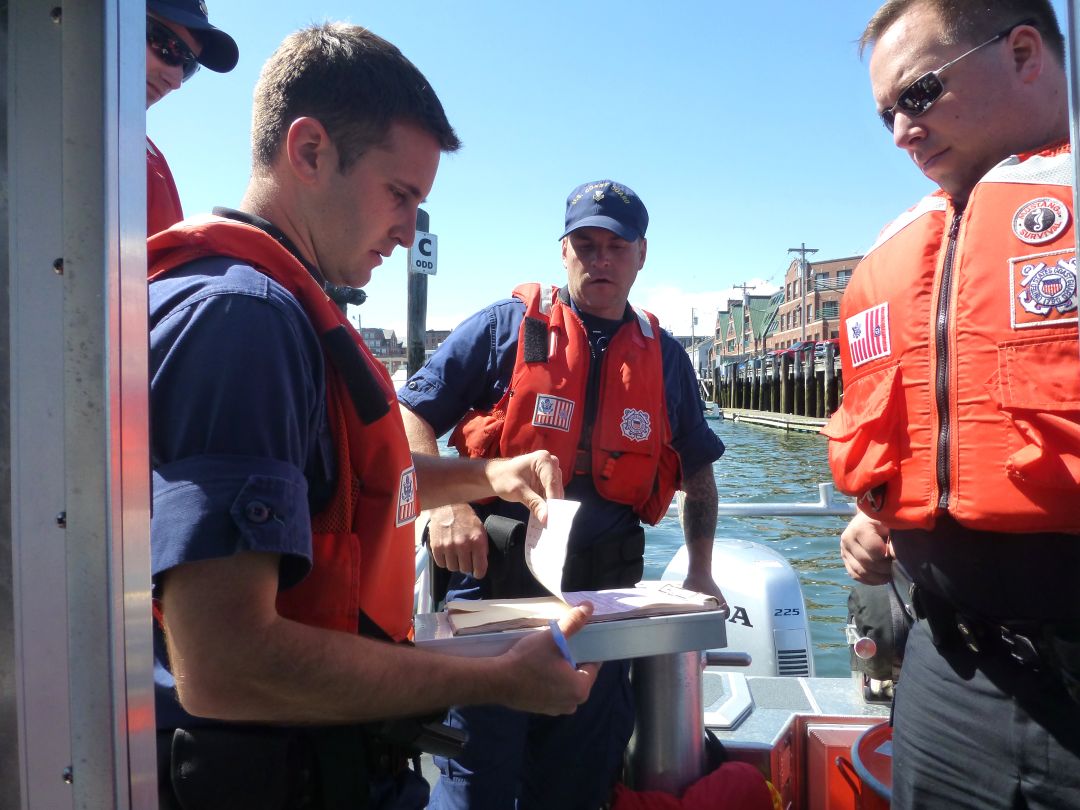 Nirel Etchart, left, a maritime enforcement specialist with the U.S. Coast Guard in South Portland, checks over a safety inspection report he filled out Friday as part of a national three-day campaign, Operation Dry Water, which aims to deter drunken boaters, while Edward Wiley, another enforcement specialist, middle, and Portland police officer John Cunliff, look on.Staff photos by Kayla J. Collins
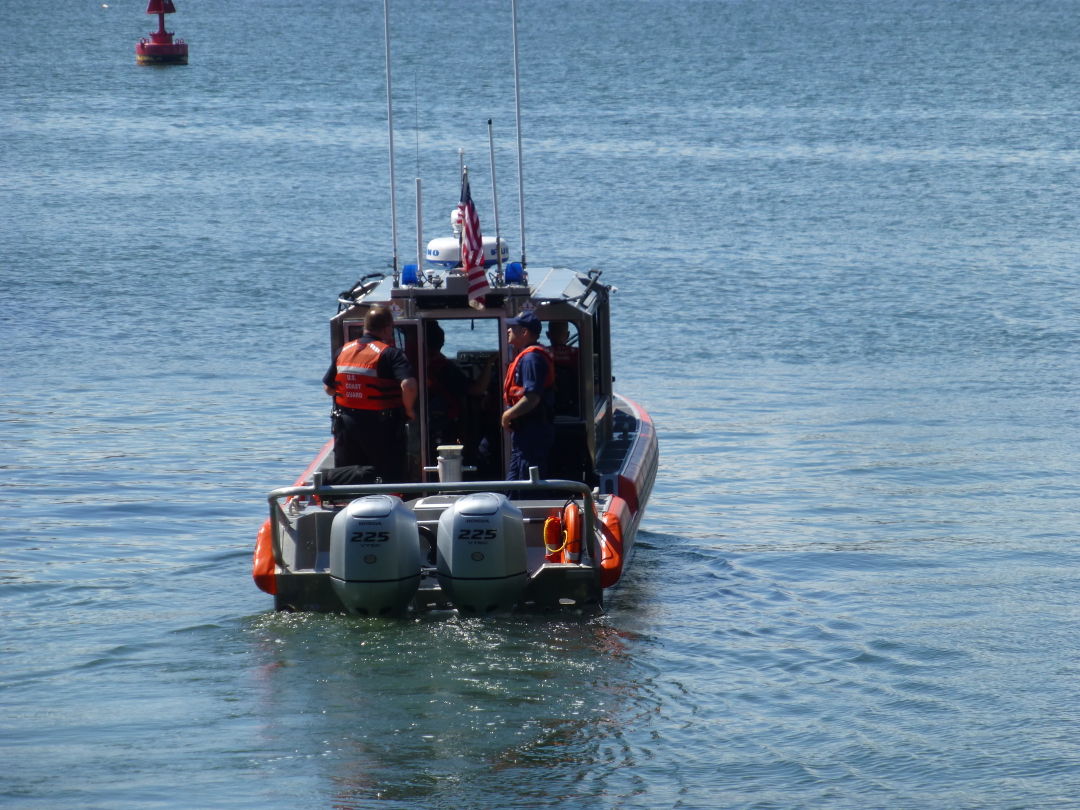 A crew from the U.S. Coast Guard departs from its station in South Portland Friday to conduct a series of safety inspections as part of a national anti-drinking and boating campaign – Operation Dry Water.
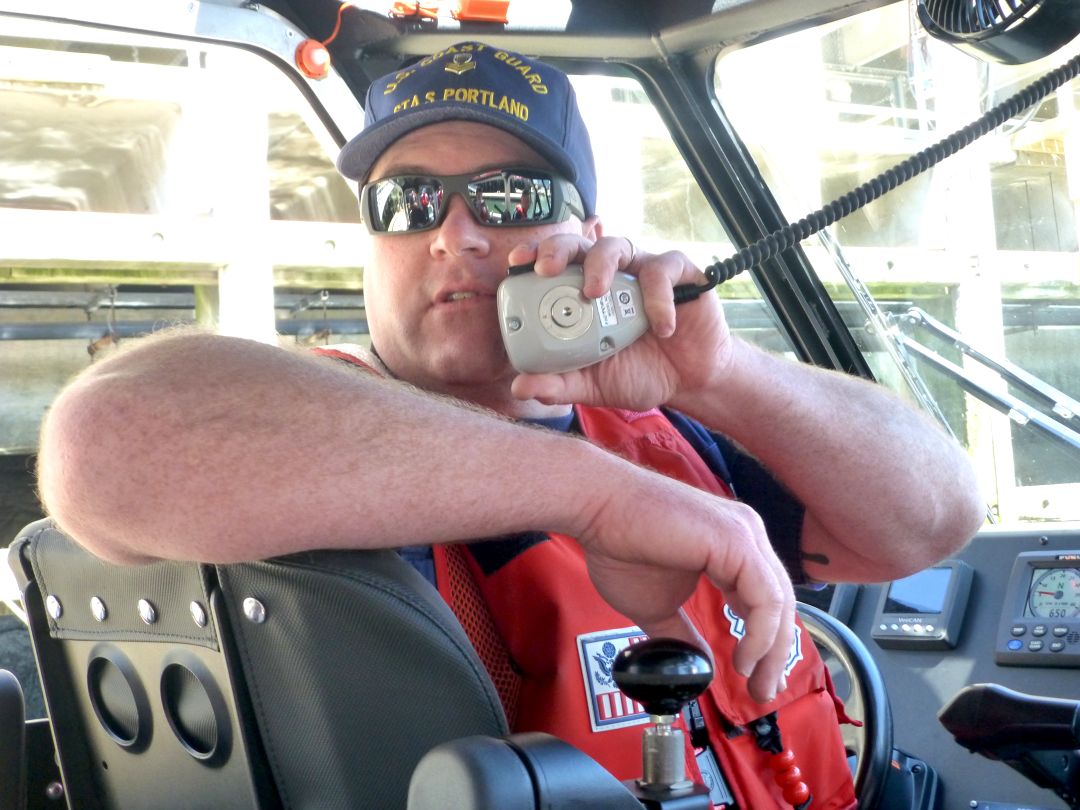 From the driver’s seat of a 29-foot response boat, 1st Class Petty Officer Michael Perry, with the U.S. Coast Guard in South Portland, communicates by radio with other local law enforcement during Operation Dry Water. Staff photos by Kayla J. Collins
Comments are no longer available on this story