
Eliza Adams, a health teacher at Windham Middle School, went to Washington, D.C., in late February to urge Maine’s Congressional representatives to re-authorize the Child Nutrition Act, a 50-year-old federal law that mandates nutrition standards for the National School Lunch Program and expires on Sept. 30.
Adams, as well as 50 other educators hosted in Washington by the Pew Charitable Trusts, urged Congress to maintain nutrition standards, which call for school lunches to contain 50 percent whole wheat grains, and a minimum of one fruit or vegetable.
Although the standards have faced opposition from school districts claiming that they are driving down lunch program participation rates, Adams says the opposite has occurred at Windham Middle School. Adams discussed her strong support of the federal nutrition standards, and her discussions with Maine’s Congressional delegation, in an interview with the Lakes Region Weekly.
Q: Why do you think Congress should re-authorize the Child Nutrition Act?
A: The Child Nutrition Act ensures that students will have the opportunity to be served a healthy meal. Research shows a strong connection between healthy habits and learning, and these healthy habits need to a part of our school nutrition program. Many students consume the majority of calories at school, which has a direct impact upon learning and lifelong health. While some school nutrition programs have experienced difficulties meeting the standards of the Child Nutrition Act, this should not be a reason to roll back the requirements.
Q: How did you wind up in Washington lobbying for a re-authorization of the Child Nutrition Act?
A: The Pew Charitable Trusts has identified school nutrition as a high priority for the overall health, lifelong well-being and academic success of our youth, and Pew views the Child Nutrition Standards as an effective approach.
For the past two years, I have been fortunate to be an ambassador with the Alliance for a Healthier Generation, a national organization leading the way in creating healthier school environments. I was contacted by the alliance about the success of the Regional School Unit 14 School Nutrition Program, and they were so pleased with the story of our success, the invitation was extended to Jeanne Reilly, the champion director of the RSU 14 School Nutrition Program, and Samantha Cowens, our district chef. We were the only team of three invited to Washington.
Q: What was it like to meet with Maine’s representatives in Washington? What did you say to them?
A: Maine has a long history of amazing politicians and meeting our delegates on the Hill certainly confirmed my admiration. Our politicians are not experts in school nutrition, but they are experts in listening, and how to approach the challenges with solutions.
Sen. Susan Collins was very well informed, and she has been a strong advocate in her work with the Department of Agriculture to strengthen the child nutrition standards. Sen. Collins asked the most challenging questions, because she wants to be prepared to move this work forward on behalf of our youth. While we spoke, several staffers were present to take notes, and I know our information mattered. We met with the staff of Sen. Angus King and Rep. Chellie Pingree, and that was very productive as well. Rep. Bruce Poliquin is new to Washington, and we were grateful to be his introduction to thinking about the future well-being of our youth.
Q: Why do you think the RSU 14 nutrition program has achieved high participation rates?
A: Under the leadership of Jeanne Reilly, our school nutrition program has become creative, offering new foods and recipes, introducing more fresh fruits and vegetables, and engaging the school and community. Simply put: the healthier foods taste better, and the students have responded by asking for more. Chef Sam Cowens has been a very positive addition to the program, by offering creative ideas, cooking classes, taste testing and focus groups with the different schools.
When students are exposed to new foods, they generally need to see and taste that food several times before accepting the change, Chef Sam makes new foods an adventure, and she really listens to the kids to see what they like to eat.
Q: Do you think any further changes should be made to the Child Nutrition Act? Or should it simply remain the same?
A: The Child Nutrition Act makes sure our students all have the chance to eat a fruit or vegetable with every meal. How can anyone argue with that?
Q: What do you say to arguments that the new nutrition guidelines impose excessive costs on school systems?
A: If a school system tries to meet the new standards using the old paradigm of commercially packaged foods, which are less appealing and lack both taste and nutrition, then yes, that is expensive. Our school has learned that while the cost of a healthy meal may cost more, this is far outweighed by the 20- to 30-percent increase in students choosing to eat complete meals at our schools.
Q: Do you plan on returning to Washington to lobby more?
A: Our voices will be heard in Washington, and our Maine politicians rely on their constituents to keep them informed. The RSU 14 School Nutrition program is a model of success, and can serve as a model for other schools.
Q: Why are you so passionate about this issue?
A: Good nutrition is not about apples and carrot sticks, it is about making sure our youth have nutritious meals to fuel their learning and develop lifelong habits of nutritious choices. We can make a difference now, when these habits are formed, and the competition is fierce for the taste buds of our youth. Students should associate effective learning in school with tasty, fresh and nutritious meals, and the success of our program is proof that kids really do want to eat well.
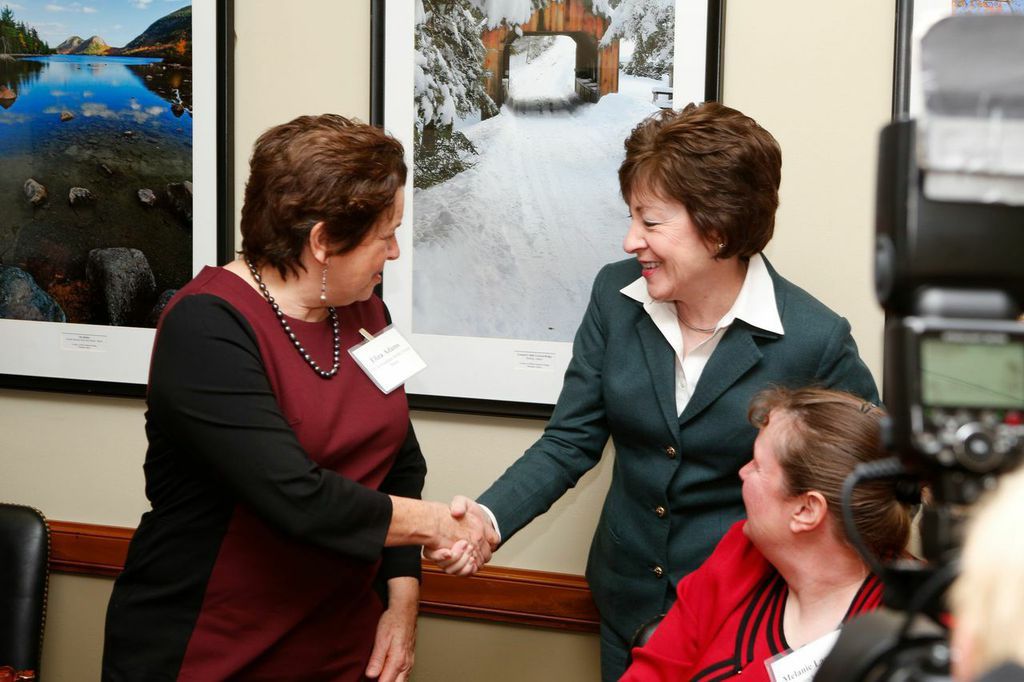 Windham Middle School health teacher Eliza Adams, left, met with Sen. Susan Collins on a recent visit to Washington, D.C. Photo courtesy of Herb Perone
Comments are no longer available on this story