
Upon first glance, Maine’s winter woods may appear lifeless – gray, leafless, motionless, frozen and blanketed by snow. The sun’s energizing grasp on life is diminished by the shortened daylight hours. Temperatures repeatedly dip below freezing, which determines whether one is trapped or freed by the properties of water. It seems like a harsh and unforgiving environment for wildlife.
As the old saying goes, though, don’t judge a book by its cover. Life goes on in sometimes unimaginable ways for wildlife during the cold winter months. You need only to strap on some snowshoes, open your eyes and ears to the sights and sounds of the surroundings, and start trekking to uncover the secrets of winter’s wildlife.
Winter’s bare tree branches and snow cover provide the perfect setting for the curious explorer to unveil nature’s mysteries. Sound travels much farther through the leafless trees, which absorb sound in the summer months when leaves are busy harvesting solar energy and converting it into fuel for other living things.
Hard surfaces, such as the frozen ground or a layer of ice on the top of snow, do not absorb sound waves and instead, bounce them off. All of this results in sharp and pure sounds, like the swoosh swoosh of a raven’s wings beating in search of its previously hidden food stores, or the hollow drumming of a woodpecker’s beak in search of an overwintering insect deep in the crevices of a tree, or the tseet-tseet call of a flock of chickadees constantly foraging to stay warm. Winter is a particularly good time to observe behaviors of birds in their often-conspicuous flocks and without the obstruction of leaves. Understanding their relationships with each other, other species, their food sources, and their ingenuity to survive in the winter may bring a deeper sense of appreciation for these small feathered flyers.
Another advantage of the snow-covered forest is that snow keeps a record of animals and their many journeys. When we’re observing wildlife at a distance, they’re absolutely aware of our presence and alter their behavior as a result. Imprints in the snow left by wildlife give us a glimpse of what their private lives are like during a hunt, or evading a predator, or basking in the fleeting sunlight. Following an animal’s tracks that are left in the snow may lead you to some interesting discoveries.
For instance, a fox’s tracks may stay on a straight path until a small set of mouse tracks cross its path. At that point the fox’s tracks may change course and shape as it speeds up to follow the smaller tracks, which lead to a hole that takes the mouse to its safe haven of tunnels underneath the snow. Stories told by tracks such as those of the fox and the mouse occur all throughout a winter woods, but you’ll only learn the stories if you take the time to go out and look. Become familiar with the tracks of some of Maine’s wildlife by reading Tracking & the Art of Seeing: How to Read Animal Tracks and Signs by Paul Rezendes.
Be sure to get outside this winter and discover your own marvels in nature. Join the Portland Water District for guided snowshoe treks through the Sebago Lake Land Reserve. Follow the Portland Water District on Facebook @ MyPortlandWater or visit our website at www.pwd.org for more information.
Carina Brown is an environmental educator at the Portland Water District. She can be reached at sebagolake@pwd.org.
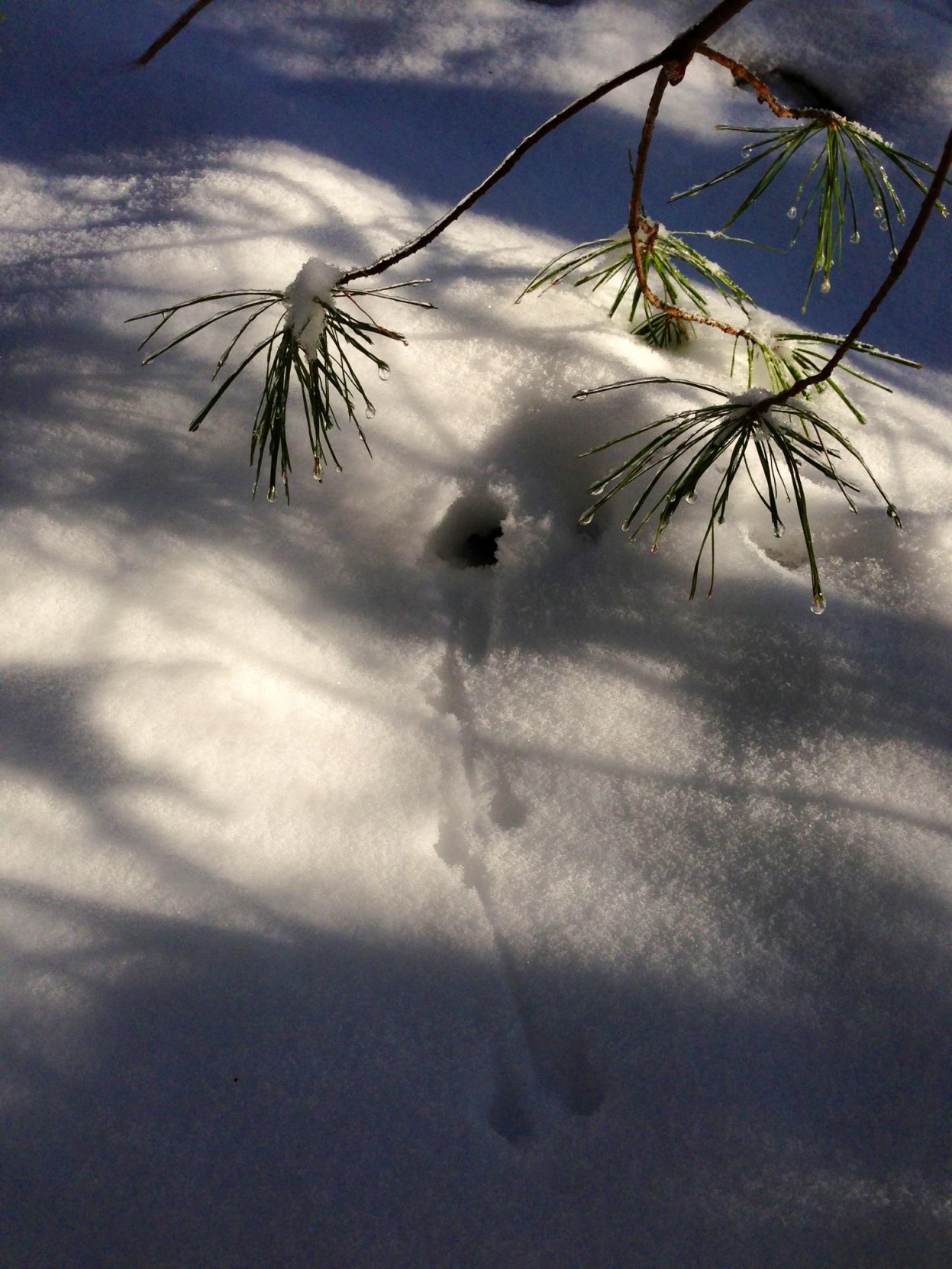 Mouse tracks disappear – evidence of life underneath the snow.Courtesy photo
Comments are no longer available on this story