
RAYMOND – Last fall, Raymond executive assistant Danielle Loring contacted Greg Cavanaugh, assistant director for the University of Southern Maine’s Campus Ventures engineering and entrepreneurship program, to discuss an upcoming conference on digital fabrication at the school.
Loring told him that town officials were interested in investigating 3-D printing technology as a potential way to revive the Raymond manufacturing sector, which has declined precipitously since the turn of the century.
Cavanaugh suggested that the town consider partnering with the university to form a “business incubator,” or a facility where local entrepreneurs can secure the equipment, space and training needed to grow their micro-enterprises into viable businesses. At the facility, Campus Ventures staff and students would both connect small entrepreneurs with investors and provide manufacturing training. Between 2010 and 2014, the Campus Ventures program completed more than 50 research and development projects and also fully commercialized several new technologies.
So was born the Raymond Manufacturing Incubator Planning Project, a proposal to study the possibility of converting a 56,000-square-foot warehouse on 1281 Roosevelt Trail – a boat storage center owned by PRM Properties and former Chipco manufacturing plant into a hive of small enterprise. PRM Properties would rent out the facility to interested small manufacturers. If successful, the incubator could help Raymond’s low- and middle-income residents secure part-time and full-time employment.
But now, the project could be in jeopardy.
While the town secured a $25,188 Community Block Development Grant to fund a study of the idea, and also signed a contract Sept. 8 with the Portland research and planning firm Planning Decisions Inc., to conduct a feasibility study, the Campus Ventures program had run out of the grant funding that sustained its budget. Cavanaugh and another staff member were laid off during the summer, when school administrators chose not to fund the program into the future.
The collapse of Campus Ventures leaves the proposed Raymond Business Incubator without a partner to provide planning and technical assistance – a key component for a successful business incubator, Cavanaugh said.
“If you look around the state at the history of how these things have happened, it is that they built a bunch of them around the state and they failed,” Cavanaugh said. “Just providing [entrepreneurs] space is not enough. They need a lot more technical assistance, they need business assistance, they need access to investors and capital. They need a lot of assistance and services, and a business incubator gives a kind of central place where all of those technical assistance services can come together.”
In response to the demise of Campus Ventures, Planning Decisions has readjusted the goals of its feasibility study. Members of the firm met with town officials on Sep. 9 to discuss a new approach for the project.
“Without USM’s Campus Ventures program as a partner in this project, the possibilities for redevelopment of the site are much more flexible,” wrote Milan Nevajda, a planner for the firm in a Sept. 16 memo. “The challenge lies in identifying the right function for the building that will attract users and generate revenue.”
In the coming months, Nevajda and his staff will conduct first phase of the study, a $10,550 series of interviews and surveys that will be finalized in a report on whether the site has any potential for redevelopment as a business incubator. Planning Decisions staff will interview local business advocacy groups, economic development organizations, industry representatives, potential entrepreneurs, developers, real estate agents, and small business financiers, in order to gauge the viability of the idea and the demand for such a site.
If the initial report concludes that the site is viable for redevelopment, Planning Decisions staff will analyze the facility’s suitability for potential uses, conduct a market survey of potential users and a market analysis of the region, and plan for ownership and management of the facility. The second phase, which would cost $14,638, would be completed by next April.
Since the building is privately owned, Nevajda wrote, any new arrangement must generate more revenue than it does today. Phil Michaud, owner of PRM Properties, said that if the arrangement were “to his benefit,” he would consider renting out the facility as a business incubator.
“With what I’m doing right now, I’m making a living,” he said. “It has to be beneficial to PRM properties.”
According to Loring, the warehouse is ideally suited to be a business incubator.
“The reason why this building that Phil owns is perfect for this use is because on one side he has office space where people can utilize that for the research and development component and the other side is segmented for manufacturing and equipment,” Loring said. “So basically people could rent different portions of it in order to have the space and the equipment to realize their project.
“Even though the building was used in the past for manufacturing, right now it is being used for boat storage,” she added. “This is trying to bring it back to its highest potential as a manufacturing facility.”
Cavanaugh said, if done right, a business incubator in Raymond is an idea worth supporting.
“I think the current surge in interest that we’re seeing in manufacturing incubators is really kind of a consequence of a sluggish economy,” Cavanaugh said. “People are not seeing the kind of jobs that they want to have. They’re resourceful Yankees and they’re turning to their ingenuity to build companies for themselves. And I think that’s something that as a state we want to foster and support and these incubators make a place for that to happen.”
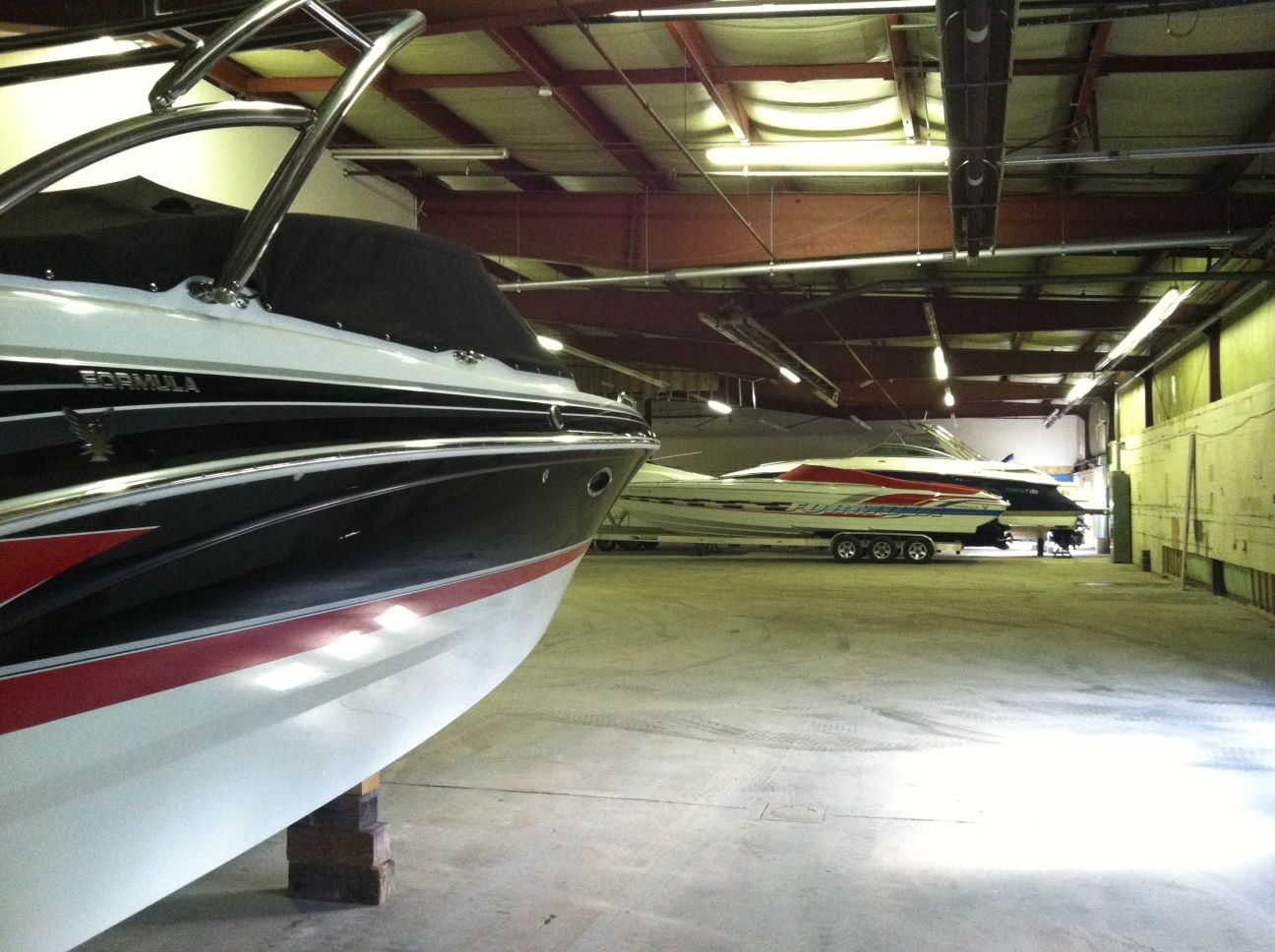 A warehouse on 1281 Roosevelt Trail used as a boat storage center has been eyed as a site for the Raymond Manufacturing Incubator Planning Project. A study of the project is under way, but the loss of the involvement of the University of Southern Maine’s Campus Ventures engineering and entrepreneurship program is likely to impact the future of the project.
Comments are no longer available on this story