
SCARBOROUGH – The four people vying for two open seats on the Scarborough Town Council are no strangers to running for elective office.
Two of the candidates, Judy Roy and Carol Rancourt, have logged more than 30 years, combined, on municipal boards. Bill Donovan, meanwhile, served on a school board in New Hampshire in the 1990s and ran for Town Council last fall, losing to Kate St. Clair by just 74 votes out of 9,278 cast. Jean-Marie Caterina also ran a close battle in her race last year for the state Legislature, falling short to incumbent Republican Heather Sirocki, but still managing to capture a healthy 49 percent margin.
At the annual candidates night sponsored by the Scarborough Community Chamber on Oct. 10, the four hopefuls laid out the reasons for putting their names forward once again, while running through a barrage of questions offered by audience members and representatives of the local press.
Caterina, 58, works as a real estate broker. She has also logged time as a teacher, social worker, personnel administrator and marketing professional. Unable to make another run at state Legislature because recent redistricting puts her slice of North Scarborough in a district now held by a member of her own party, Caterina said she is running for the council “to offer a fresh perspective to town government.” Her three major issues, she said, are to maintain “the best schools that we can afford,” to keep the property tax rate low by working to broaden the tax base, and to keep Scarborough’s beaches, marshes and farmland “preserved, open and accessible to as many people as possible.”
Donovan, 66, who retired in late 2011 from a career as a municipal attorney, said he hopes to act as a voice for the middle class. “We’ve had unsustainable tax increases in recent years, and we need to find solutions,” he said. However, Donovan, who describes himself as being “very pro-school,” said it will take more ingenuity to lower the tax rate than simply to blame the school department for regular, and seemingly inevitable, tax hikes.
Rancourt, 64, is a volunteer services manager at Southern Maine Agency on Aging. She bumped up against term limits last fall and was forced to sit out a year on the council, but is back, she said, because “I believe public service is a responsibility of good citizenship.” For Rancourt, the process of how the public’s work is done is as important as the decisions made. It’s all about managing change to the best advantage of everyone in the community, she said, adding, “Democracy is messy and I enjoy the mess.”
The lone incumbent following Ron Ahlquist’s withdrawal from the race, Roy, 70, has said she went back and forth on whether to run for another term. If re-elected, she will be termed out in 2015 and will then likely retire for good from public office, she said. The decision to run one last time came down to a love for the town she’s called home for most of her life. “I really care about the town of Scarborough, both where it’s come from and where it’s going,” she said, adding that she hopes, as always, to do, “the best that I can, for the most people that I can, with the least amount of dollars.” Among the annual goals developed by the Town Council, Roy said her personal priorities are to “maintain and enhance a business-friendly attitude” in town, to develop a budget that is “fair and equitable,” and to maintain public functions at current levels of service, or better.
Beach dogs
The candidates night debate, which is played on a near-infinite loop on Scarborough Community Television though Election Day, generally draws a sparse audience at the live event. This year, about half of the crowd, which numbered fewer than a dozen people when factoring out candidates and event organizers, were members of the advocacy group Dog Owners of Greater Scarborough, which is petitioning to overturn a new leash law adopted by the council at its Oct. 2 meeting.
That decision, the result of a war over dog access to public beaches waged since July 15 when a loose dog killed an endangered piping plover chick at Pine Point, has curtailed canine freedoms throughout town. With a proposal on the table to require that dogs be on leashes at all times on beaches during the plover nesting season, the council instead voted to ban dogs from being off leash on any public property, anywhere in town, year-round.
All four candidates said the council went too far in that 5-2 vote, while two, Caterina and Rancourt, admitted to signing the petition circulating to undo the decision.
“I feel it was a bit of an overreach on the part of the council,” said Caterina, advocating from her position as a member of the conservation commission for the creation of dog parks on public land in town. Donovan said he would support the “least restrictive ordinance regarding dogs so long as it takes into account the rights of everyone involved.” Although a past dog owner, Donovan said he is “sympathetic” to people who “feel annoyance, or are even threatened or intimidated” by dogs, taking the argument, as some on the council have, beyond the question of canine impact on the plover population. “There is not a simple, clean-cut answer to what should be done,” he said.
“I was quite surprised at the decision,” said Rancourt, saying that an 8-foot maximum leash length when on the beach is too short for certain dog breeds. Rancourt also found fault with the dramatic shift in the leash law, made more strict in a last-minute amendment most councilors first saw only hours before the vote, and which the public was unaware of at all until the motion was made. “To do it so quickly without what I call due process was not the best decision on behalf of the council, I believe,” she said.
Drawing laughter by noting, “I was there,” Roy pointed out that she voted against the amendment. “I thought that requiring leashes on all town property was new, and the public had not had an opportunity to weigh in on it,” she said. Instead, Roy favors creating an ad hoc committee “to work out the minutia” involved in all aspects of public education and enforcement relating to the plight of the piping plover in town.
Crossroads
and casinos
Recently, the council added a new “Crossroads Planned Development District” to the town’s zoning regulations. The new zone, which encompasses the 480-acre Scarborough Down’s property, envisions mixed-use development, including a dense residential allowance for up to 20 housing units per acre in buildings up to six stories high. In addition, the council acquiesced to a Downs’ request for an added measure stating that casino gambling would be allowed if approved by voters.
Asked how they felt about this development, all four candidates gave a thumbs-up to the potential for remaking the forested Downs’ property into a village center, but they split over the possibility of a casino being part of the mix.
Saying he felt the town “approached the issue responsibly,” Donovan said that while he personally does not gamble, “I don’t have an inherent opposition to casino gambling. I would not take a knee-jerk reaction against it.”
Rancourt said she opposes a casino, calling the supposition that one would boost the local economy “a false promise,” but would support it if residents voted to allow one. However, she did say she felt the council acted too quickly on the late inclusion of the casino reference. “There was testimony the night of the amendment, but it was voted on pretty quickly,” said Rancourt. “Substantive changes need full vetting before the town.” Rancourt did say she supports the remainder of the zoning change, stumping for a convention center in addition to the homes and stores that might be built on the Downs’ property.
Roy countered that the zoning change was debated for more than a year, including three public forums. Although the casino clause was added late in the process by the council, it had been discussed, she said, with the long-range planning committee offering no opinion other than to call it a council decision. “The purpose of incorporating the language relative to the casino was to avoid having to come to the general public with two referendum questions,” said Roy, referencing state and local requirements. “This narrows it down to one question, which is less confusing.” Roy also noted that rules for the new district require a master plan for infrastructure needs, even if lots are sold off piecemeal.
“From a real estate point of view, which I am an expert on, that is a fabulous location,” said Caterina, adding that she hopes any plan will include an allowance for affordable housing. “I happen to know there are a lot of people who work for the town – policemen, firemen, teachers – who can’t afford to live here. So, I would like to see more done from that point of view.” Affordable housing is termed a “key objective” in the new zoning rules, which call on at least 10 percent of new housing units in the district to meet low-income guidelines. Caterina said she is “not morally opposed” to gambling, but she “is not convinced” a casino would bring good-paying jobs, or an appropriate set of ancillary businesses. “Make it mixed use, but make it quality. That’s where I stand,” she said.
School budgets
Given that a state take-back of a school bus subsidy, mistakenly applied twice to the school department, was part of this year’s general purpose aid package – a fact that did not come out until after the school budget was voted on – candidates were asked what they want to know from, and how they want to communicate with, the Board of Education going into budgeting season.
Rancourt said she would like to see more joint meetings between the school board and the council. “As far as knowing what the revenues are, given the convoluted, arcane system that our state uses to fund education, it’s really hard to follow almost until the 11:59 hour,” she said. “And in this budget year coming up, with sequestration and the government shutdown, who knows what our budget is going to look like.”
Roy noted that there were two joint meetings this past year. “We did have open dialogue,” she said. “I thought this was one of the easiest years in dealing with the school department.” Roy said talks have already begun between the Town Council’s finance committee and municipal department heads to identify essential and discretionary spending lines. A meeting with the school finance committee is hoped for as well, she said, in advance of more formal joint budget talks.
Caterina said she has “knocked on over 2,000 doors” in her council and legislative contests, finding that people she’s spoken to support local schools, but “don’t feel the budgets are communicated well.” To combat that, Caterina said, the Town Council should establish a liaison to the school board, while more people should look on education as “an investment in the quality of the town,” rather than as simply the largest part of their tax bills.
While all candidates deferred to the Board of Education on line-item budgeting, noting that the Town Council has purview over the bottom line only, only Donovan spoke forcefully for laying down that line before the school board begins to deliberate. “You cannot have soaring tax rates and flat incomes for your middle class and do anything but fail as a community,” he said. Referring to the initial failure of the budget at the polls this year, Donovan said, “I did not perceive that as votes against the schools. I think they were votes against a rather outrageous series of increases in the taxes over several years. People simply cannot afford to continue that sort of taxing. It takes it right out of money they would have spent on normal living.”
Donovan said the school’s and town’s finance committees need to meet “early and often” and report back to their full bodies. And, while the school has developed a rolling 18-month plan, Donovan said the school board should work with the Town Council on a collaborative long-range spending plan, “to soften the bumps, so that nobody gets blindsided.”
Government structure
On Oct. 3 the Scarborough Democratic Committee held an event inviting local Democrats to “come meet our candidates for municipal office.” Scarborough, like most Maine towns, conducts non-partisan elections at the local level. However, while Democratic committee chairwoman Rachel Hendrickson said the expectation is for councilors to act in a non-partisan manner on behalf of all residents, the party does hope to elect its members to local, as well as state office. That will be an easy win this year, as all four candidates for Town Council are registered Democrats.
Still, all four – including Caterina, who is treasurer of the town Democratic committee – said they prefer to keep partisan politics out of local government, unlike in nearby Westbrook, where party status goes part and parcel with ballot access. Roy, in particular, said she declined to attend the Oct. 3 event for just that reason. “I think we have enough of party politics in Washington to suffice for all of us right now,” she said. “I think it muddies the water.”
“Having run in a very political race last year, I find this race very refreshing,” said Caterina. “I think we all come to the table with certain values, I don’t care how you label them. I just happen to have values that line up with the Democratic Party.”
“When I decided to run I saw a lot of people who I thought would benefit from me being their voice. No doubt they run the political spectrum, but I don’t care,” said Donovan, saying he’s thankful to avoid the “nastiness, bitterness or acrimony” of party politics.
“We tried many years ago to have voting districts and that failed,” said Rancourt, predicting any move toward partisan elections will not likely pass muster with voters. “Scarborough likes being seen as one big town, at-large,” she said. “We’re one big family. I think that’s how we are going to continue in the near future, and probably the far future, as well.”
Asked if Scarborough, long touted as the fastest growing town in the state, is large enough to require a mayor, all four candidates agreed the town has a so-called “weak mayor” system, similar to South Portland, in all but name only, with the Town Council chairman serving that function. Roy said recent conflicts between Portland’s mayor and its City Council speaks against establishing a mayor with executive powers in Scarborough.
“We have a chairperson here in Scarborough, and I think that works fine,” agreed Caterina.
“We are a large community, and there may come a time in the future when we may benefit from more full-time people,” said Donovan, although he added the council “seems to work well” in its present structure.
“I don’t think we’re ready for a strong, centralized position, but if we want to call the council chairman the mayor, that’s fine with me, although it would take a charter change,” said Rancourt.
Communication
Asked how the Town Council can better communicate with the public, most of the candidates shied away from advocating tools like Facebook and Twitter.
The exception was Caterina, who, with personal, business and campaign pages on Facebook, declared herself, “the queen of social media.”
“I think Facebook is one of the legitimate ways to communicate,” she said. “One of the questions I do have about it is freedom of information and what the legal ramifications of some of that are, but I think that’s not insurmountable.” Caterina said the council “can do a better job” communicating with young people over social media, but actually touted old-fashioned retail politicking.
“If elected, I have a plan that would commit to going around to the various neighborhoods once a month, maybe at the various fire departments, or coffee shops, or whatever, and just being there if people want to come in and talk to me,” she said.
Donovan, by contrast, declared himself “the greatest Luddite of social media.” Although he endorsed electronic communication, he questioned if tools like Twitter and Facebook “are a fad, or the future.” Still, the council “can do a much better job” at public outreach, he said, suggesting a “Chairman’s Notes” posting on the town’s website, which he described as a “more readable form” of the council’s meeting minutes.
“I would say that 140 characters on Twitter is probably not the way to explain anything about government,” said Rancourt, “So, I don’t think I would go that way.” Instead, Rancourt said, “Communication is where it’s at,” suggesting a “more user-friendly” website. “Whatever method is out there, whatever way we can communicate better, it’s worth a try, except Twitter,” she said.
Rancourt and Roy both said residents also have “a responsibility” to inform themselves, by actively seeking out the information that is made available on the town’s website.
Beyond that, Roy questioned the use of social media, saying, “There are a lot of repercussions and legal issues that can arise as a result,” if councilors do not moderate their posts with care.
“We are working on updating the town website and I’ve asked for a workshop in the spring on social media,” said Roy. “I don’t use Facebook. I don’t twit, or tweeter, or whatever you call it, but I do use email very, very actively. Whenever I get a message from a constituent, I reply.”
Personnel policy
Referring to a recent personnel ordinance update that allegedly restricts the right of part-time employees to appeal disciplinary action, as well as a school board plan to outsource 28 custodial jobs, an audience member asked candidates to explain their values as an employer.
Recalling a “very difficult year” in his former law firm in which he worked successfully to retain jobs by cutting costs, Donovan said, “This whole business about throwing the custodians out because it will save a few dollars, that’s tough for me to swallow.”
Rancourt also opposed “privatizing” the custodial staff. “I think it’s a mistake,” she said, referring to the recent brouhaha over the state’s program that transports welfare recipients to medical appointments. “It’s going to change the atmosphere in the schools,” she said. Rancourt also said that while part-time workers are due lesser benefits, they should enjoy an equal right of appeal as their full-time counterparts.
Roy said the personnel change actually did not go through. “The council turned that down,” she said. “We did not let that go through. They deserve that right of appeal.”
Roy credited custodians for “taking ownership” in their schools, and questioned if outsourced workers would have that same loyalty. She also predicted that the plan might not save the school department as much as it expects, given the likelihood of occasional work that falls outside whatever contract is negotiated with a vendor. “The dollars you are going to save up front because you are going to pay less for the outside contracted person, you are probably going to pay in the long run catching up with things they do not do, because they don’t have a sense of ownership.”
“I know that people are your greatest asset,” said Caterina, who called it “wrong” to outsource the custodians’ jobs. “There may be some short-term savings, but there is going to be long-term heartache,” she said. “As a former teacher, I depended on my custodians frequently. They knew the children as well as I did.
“We do need to have financial prudence, but I was appalled to hear this was going through,” she said. “Let’s look at what else we can do without affecting the lives of these people who have worked so hard for us.”
Final pitch
In their closing comments, the candidates each got two minutes to make a final pitch for votes.
“I’m ready to tackle the difficult issues facing Scarborough,” said Rancourt, listing maintenance of municipal services, keeping schools competitive, quality-of-life issues “such as dogs and casinos,” and senior-citizen needs, including the establishment of more sidewalks, bike paths and increased public transportation.
“I love Scarborough,” said Rancourt. “I plan to live here the rest of my life and even beyond. I have my plot all ready.”
Roy said, “All of the candidates bring something to the table,” but asked for “one last three-year term.”
“I hope the service that I have provided to date has met the expectations of the public,” said Roy. “I will do everything I can to reach some compromise. Nobody is going to win 100 percent, but my position is always to get somewhere in the middle, so that everybody gets a little piece of the pie, but there’s always some left for Santa Claus.”
Caterina said she would bring “energy and a wealth of experience” to the Town Council. “A new face and new perspectives are always a good thing to introduce into groups,” she said. “Maybe where things have been stuck before, we can get them unstuck.”
Donovan noted that more than half of Scarborough residents live in homes with a total annual income of less than $60,000. “I feel as though those people need a voice for promoting budget and tax stability,” he said. “That to me is a critical factor that any candidate should bring in this election.”
Business development is key, he said, while low- and moderate-income housing needs greater attention. But both need to occur with an eye toward preservation given Scarborough’s critical natural resources, he said. “We have an opportunity to take a chance locally for a healthier, greener planet, and I support that,” he said.
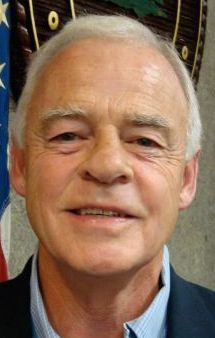 Bill Donovan
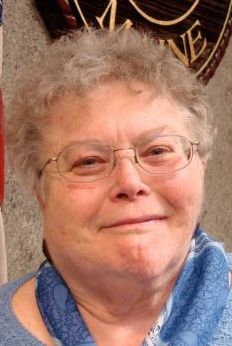 Carol Rancourt
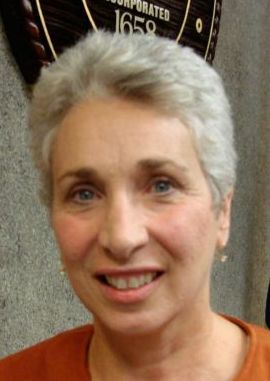 Jean-Marie Caterina
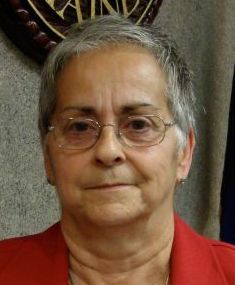 Judy Roy
Comments are no longer available on this story