
The Chronic Pain Support Group of Southern Maine, which recently observed its 20th anniversary, is anything but a bimonthly pity party.
“Members offer (each other) understanding and acceptance,” said founder Susan Gold of Saco. “Sometimes there are tears. But there are also lots of laughs, too, as people discover that life goes on and that every life can be a good life – even lives marred by chronic pain.”
Gold started the pain support group after being diagnosed with rheumatoid arthritis and finding that although friends and family were sympathetic, none of them could truly understood what it meant to cope with pain every day.
“People would express sympathy one day, then ask me to do things that were impossible for me given my condition,” she recalled. “I began to feel bitter and isolated. Then one day a homeless man, seeing me grimace in pain as I stepped out of my car, said to me, ‘Your knee hurts. I hope it feels better soon.’ Just to have that acknowledgment lifted the weight of resentment from my shoulders.”
The goal of the pain group, which got its start in late summer of 1993, is to provide a safe place where people with chronic pain can support one another, develop friendships, share ideas and thoughts, obtain information about their condition from professionals and each other and learn coping skills in a nonjudgmental and caring atmosphere, according to Gold.
She said the most important aspect of the group is that the members can offer each other support and understanding.
“At every meeting I facilitated, at least one person would nod, first in amazement and then in relief, that here, finally, someone understood what it meant to live every day in pain,” she said.
The group has adopted a motto, “Pain is inevitable, misery is optional,” which helps members to reject misery and grab all the joy they can every day.
The chronic pain group is now under the leadership of Ernest Merritt, who took over as the facilitator in 2008.
“Age, sex, level of education, job or unemployment make no difference – we all live with chronic pain and we all can benefit from each other’s journey,” he said.
Attendance at the group’s twice monthly meetings fluctuates, according to Merritt, but there is generally an average of eight people who come to the meetings held at The Pines in Ocean Park on the first and third Thursday of each month.
“We encourage family and friends to attend meetings so that they can better understand what their loved one is going through and learn how to be supportive,” Gold said.
Gold said that while the support group cannot “make the pain go away, we can show (people) how to live a better, more enjoyable and productive life despite the pain. At the meetings you will find a community of friends who truly do understand what it’s like to face chronic pain every day.”
During its 20th anniversary celebration, the group gave out certificates of appreciation, thanked the volunteers who work with the group and viewed the University of New England produced documentary, “Portraits of Pain,” which features interviews with several local people who live with chronic pain, including both Merritt and Gold.
A CLOSER LOOK
The Chronic Pain Support Group of Southern Maine meets at The Pines in Ocean Park the first and third Thursday of each month. The first meeting is at 6 p.m. and the second is at 11 a.m. Go online to www.painsupportgroup.org or call Evelyn at 937-5020 or Jane at 934-4189 or email supportgroup@gwi.net for more information.
The group next meets on Thursday, Oct. 3, at 6 p.m. The guest speaker is Dr. Gregory W. Nevens, who will talk about the sources of chronic pain and how to treat it using complementary and alternative medicine techniques.
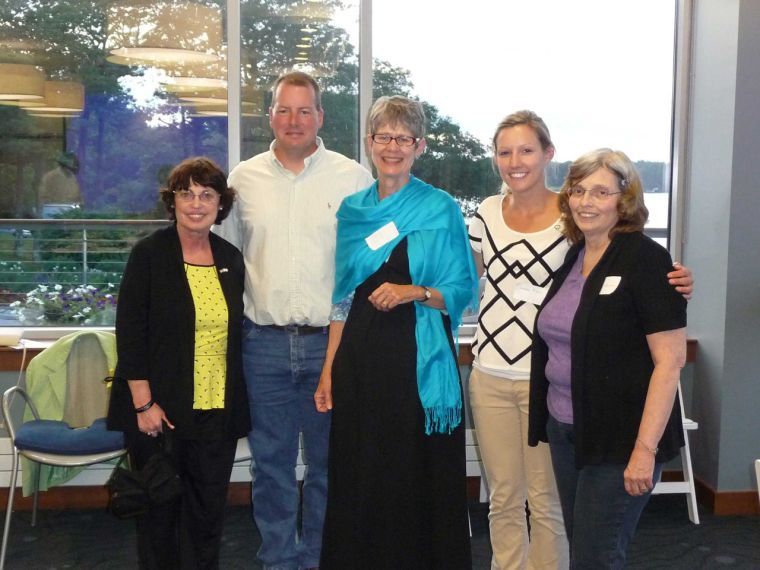 Celebrating the 20th anniversary of the Chronic Pain Support Group of Southern Maine are, from left, Nancy Kelley, Dr. Ed Bilsky, Susan Gold, Lindsay St. Louis and Shirley Gagne.
Comments are no longer available on this story