
Energy-efficiency expert DeWitt Kimball incorporates the training from each of his certifications with more than 20 years of field work in his analysis of buildings. Through his Brunswick-based business, Complete Home Evaluations, he helps homeowners looking to save money on heating bills. Dewitt will be bringing his knowledge to Freeport’s Energy Fair on Oct. 2.
Kimball, 55, was recently invited to Washington, D.C., where he participated in meetings with Sens. Olympia Snowe and Susan Collins, and U.S. Rep. Chellie Pingree, as well as others, talking about the benefits of improving home energy efficiency. He spoke to the importance of the field in relation to job growth, environmental impact and financial gains for families. Kimball, a self-described nomad who lived in the Arctic for a spell, is a graduate of the College of the Atlantic in Bar Harbor and spent a few years teaching middle school in Falmouth. He recently spoke with the Tri-Town Weekly about what he does as an energy consultant, what people can do cheaply to save money, and how spiders can lead a homeowner to savings.
Q: How would you describe what you do?
A: I do energy analysis for residential homes, businesses and churches. I don’t sell anything. There’s an old expression that says if you sell hammers, everything is a nail. I’m a homeowner’s advocate, pure and simple. I’ll come into a home and evaluate the deficiency in efficiency.
Q: How do you do that exactly?
A: I use a depressurizer, an infrared camera, test the actual heating systems and inspect the insulation. I also do air quality tests throughout the house. Based on that, I can give the homeowner an idea of where he or she can save money. If they can do it themselves and save themselves hundreds if not thousands of dollars, all the power to them.
Q: If they choose to go that route, where can a homeowner find information?
A: They can access coupons and discounts through efficiencymaine.com.
Q: Maine has a number of old houses. Does it make saving money on energy more challenging?
A: It can, definitely. The drafty old houses can be tricky. Depending on how they were built, if you wrap an old house up too tightly, moisture can become a problem. Some people think that by buying a new house, everything will be jolly. Some builders are fantastic and some aren’t, so it all depends. A carpenter may be up to date on the latest ways to build efficiently and others may still do the same things they did 20 or 30 years ago. The trend is getting better, though. It’s not just old houses. I have done work with a number of churches who can spend up to $20,000 a year in heating costs.
Q: What types of things will you be discussing in Freeport?
A: As a former teacher, I like to have people ask a lot of questions. It can be wide ranging but I try to educate people on what they can do specifically for their house. Each question and concern can be different, but again I try to steer people in a direction where they don’t have to pour thousands of dollars into something they can do themselves.
Q: What kind of savings are we talking about on heating bills?
A: It could be a savings anywhere from 10 to 20 percent on their own or potentially more if they went through a professional.
Q: So people may need to spend a little money to save a little money?
A: Exactly. If you are looking at hiring someone to do this, it’s generally a four- to five-year payback. For example, if you invested $5,000 on energy efficiency for your home and get a 20 percent annual return on that investment, it’s pretty good. Eventually you’ll start doubling your money every few years.
Q: What are a few common and simple improvements people can do to save money on energy?
A: The first thing is to go into your basement and look for cobwebs, because spiders set up near their food sources. Find where this is happening and spray foam it. Also look near chimneys.
Q: You also perform a whole home energy audit. What is that, exactly?
A: Your utility bill may be shocking, but it offers few helpful details: It doesn’t tell you when your energy use peaks, doesn’t explain how best to reduce power consumption, and doesn’t tell you how your home is spending your money. We think it’s worth finding out. A home energy audit is one of the first steps to understanding your home’s energy usage, as well its overall health and performance. Using a combination of high-tech tests and common-sense evaluations, a good auditor provides homeowners with a list of energy- and money-saving steps, explains how and why your house is costing you money, then prioritizes steps to take to knock down those costs over the long haul.
A typical audit is comprised of several steps: A thorough visual inspection of the home’s building envelope. An insulation check, generally involving infrared thermography, to pinpoint spots where insulation may have settled, been improperly installed, or where it may be missing altogether. An air leakage test using a blower door, to measure the cumulative effect of all the air leaks in the home. A ventilation check – healthy houses have appropriate ventilation, and an auditor will test ventilation systems to ensure that they conform to safety standards. All visible gas lines, the gas stove, and gas-powered water heater will be examined to ensure that there are no leaks. The auditor will evaluate if your central heating system needs cleaning or a tune-up. Finally, expect a few suspect appliances, including old driers or refrigerators, to be tested with an electricity monitor. There are times when one terrifically inefficient appliance throws an entire house’s energy use out of whack. Last off, bear in mind that what turns up might surprise you. Homeowners are often shocked to discover that all the little air leaks throughout their house add up to the equivalent of a window being left open year round. Just remember that what you don’t know can cost you. It’s better to know.
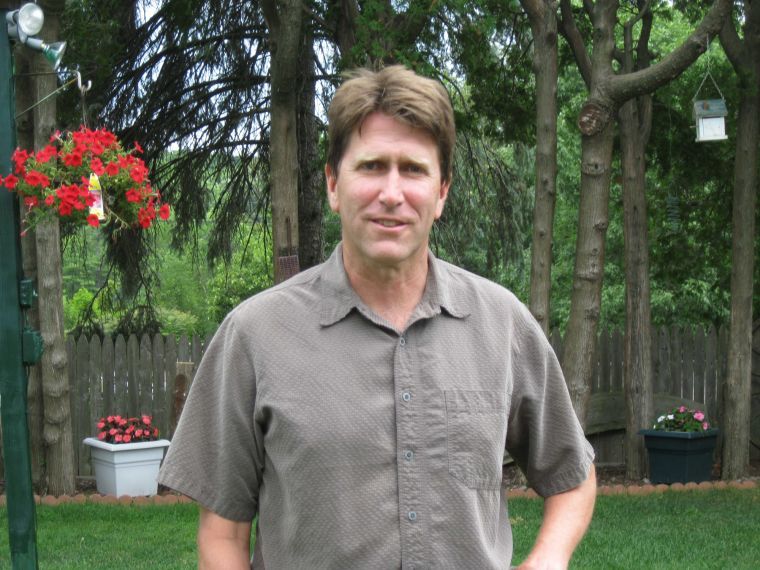 Dewitt Kimball, owner of Brunswick-based Complete Home Evaluations, will be on hand at the town of Freeport Energy Fair on Oct. 2 to answer questions from homeowners who are looking to save money on energy costs. Kimball performs whole home energy audits and advises people on inexpensive ways to help their homes heat and cool better.
Comments are no longer available on this story