
SOUTH PORTLAND – Trout Brook in South Portland is living up to its name, thanks to a little help from city school children.
On Thursday, May 23, fourth-graders from the Dyer and Skillin elementary schools released into the impaired stream baby trout, known as “fry,” which they raised as part of Portland Water District’s Classroom Hatchery Program.
From 500 eggs received in January and nurtured through constant monitoring and care, the students released about 100 fry, each student stepping up to the stream’s edge in the Trout Brook Nature Preserve off Providence Avenue and gently upending a plastic cup containing former charges, given names like Princess Wink-Wink, Sir Kobe Bryant II and Monkey Pudding.
“Have a good adventure, little buddy,” shouted Dennis Slododzian, as he waved off his former charge, named Zippy because “he kept zipping around the cup.”
“Awwww,” said Renee Wallingford, with mock maternal woe, as she watched her fish dart off downstream. “They grow up so fast.”
The project is part of the water district’s educational outreach program, designed to teach children about responsible stewardship of watersheds. This year, the longstanding program, now in its second year at Trout Brook, coincides with renewed efforts to get its 3-mile length removed from the state’s list of “urban-impaired” streams. That drive will gain new momentum Friday with the first meeting of the Trout Brook Watershed Management Plan steering committee. The plan was created two years ago using a $35,000 grant from the state Department of Environmental Protection, which earlier this year funded implementation with another $70,000 grant.
“The fixes are pretty straightforward,” said Fred Dillon, stormwater program coordinator with the South Portland Water Resource Protection Department. “A lot of it is working with abutting landowners to put in buffers and more benign landscaping practices.”
According to Patrick Marass, urban watershed coordinator with the Cumberland County Soil and Water Conservation District, which developed the watershed plan alongside South Portland and Cape Elizabeth, the new grant will help reimburse the owners of land abutting the stream for up to 50 percent of materials they purchase to build those vegetative buffers.
Both Dillon and Marass were on hand for the student project Thursday. While some students studied macroinvertebrates and other aquatic bugs trout feed on, Dillon gave tours of the watershed, while Marass led students through water quality testing, including temperature and electrical conductivity, along with pH and oxygen levels.
Students found all four levels well within the safe range for their fish, although that came as something of a disappointment to some students, following one lighthearted answer by Marass to a student question.
“What do we do with our fish if the water quality isn’t right?” asked Isabelle Stocks.
“Well,” said Marass, causing eyes to pop wide, “I guess you’ll have to take them home and raise them in your bathtubs.”
According to Denise McNamara, an elementary teacher of 25 year’s standing in South Portland, it’s just that type of uncertainty that makes the project memorable for students. From October to April, volunteers from the Portland Water District and the city of South Portland have staged seminars for students as part of the fourth-grade curriculum on watersheds.
“They have interactive lessons and the kids love them and look forward to them,” she said. “In fact, every time they come in I learn something new myself, and they do it for free.
“But this type of thing, it’s more than just learning the vocabulary of the watershed and giving back on right answer. This is hands-on learning, as they take measurements and study the area and the bugs and can’t be sure until they get their results whether or not they can release their fish. Thatmakes it real for them, and I think it makes them more aware of what’s around them.”
To press her point, McNamama noted that earlier that the previous week she was visited by a former student, now enrolled at Yale University.
“I’m sure he’s long since forgotten a lot of what he did in elementary school, but he sure remembered the fish project, back from when we used to do it with salmon released in Westbrook,” she said. “He seemed to remember every detail of that and wanted to know all about what the students do now.”
That type of lasting impact is exactly what the Portland Water District is aiming for, according to it environmental education coordinator, Sarah Plummer.
“It’s really important for environmental education to connect students to local sources,” she said. “From our standpoint, we just want kids to know about the resources in their own hometowns so they feel better connected to water, because they may live in a watershed at some point, somewhere in the world. So, they need to know how to keep it clean.”
Such was the case for Dyer student Gavin Tarling, who admitted that although he goes to Red’s Dairy Freeze “a lot,” he “had no idea this place was in behind here,” or that is part of a 2.35-square-mile watershed that covers much of Cape Elizabeth and South Portland, from the headwaters at Maxwell Farm in Cape to Mill Creek Park, extending as far west as Fickett Street and Sawyer Road.
“This project allows the kids to take all that learning about watersheds and fish anatomy and non-point source pollution to the next level with a living creature they’ve raised themselves,” said Plummer.
“This is pretty cool,” said Tarling, after releasing his fish, named Herman. “I’ve learned there has to be a whole lot of factors that need to be just right for the fish to survive, like temperature, oxygen levels and other stuff.”
Although students found the water quality of Trout Brook well within tolerable levels for its namesake, the 1,700-acre watershed still fails to meet minimum quality standards in the federal Clean Water Act.
In 2006, a study prepared by the South Portland Land Trust, with the help of a citizen steering committee that had worked to collect water samples since 2002, found 86 separate pollution points into the stream, seven of them toxic. Those, according to the land trust’s executive director, Jon Dore, were due in part to the fact that 13 percent of the land area around what since last November has been known as the Trout Brook Nature Preserve is impervious surface, such as parking lots and driveways.
That’s led to the biggest problem for the stream, a high chloride content, possible due to stormwater runoff and spring melt from area roads.
“We’re not certain of it, but we think some of that might be coming from our public works facility on O’Neil Street, actually,” said Dillon. “That’s one of the reasons it might be good to modernize that facility, because it is so antiquated now.”
While the salt is not so bad for the trout, it is toxic to the aquatic organisms they feed on, said Dillon, noting that Trout Brook is one of five urban-impaired streams in South Portland.
“In the more urbanized areas like this, stormwater runoff is typically what causes a whole suite of problems,” said Marass.
“Right now, we’re just starting the implementation project to try and address some of these issues,” said Kate McDonald, a project scientist for the Cumberland County Soil and Water Conservation. “We think its not going to be a huge financial headache for the communities to get us at criteria.
“And, to work with the students and start with them early, so they know what needs to be done to preserve our resources, that’s really exciting,” said McDonald.
“It’s been really eye-opening just how passionate the kids are about this at such a young age,” said Jason Duff, a water district intern and recent environmental science graduate form the University of Southern Maine.
“It’s only because the quality of the water here has so improved in the last few years based on a lot of things the city has done that we are able to do this here,” said McNamama. “So, that’s a very good thing.”
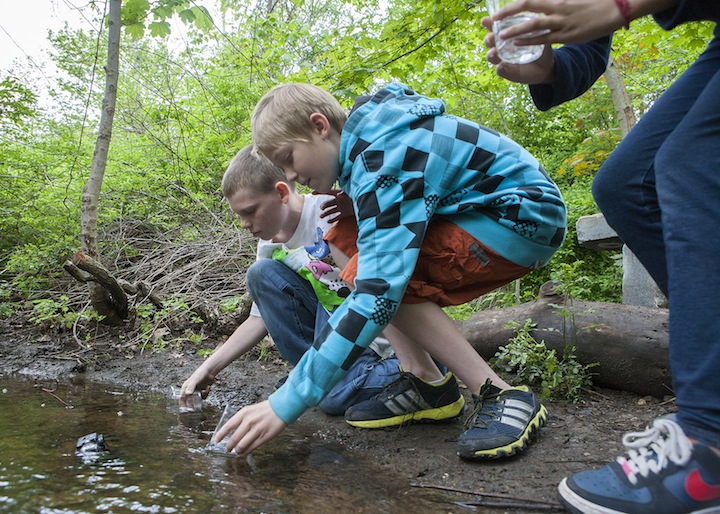
Photo by Rich Obrey
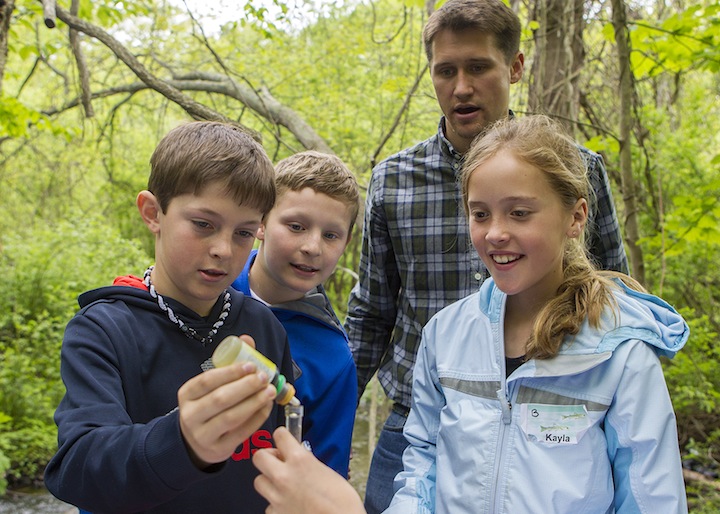
Photo by Rich Obrey
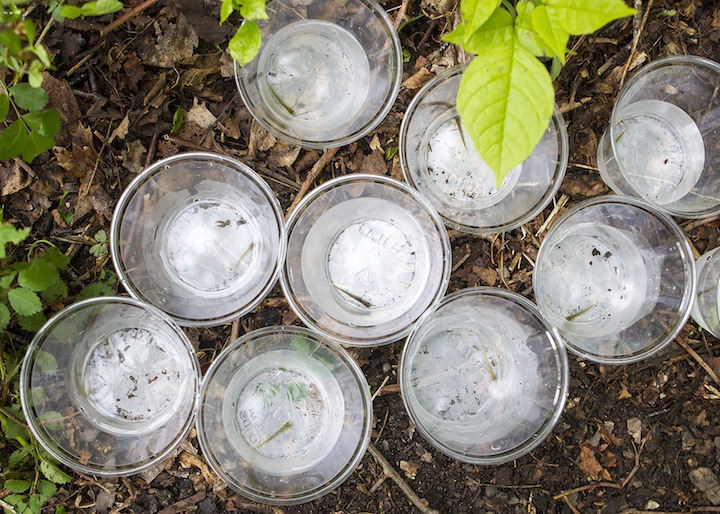
Photo by Rich Obrey
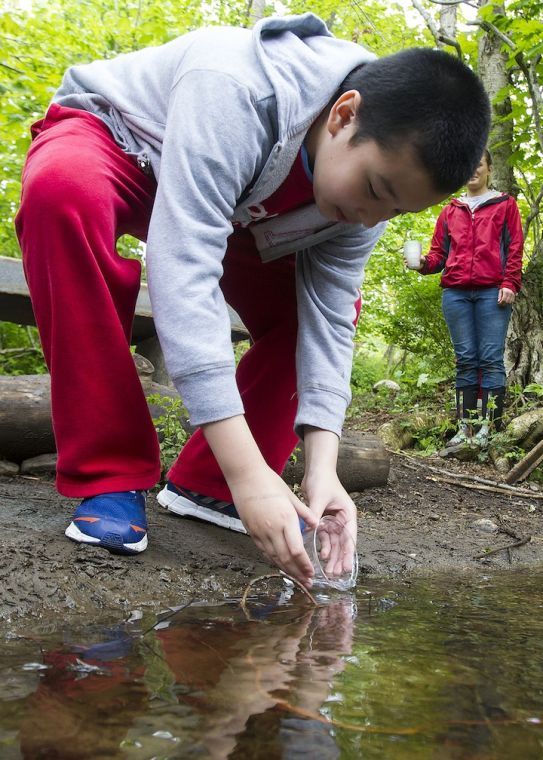 The water testing complete, Dyer Elementary fourth-grader Caleb Doan releases baby trout into the stream at the Trout Brook Nature Preserve.
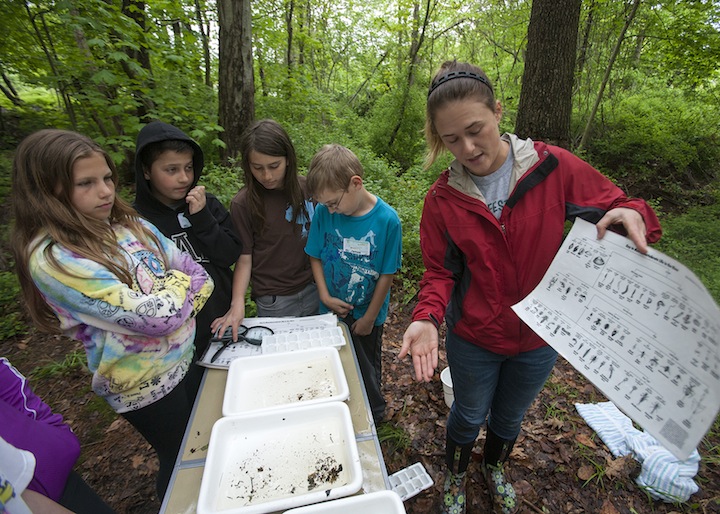
Photo by Rich Obrey
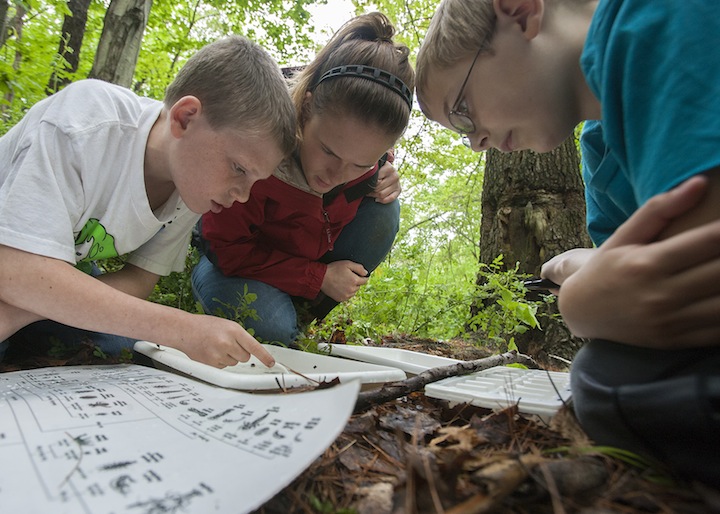
Photo by Rich Obrey
Comments are no longer available on this story