
WESTBROOK – Inside Westbrook Middle School cafeteria, seventh-graders are hanging around the trash.
The students aren’t looking for test answers or love notes. They’re working to reduce the amount of trash from the cafeteria as part of the Chewonki Foundation’s Zero Waste challenge, aimed to eliminate much of the waste that could be recycled, composted and reused instead of tossed.
Westbrook Middle School has been named as one of the top three schools out of the 14 in the state participating in the contest.
“We wanted to reduce waste in the school,” said Evan Pednault, 13.
“And composting is a good deal and you can reuse composting for gardening soil,” added classmate Ethan McCoubrey, also 13.
According to a 6-minute video for the competition, written and produced by students about their project, the group has been able to reduce the amount of trash coming out of the cafeteria by 94 percent and increased recycling by 50 percent by making a few simple changes.
“We got the cafeteria to stop using plastic straws and foam plates,” said 13-year-old Shania McCrillis.
McCoubrey said before the seventh-graders started this project in December, there were at least three trash bins per row in the cafeteria. Now, instead of having about 15 trashcans in the room, there’s a station with two bins for recycling, trash and composting, along with smaller bins for liquids and even a container for plastic silverware.
Barbara Nichols, director of school nutrition programs, is even considering getting rid of plastic silverware and replacing it with reusable utensils.
“I support this project 100 percent. I think it’s wonderful,” Nichols said. “We’ve done a few things to support the program so far. We got rid of foam plates and replaced them with paper. We may even get rid of those and maybe go to a deli wrap, that’s for pizza. We maybe getting rid of plastic utensils, but I need to know they wouldn’t be thrown away.”
With help from the janitorial and school staff, the students also calculated they could save the school district $1,840 per year on their trash collection bill by simply separating all the trash into proper bins just inside the middle school cafeteria.
“We’re only a few weeks in and already I’ve had kids come forward and say, ‘Hey, can we help?’ By the time the fifth-graders become seventh- and eighty-graders, we should have a great recycling program in place,” said Al Hardy, a special services aide who helps with the program.
Student volunteers are used each lunch period to direct those finished with their meal to dump their trash, food, liquids, recyclables and reusables into specifically labeled bins. Already, the students say many don’t need help anymore. They just get it.
The 40-student team submitted its video to Chewonki in January to show the research, findings and the improvements made so far.
“Not every school does a video. Some people jumped out of recycling bins. We had a couple of pictures to show what we were doing. The video shows what’s trash and what’s recycling,” said Michael Young, a student involved in the project.
In October, teachers Stephen Moulen and Miranda Fernald began to incorporate elements of the competition into their social studies and science lessons.
By December, students were collecting data on the amount of waste the fifth- through eighth-grade students threw away each day. They spent three days weighing all the trash and digging through the garbage. Students found out that 10 percent was recycling, 27.5 percent was liquids, 56.5 percent could be composted and only 6 percent was trash.
The project isn’t limited to the confines of the cafeteria.
Inside the school building itself, students made sure each classroom had a recycling bin and replaced the small bins with larger ones. The custodial team told the classes that they are now emptying the recycling bins twice as much as they had in the past.
McCoubrey brought in a basketball hoop the team set up in a hallway to encourage people to recycle by making it a game. Prizes are even given away as added incentive to recycle and more students are picking up trash they see in the hallways.
They are also trying to push more classrooms to use less paper by championing the use of white boards and recommending information that needs to be sent home to parents be done by email instead of handouts.
Students are taking what they learned inside the classroom back home with them. Many in the classes say they have started to recycle more at home and teach their parents about the program and they’ve changed their habits in order to help the environment.
“Whenever I went to baseball I’d have a soda and I’d just throw it on the ground and stuff. Now I know there is a recycling bin and I just have to hold on to it until I get to it,” said Chase Levasseur, 12.
Eventually, the students want to see more change inside the district by implementing the program at all schools and teaching other students at a younger age what and how to recycle.
In April, the students will find out whether they won $2,000 for first place, $1,000 for second or $500 for third place during the award ceremony. While the date for the awards is still unknown, the students do know all the money will go back in to the project and they will be awarded with a bowling party as a special thanks to everyone who participated.
The project isn’t without problems. According to Hardy, each month it costs a few hundred dollars to pay for handling the food waste, which is composted. The hope is that aspect will one day be self-sustaining by selling the compost, but that part still needs to be hammered out.
After a Portland Trails representative began to work with Westbrook Middle School last fall on cleaning up the trails near the school, Hardy suggested there was an opportunity to make the already eco-friendly building even greener through the Chewonki competition.
Eventually, the students would like to expand the trail system around the school, but for now the focus moves to Earth Day next month.
“It’d be great if the compost was ready for Earth Day. They can take what was rubbish and see it become something useable,” Hardy said.
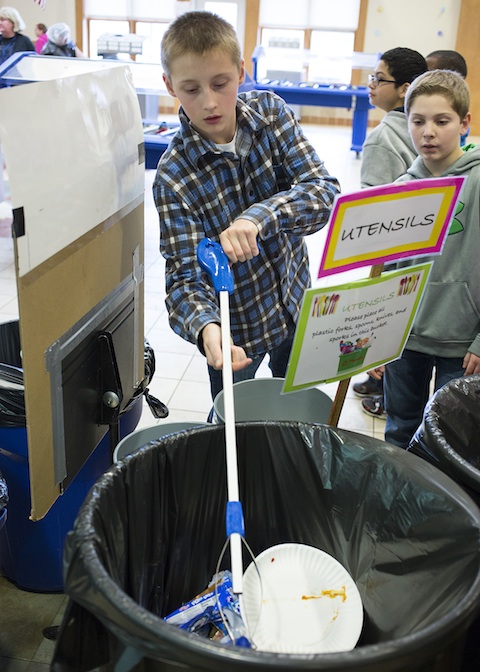
Photo by Rich Obrey
Photo by Rich Obrey
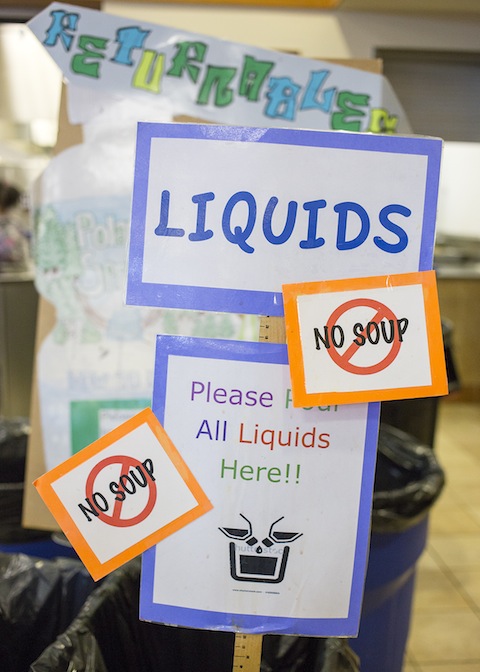
Photo by Rich Obrey
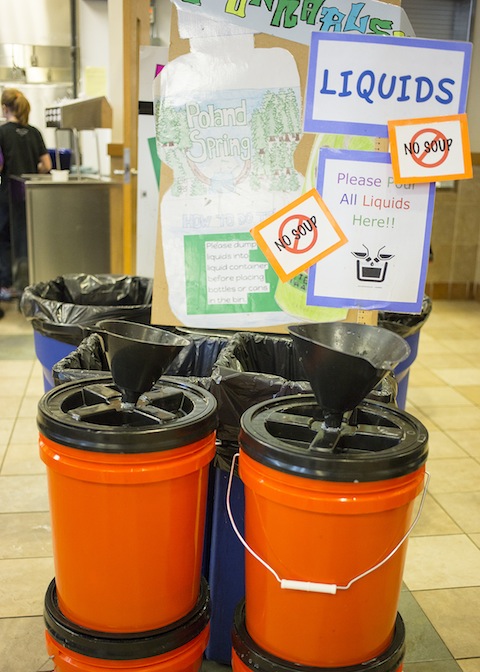
Photo by Rich Obrey
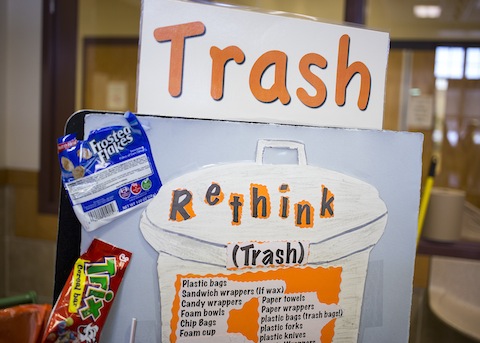
Photo by Rich Obrey
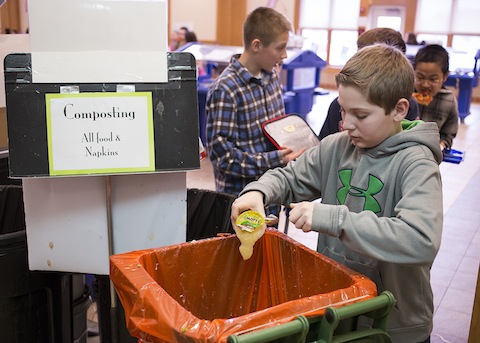
Photo by Rich Obrey
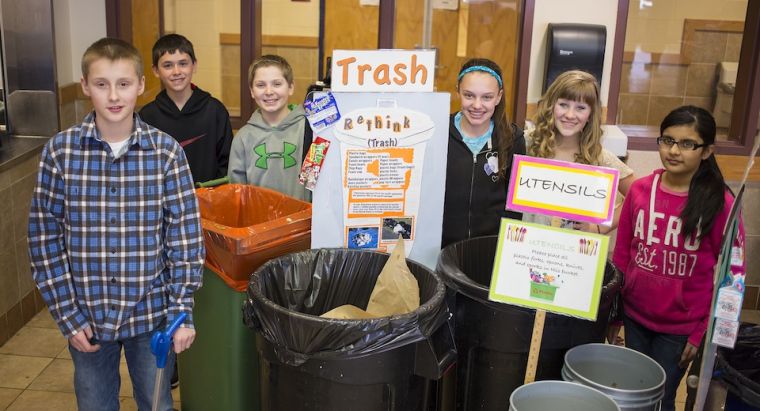 Students at Westbrook Middle School spearhead an effort to recycle or reuse all the food, plates and utensils thrown away in the school cafeteria.
Comments are no longer available on this story