Posted inAmerican Journal

Finding her voice again

4 min read

WESTBROOK – Three decades ago, Betty Lou Trufant caught a cold

and lost her voice. Like most of us, she suffered through the

sniffling, the sneezes, the coughing and the laryngitis that often

comes with the seasonal illness. But while the cold went away, her

voice never returned. Until a new treatment allowed her to speak

for the first time in 30 years.

Advertisement

WESTBROOK – Three decades ago, Betty Lou Trufant caught a cold and lost her voice.

Like most of us, she suffered through the sniffling, the sneezes, the coughing and the laryngitis that often comes with the seasonal illness. But while the cold went away, her voice never returned.

Trufant, 64, of Westbrook, suffered from vocal paralysis, a rare condition usually occurring as a side effect in surgical patients. In Trufant’s case, doctors believe it was caused by the cold virus. Since 1982, Trufant could converse only in a hoarse whisper, or communicate using gestures or grunts.

“I really didn’t think that there was any hope for me,” she said.

But the accidental discovery of new treatment for the disorder on a TV program last spring led Trufant to find help from a clinic in Ohio, and today she is able – for the first time in 30 years – to have a normal conversation with the voice she remembers.

This week, she was the subject of a TV program herself, on ABC News, which tagged along for a follow-up visit Trufant made to the Cleveland Clinic in Cleveland, where she had the surgery done on Aug. 23, 2011.

Advertisement

Trufant said she contacted the clinic after seeing another program on ABC News about a Maryland woman who had a similar problem and got treatment there.

Dr. Michael Benninger, chairman of the clinic’s head and neck institute, performed the procedure that saved Trufant’s voice. He described her condition as only partial paralysis.

Benninger said the common term “vocal chords” is a misnomer, because the human larynx contains flaps, or “folds,” which open and close on either side of the throat and give people the ability to produce a voice.

“It’s like a piano string or a guitar string,” he said. “They’ve got to vibrate to produce sound.”

But they have to be touching to vibrate together to work. For 30 years, Benninger said, one of Trufant’s folds, paralyzed by the virus, has not moved, so she could not make the sounds ordinary people make without help.

“I really spoke like I was a heavy smoker,” said Trufant, who has never smoked in her life.

Advertisement

Benninger said the clinic, which performs heart, chest, and many other surgeries every day, sees the condition in some patients, but only after they come out of surgery. While not unheard of, vocal paralysis that comes from another source, as in Trufant’s case, is rare.

“It’s only a small segment of these people who have permanent paralysis,” he said.

While Trufant could communicate with the paralysis, it was almost impossible for others to hear her, especially in noisy circumstances. She couldn’t order food at a drive-up window. Attending parties or any public gatherings, she said, had been out of the question for the past three decades.

“It becomes very frustrating and depressing,” she said.

Now retired, Trufant used to work in data entry, a job she loved in part because she could sit alone in a cubicle and not have to deal with the public.

Benninger’s operation, which Trufant said was covered by insurance, involved inserting a silicone implant in Trufant’s throat, essentially propping up the paralyzed vocal fold so the other fold could touch it, allowing Trufant’s voice to work.

Advertisement

It took some time to recover, but soon, Trufant said, she could speak with her old voice again. It worked so well, she said, that Trufant’s grandson, Trey Jacobs, 11, who had never heard her real voice, didn’t believe he was talking to her on the telephone the first time he spoke to her after the surgery.

“She doesn’t sound like she’s whispering anymore,” he said.

Benninger said the technique he used has been around since the 1970s, but it took many years to catch on as a more common treatment. Meanwhile, Trufant, who tried everything in the 1980s, including a host of homeopathic remedies suggested by well-meaning friends and family members, believed there was no treatment available.

“Some time ago, she was under the impression that nothing could be done,” Benninger said.

Today, Trufant said, her confidence is returning, and she hopes to serve as an example to others who think nothing can be done.

“I’m hoping through all this that someone who doesn’t have a voice can see that they have a voice,” she said.

Benninger said most cases of vocal paralysis are treatable today.

“There are very few reasons that people should be left without a voice,” he said.
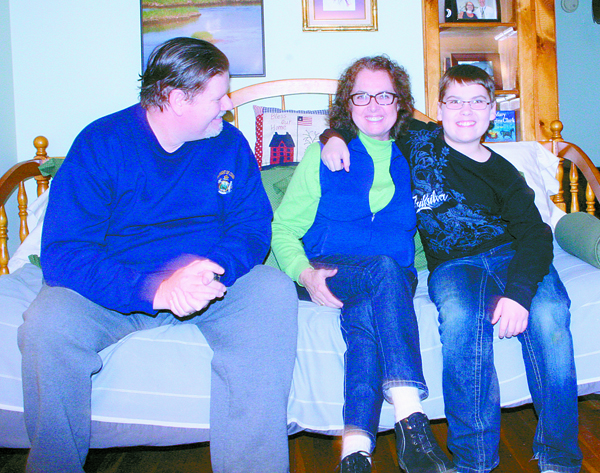
Betty Lou Trufant sits in her Mayberry Road home in Westbrook
with her husband, Ron, and her 11-year-old grandson, Trey Jacobs.
Trufant recently had surgery done to repair her vocal chords after
a virus left them partially paralyzed, leaving her virtually unable
to speak, 30 years ago. (Staff photo be Sean Murphy)

Comments are no longer available on this story

Posted inAmerican Journal, Southern Forecaster, Web

Finding her voice again

4 min read

WESTBROOK – Three decades ago, Betty Lou Trufant caught a cold

and lost her voice. Like most of us, she suffered through the

sniffling, the sneezes, the coughing and the laryngitis that often

comes with the seasonal illness. But while the cold went away, her

voice never returned. Until a new treatment allowed her to speak

for the first time in 30 years.

Advertisement

WESTBROOK – Three decades ago, Betty Lou Trufant caught a cold and lost her voice.

Like most of us, she suffered through the sniffling, the sneezes, the coughing and the laryngitis that often comes with the seasonal illness. But while the cold went away, her voice never returned.

Trufant, 64, of Westbrook, suffered from vocal paralysis, a rare condition usually occurring as a side effect in surgical patients. In Trufant’s case, doctors believe it was caused by the cold virus. Since 1982, Trufant could converse only in a hoarse whisper, or communicate using gestures or grunts.

“I really didn’t think that there was any hope for me,” she said.

But the accidental discovery of new treatment for the disorder on a TV program last spring led Trufant to find help from a clinic in Ohio, and today she is able – for the first time in 30 years – to have a normal conversation with the voice she remembers.

This week, she was the subject of a TV program herself, on ABC News, which tagged along for a follow-up visit Trufant made to the Cleveland Clinic in Cleveland, where she had the surgery done on Aug. 23, 2011.

Advertisement

Trufant said she contacted the clinic after seeing another program on ABC News about a Maryland woman who had a similar problem and got treatment there.

Dr. Michael Benninger, chairman of the clinic’s head and neck institute, performed the procedure that saved Trufant’s voice. He described her condition as only partial paralysis.

Benninger said the common term “vocal chords” is a misnomer, because the human larynx contains flaps, or “folds,” which open and close on either side of the throat and give people the ability to produce a voice.

“It’s like a piano string or a guitar string,” he said. “They’ve got to vibrate to produce sound.”

But they have to be touching to vibrate together to work. For 30 years, Benninger said, one of Trufant’s folds, paralyzed by the virus, has not moved, so she could not make the sounds ordinary people make without help.

“I really spoke like I was a heavy smoker,” said Trufant, who has never smoked in her life.

Advertisement

Benninger said the clinic, which performs heart, chest, and many other surgeries every day, sees the condition in some patients, but only after they come out of surgery. While not unheard of, vocal paralysis that comes from another source, as in Trufant’s case, is rare.

“It’s only a small segment of these people who have permanent paralysis,” he said.

While Trufant could communicate with the paralysis, it was almost impossible for others to hear her, especially in noisy circumstances. She couldn’t order food at a drive-up window. Attending parties or any public gatherings, she said, had been out of the question for the past three decades.

“It becomes very frustrating and depressing,” she said.

Now retired, Trufant used to work in data entry, a job she loved in part because she could sit alone in a cubicle and not have to deal with the public.

Benninger’s operation, which Trufant said was covered by insurance, involved inserting a silicone implant in Trufant’s throat, essentially propping up the paralyzed vocal fold so the other fold could touch it, allowing Trufant’s voice to work.

Advertisement

It took some time to recover, but soon, Trufant said, she could speak with her old voice again. It worked so well, she said, that Trufant’s grandson, Trey Jacobs, 11, who had never heard her real voice, didn’t believe he was talking to her on the telephone the first time he spoke to her after the surgery.

“She doesn’t sound like she’s whispering anymore,” he said.

Benninger said the technique he used has been around since the 1970s, but it took many years to catch on as a more common treatment. Meanwhile, Trufant, who tried everything in the 1980s, including a host of homeopathic remedies suggested by well-meaning friends and family members, believed there was no treatment available.

“Some time ago, she was under the impression that nothing could be done,” Benninger said.

Today, Trufant said, her confidence is returning, and she hopes to serve as an example to others who think nothing can be done.

“I’m hoping through all this that someone who doesn’t have a voice can see that they have a voice,” she said.

Benninger said most cases of vocal paralysis are treatable today.

“There are very few reasons that people should be left without a voice,” he said.

Betty Lou Trufant sits in her Mayberry Road home in Westbrook
with her husband, Ron, and her 11-year-old grandson, Trey Jacobs.
Trufant recently had surgery done to repair her vocal chords after
a virus left them partially paralyzed, leaving her virtually unable
to speak, 30 years ago. (Staff photo be Sean Murphy)

Comments are no longer available on this story