
WESTBROOK – Eric Dahms doesn’t think of himself as a crusader, but the Westbrook native, who now makes his living in England as a digital advertising analytics consultant, knows the web. When news of hundreds of protestors taking to the streets in New York City to protest against corporate greed broke via social media, not mainstream news outlets, Dahms thought something was wrong.
For Dahms, 27, watching the news from 3,000 miles away, the situation was eerily similar to news of protests breaking out during the now-famous Arab Spring, and the aftermath of the elections in Iran. While totalitarian dictatorships did not muzzle the American press, Dahms believes apathy did, and he has since set out, like he did with the news from the Middle East, to spread the word online. He has aggregated articles, photos, and other information on the protests, in New York and now other American cities, on his Facebook page, www.facebook.com/EricDahms, and his Twitter feed, at www.twitter.com/edahms.
Dahms grew up in Westbrook, graduating from Westbrook High School in 2002. He went on to get his bachelor’s degree in marketing and information technology at Bentley University in 2006, and a Master’s in international economics from Essex University in 2010. Today, he watches events unfolding in the United States from afar, and this week, he spoke to the American Journal about what he has been documenting.
Q: What moved you to begin documenting unfolding events online?
A: A few years ago, I decided to turn my social media networks into information dissemination networks. I began using my Twitter feed as a source for news and realized that a lot of people I know don’t seek out information on domestic or international affairs. I wanted to help educate, so I began re-posting the articles I read, hoping that if people saw them in their feeds, they would read them. Essentially, if people weren’t going to seek out global information, I would try to bring it to them.
After moving to England, I realized how isolated we truly are in the U.S. Our news barely touches on global events, and our information about other countries’ cultures and histories is limited in our education. I don’t necessarily think it is a fault of our society or culture, though, as I believe it is a direct result of our geographic location. Geographically, we are quite isolated – we are on a need-to-know basis regarding events across the world and often we simply just don’t need to know.
Q: How did you first find out about the Occupy movements?
A: I first heard about the Occupy movement on Twitter – just like the Arab Spring uprisings and Iran protests – during the first week of the occupation in New York City.
Q: Can you describe your reactions to the first reports about the protests? What has been the mood of the various participants in the protests?
A: My first reaction was one of full support. I believe many of the ideals they’re representing are the next evolution required to sustain a system of governance that is supported by the people. As an economist, I think the growth in income disparity we have seen in the past decade is unbelievable.
The mood of the participants has been that of joy and determination. Joy that finally people are starting to ban together en masse to voice their opinions against a system that has clearly caused harm to a high percentage of people. Determination to spread the word of protest as effectively as possible, get peaceful bodies in the streets, create a general assembly system that is as democratic as possible, find solutions for monetary and equipment support, hit a critical mass, and get our representatives to hear our voices over the corporate campaign donation dollar signs.
Q: Is your goal here to express your own views about the movements, or merely a documentation of what others are doing?
A: My goal is to document what has been occurring in the Occupy movement as it has become blatantly evident that American news agencies were consciously ignoring the protests. I don’t believe agencies can ignore it now, but very few will cover it in-depth – that is, until the unions begin putting thousands of bodies on the streets and call for strikes, which I believe is highly probable in the coming months.
Q: When you say the mainstream media has been “ignoring” the Occupy protests, what do you feel has not been represented?
A: I’m absolutely baffled that the protesters’ first march to Union Square in New York and the reaction of the NYPD was not caught on mainstream media news cameras. True journalism would have seen multiple reporters speeding down to the thick of it to document the event – whether or not those reporters agree with the protests. A true journalist would be camped and living with Occupy protesters while documenting the entire event as it unfolds over weeks or months. Instead, all we get is a 2-minute, possibly live and probably rehearsed conversation between a broadcaster and a dolled-up reporter. That’s not journalism.
Q: Have you seen evidence that your online documenting is having an impact? Have the movement participants contacted you as a result of your posts?
A: The simple answer to this is the growth in social media followers and comments or retweets on protest posts. I’ve had a number of people thank me for collecting media and disseminating it, and I’ve been invited to join social network groups to help spread information. I’ve communicated with those leading OccupyChicago, and I’m hoping to provide assistance however I can to OccupyBoston and OccupyMaine. Additionally, I’ve been in communication with and have provided a few videos to both FeedTheProtest.com and USLaw.com to support an investigation into a specific charge that was given to an arrested protester.
Q: Do you view yourself as a journalist?
A: I do not view myself as a journalist. I have realized, though, that with this Internet evolution of real-time citizen journalism through social media comes the demand for a new role – a person that confirms, collects, collates, centralizes, and even investigates the media and information that flows through networks. I cannot be at the Occupy protests in body, but I can support the movement by sacrificing my time to document this information flowing in real-time.
Q: Being someone participating in spreading the word, do you feel you’ve learned more about the events than you would have simply by watching the news or reading other third-hand accounts reported by other sources?
A: Undoubtedly. Becoming immersed in this information gives one a much more thorough perspective than the evening news or even the daily paper would give. In a country with highly polarized politics voiced through giant media conglomerates, it becomes increasingly important for individuals to be able to seek out information for themselves and create opinions based on proactive research. The Internet gives us more information at the push of a button than any human being has ever had since the dawn of civilization, and we must use that to our advantage.
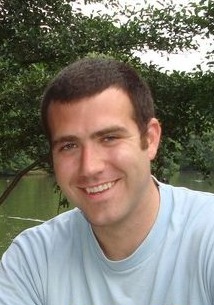 Eric Dahms, a Westbrook High School graduate, watches events
Comments are no longer available on this story