
WINDHAM – The Residential Rehab program at Windham-based Crossroads for Women, which has been the cornerstone of its substance abuse program since 1974, would be shut down if cuts proposed in the new state budget become a reality.
In his budget proposal submitted last month to the Maine Legislature, Gov. Paul LePage cut funding to the Maine Office of Substance Abuse by 31 percent, or $5.6 million, for the upcoming 2011-2012 fiscal year, according to Director Guy Cousins. The OSA funds Crossroads and several other substance abuse programs throughout the state.
In total, 10 of the state’s 13 residential substance abuse programs would be cut, Crossroads’ program among them, spurring fears that critical care for patients would be eliminated, and that costs would simply be shifted to places where care is more expensive, such as hospital emergency rooms and jails.
In an effort to reach the $5.6 million in cuts, Cousins said he had to target the department’s most expensive programs, namely inpatient rehabilitation programs where patients receive constant care while they recover from drug and/or alcohol addiction. Three residential programs will remain in operation, in Portland, Bangor and Aroostook County.
“(Residential programs) are the most expensive since they are 24/7. To come close to that $5.6 million number, we had to identify the programs that cost the most,” Cousins said Tuesday. “We’re charged with submitting a budget. This is the only way we could do it.”
According to Darcy Boulton, who completed the Crossroads rehab program 21 years ago and became the organization’s director of administrative services shortly afterward, the cuts would total $855,000 and spell the end of what she says has been a successful program with a 73 percent success rate. Over the last 10 years, she said, Crossroads has served 1,927 women from throughout Maine in its Windham location alone.
“I’ve seen proposals like this before, but usually cooler heads prevail. But this time I’ve got a really bad feeling,” said Boulton, who grew up in Windham and credits Crossroads for saving her life.
Boulton said the cuts would actually cost the state more in the long run since people who need rehabilitation would find their way into other parts of the state’s health system such as jails and hospitals.
“It’s penny wise and pound foolish,” Boulton said. “The whole health care system will be impacted. Rather than coming here, where will these women go? Jails, hospital ERs, that’s where. It’s going to be pretty scary.”
When asked about the potential impact, Cousins agreed with Boulton, saying for every one dollar spent on treatment programs such as Crossroads, the state saves $7. And when asked about the long-term costs, Cousins replied, “I’m not sure how anyone can argue with that. It’s going to be challenging meeting the treatment requirements, but this is the financial reality we’re dealing with.”
According to Crossroads Executive Director Barbara Dacri, the facility has 15 beds in the Residential Rehab program in Windham, 12 beds in a halfway house program in Portland and an outpatient clinic in Kennebunk where women can come for therapy sessions lasting one to three hours. If the governor’s cuts are approved by the Legislature, Dacri said Crossroads would only have enough money to support the inpatient program in Kennebunk. But, she said, “for many that’s not enough of an intervention” because most women who use the program are dealing with abusive situations at home and require full-time support away from family or friends “who may try to sabotage their recovery.”
“The loss of this is significant,” Dacri said. “Many of these women have histories of trauma: sexual, emotional, mental. It goes hand in hand with substance abuse. What they need is a safe place to detox and round-the-clock support.”
Sen. Bill Diamond, D-Windham, said the Legislature has yet to take up the Governor’s budget since it’s still making its way through committee and that “there’s a long way between now and May by the time the budget is passed so I would say it’s still a bit early, since nothing is finalized.”
Diamond supports the Windham program, saying, “It’s a valuable program and they have their cheerleaders and I’m one. But this isn’t a foregone conclusion and it’ll be a battle just like anything else.”
Diamond also said the Governor’s budget has a net increase of $300 million, which might provide some opportunity for shuffling priorities.
“That’s $300 million more than Baldacci’s last budget, and this is a low-priced program so we’ll see what we can do,” he said. “We’ll end up paying more if it’s closed. So in that way it makes sense to keep it going.”
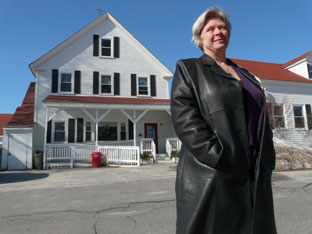 Darcy Boulton, who completed a substance abuse recovery program at Crossroads for Women in Windham 21 years ago, is proud of the substance abuse program she now works for but concerned for the program’s future since the current state budget calls for closing all but three of the state’s residential rehab programs, Crossroads, above, among them. Staff photo by John Balentine
Comments are no longer available on this story