
After acquittal, prosecutor says he believes Agostino Samson ‘got away with murder’
After five days of testimony, 32 witnesses, and a day and a half of jury deliberation ending late Tuesday afternoon, Agostino J. Samson of Windham was found not guilty of murdering Scott Libby of Raymond.
The question now remains: Who is responsible for the death of Libby, a respected landscaper, accountant and one of the founders of the Lakes Region Farmer’s Market?
Prosecutors in the case are “mystified” by the not-guilty verdict and still believe Samson was Libby’s killer. They aren’t pursuing any other suspects.
“As far as I’m concerned, Mr. Samson got away with murder. There is no other evidence pointing at any other human being. There is, however, overwhelming evidence pointing at Samson,” said Assistant District Attorney Andrew Benson, who led the prosecution for the state.
Samson was cleared of both the murder charge and a lesser manslaughter charge Tuesday afternoon. In media reports, Samson said he was relieved the trial was over and was looking forward to returning to his grandmother’s home in Windham.
Samson was accused of killing Libby in the early morning hours of Feb. 20 by bludgeoning him to death with a cast-iron frying pan, and then driving Libby’s car to a desolate section of railroad track about a quarter-mile from the Bethel Hostel, where Samson lived at the time of Libby’s murder.
A train struck Libby’s car at 2:45 a.m. but an autopsy determined that the slow-speed collision couldn’t have caused the injuries found on Libby’s body. Instead, the state medical examiner’s office determined Libby died of repeated blows to the head and neck caused by blunt-force trauma.
The defense for Samson argued throughout the case that the prosecution had little direct evidence placing Samson at the scene of the crime, only circumstantial evidence.
A day after the verdict was read, prosecuting attorney Benson agreed the state’s case was built on circumstantial evidence, “but it was overwhelming circumstantial evidence of the defendant’s guilt,” he said.
In arguing for Samson’s guilt, Benson told jurors police had found a fingerprint of Samson’s containing Libby’s blood on the Bethel Hostel entrance door. He said Samson had access to a frying skillet since he was a cook at a Bethel restaurant. Benson also cited cell phone records showing Libby and Samson talking the night of the crime, as well as cell phone tower records showing Libby met with Samson the night of the crime.
Also presented were statements of several witnesses saying Libby was meeting Samson to return a wristwatch and necklace Libby was holding as collateral for a $400 loan Libby had given Samson. Benson argued that crime lab investigators found Libby’s blood on the face of the wristwatch, and that an alcohol swab containing Libby’s blood was found in a Dumpster at the Bethel Hostel where Samson was staying.
Defense attorney Maurice Porter declined to comment for this story. At trial, Porter argued against the blood evidence, saying the DNA was inconclusive and could have belonged to someone other than Samson.
He also argued that the skillet handle found in Libby’s car was made of different material from the skillets used at Samson’s place of employment. Porter told the jury that police found no evidence between the scene of the accident and Samson’s residence at the Bethel Hostel, which is located about three-tenths of a mile from the accident scene.
Clinching testimony
Porter’s cross-examination of Maine State Police Detective Herbert Leighton last Thursday morning may have been key to the jury’s decision. During the lengthy exchange where Porter was faulting the prosecution for not pursuing any other suspects than Samson, Porter asked Leighton, “Were you investigating Mr. Libby’s death, or were you trying to find evidence that (Samson) did it?”
It was during that exchange that jurors were reminded of Libby’s work at a gay bar in Boston and that the area where Libby’s body was found is known as a “gay hitchhiker’s area.”
Benson said Porter was probably successful in spreading doubt in the jurors’ minds by positing the alternative scenario, but he considered the defense’s story of Libby being killed in a rendezvous-gone-bad highly unlikely.
“There is no evidence pointing to any such thing occurring. If you ask me, that whole idea is fanciful. But you have to respect the jury’s findings. I’m sure they acted in good faith,” Benson said.
No family members of Scott Libby commented on the case. A memorial Web site set up for Libby featured a daily blog summarizing the day’s events.
A post from the final day of the trial read, “The family wishes to thank everyone who has expressed their support during this time.”
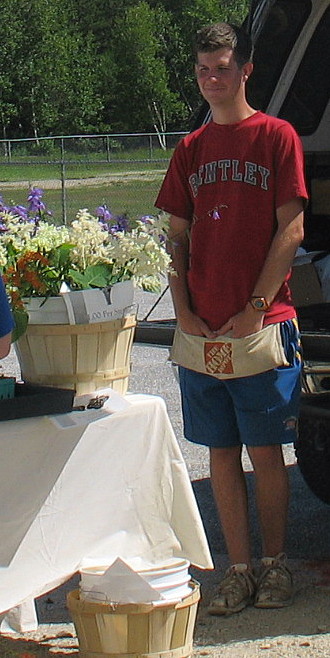 The murder of Scott Libby remains unresolved after the acquittal of Agostino Samson.
Comments are no longer available on this story