
Though Heath Roberts’ new children’s book, “The Day the Frogs Went Hopping Mad,” is not explicitly religious, it was Roberts’ faith that inspired him to write the story.
The book, which was recently released by Tate Publishing, is geared primarily for children ages 5 to 8.
Roberts works at Hancock Lumber’s Ryefield Sawmill and lives in Casco with his wife, Elizabeth; 2-year-old son, Aidan, and 3-year-old daughter, Abigail.
Roberts will read and sign his book at Books N Things in Norway on April 4 from 11 a.m.-1 p.m. He is looking for more opportunities to do readings and signings at other venues.
Q: Does the story in this book come from personal experience?
A: The story itself wasn’t based on anything in particular. I had two goals in mind. One, I wanted to create a book that was fun to read. I’ve always enjoyed Dr. Seuss and Shel Silverstein, books like that. The style was so creative and fun that I enjoyed them. Even to this day, I still enjoy them. That helped shape my style, in terms of rhyming. I used to do a lot of poetry too, so I think it was a natural fit.
The second aspect was, not only did I want it to be fun, I wanted it to be something that would teach children and would have a Christian moral behind it. Kind of like Aesop’s fables always had a lesson behind them. In this book, there’s a verse on the dedication page. It’s Proverb 16:9. “The mind of man plans his way but the lord directs his steps.” It’s kind of the theme of the book.
It’s about an old man looking back on his days as a little boy. He had these visions of grandeur, of catching the big daddy of them all, which is essentially a frog to win all frog race contests… He captures the big daddy, but as he goes to sleep that night the frogs plot to set the big daddy free… He wakes up in the middle of the night to the sound of the frogs and realizes they were coming to set the big daddy free.
It leaves him with a choice, is he going to pursue his dream at the expense of his town or is he going to let the big daddy go and save his town. At that moment, he comes to the conclusion that the best choice is to let the big daddy go, but he experiences the heartache of realizing that it also means letting go of his dreams.
Q: Do you have plans to write more books?
A: I’m kind of waiting to see how this one turns out. I have started a second one. I don’t have a title for it yet, but it’s about Sidney the sparrow. It takes place in the springtime when all the new animals are starting to test wobbly legs. You can hear a bird squawk in the tree and it’s Sidney and all his brothers and sisters have left the nest but he refuses. His parents are trying to convince him that it’s all right, that he’ll be able to fly but he just has to try first. He says, “You always tell me to use my head, but what good does it do if I end up dead.”
It’s about his parents trying to convince him that sometimes you have to step out and face change and face new things in order to truly spread your wings and fly.
Q: Did you read a lot as a child?
A: I loved to read. I read all the way up through high school. I was always in the library getting new books. I grew up in Westbrook. I used to walk from Westbrook Gardens down to the Walker Memorial Library probably at least once a week, and I’d always pick out some new books. I still do, not as much as I used to, with the kids. I still enjoy reading.
Q: What do you hope children get out of the book?
A: My hope is that they realize that life has a lot of curveballs, and sometimes you knock it out of the park, and sometimes you swing and you miss. Both are a real part of life. We want to hit it out of the park every time, but that’s not a reality. But even when you swing and miss, you can learn from that.
And that God has a plan in all of it, in the good and the bad. He doesn’t waste anything. For people that believe in him, that is an important thing for them to hold on to because that gives us strength and comfort in times like these, when you’re not sure how your bills are going to get paid or you just took a hit at work… For those that don’t (believe in God), it’s a truth that’s true regardless of what you believe. If somebody’s an atheist, they could pick up this book and the lesson would be just as true and just as profitable for them.
Q: Do you think more people turn to religion during tough economic times?
A: I think it definitely creates an atmosphere where people have to look beyond themselves, particularly as Americans… Now that we’re vulnerable, it’s scary, and I think it’s a great opportunity because it challenges people to see the truth in life.
We can’t make it on our own. We can try to fool ourselves into thinking that we have it all together and look tough. That’s where faith can come in and believing that there is a God that cares about you, and a God that’s watching over you to protect you and provide for you. That brings great comfort to people.
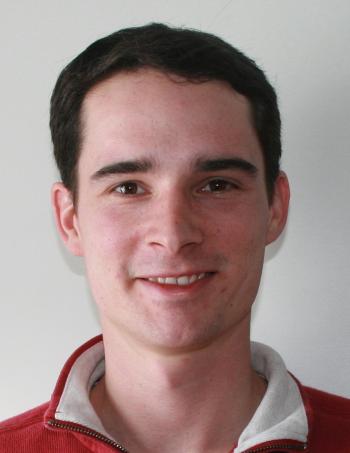 Heath Roberts
Comments are no longer available on this story