
Rep. Lester Ordway, the Republican incumbent and a Standish resident, and Democrat Pam Smith, also of Standish, are vying for the Maine House of Representatives District 23 seat in the Nov. 8 election. House 23 covers part of Standish.
Ordway, 60, is an instructor in automotive technology at Central Maine Community College. He is married with four grown children. Smith, 61, is a lawyer in private practice, with a specialty in ad litem work (primarily representing children). She is married with one child, three stepchildren and three grandchildren.
Ordway was elected to a one-year position in the House last year, in a special election. He served a one-year term on the Standish Town Council, which ended in June 2016, when he decided not to run for re-election.
He has served previously on the Board of Directors for School Administrative District 6, the Standish Planning Board, and presently serves on the School Administrative District 6 Budget Advisory Committee.
In an interview, Ordway said a problem facing the Legislature is that high taxes and regulations make it difficult to run a business. He said as a legislator, he will focus on improving the economy “so our kids can stay” in the state.
A big concern to his constituents, he said, is funding for public education. In 2004, voters approved a referendum question that said the state should fund public education at 55 percent of the total costs. That measure has not been enforced or implemented, but, he said, the state “needs to live up to its obligation and start funding education at the appropriate levels.”
Ordway said he does not support legislative action disciplining Gov. Paul LePage following the obscene voicemail he left Rep. Drew Gattine, D-Westbrook, in August. He said this is because the Legislature does not have the authority to censure the governor, and cannot impeach him because he has not committed a crime.
Ordway said in response to the high levels of opiate addiction in the state, the Legislature should focus even more on education and treatment options for addiction.
“We did some pretty good things last year in the Legislation on the enforcement level,” but the problem can’t be solved from just a single angle, he said.
Ordway is voting for Donald Trump in the presidential election.
Also in November, he plans to vote no for all of the six referendum questions.
“I really don’t care what people do in their own homes,” he said, but he opposes the legalization of marijuana – Question 1 – because the state does not have a way for the police to test people suspected of driving under the influence of marijuana, like they do alcohol.
Question 2, to levy a 3 percent tax on income greater than $200,000 per year to aid education, would “just drive people with means to leave Maine,” he said.
Ordway agrees teachers are underpaid, but does not think taxing income is the right approach. Instead, he thinks the state should fund the total costs of public education at 55 percent.
Ordway said “absolutely no” to Question 3, which would require background checks for gun sales made by an unlicensed dealer, because it’s an “attempt to bypass the Second Amendment.”
As for the minimum wage increase to $12 an hour by 2020, Question 4, Ordway said it would be “a job killer.”
“Should we have a minimum wage increase? Probably,” Ordway said, but Question 4 is not the right approach because it doesn’t have provisions for high school students.
He opposes rank choice voting, Question 5, which he said is against the state’s constitution.
Ordway said he opposes Question 6, to appropriate $100 million in bonds for transportation projects, because he’s “not a big fan of bonding.”
In an interview, Smith considers one of the biggest problems facing the Legislature to be a “lack of bipartisanship,” she said. Smith said as a legislator, she would look at laws based on how they would affect citizens, and would plan to work with Republicans and Democrats.
“As a Democrat, I want to be in the House to be able to support legislation that some Republicans supported last session,” she said, including a solar energy bill that was passed in the Legislature but later vetoed by LePage.
In considering the ballot referendum questions and other issues, she considers multiple angles when deciding how to vote, she said, going “beyond the knee-jerk reaction” of voting with her party.
Smith said among the most important concerns for her constituents are environmental issues around Sebago Lake, and “about how the elderly will be able to continue to afford to stay in their homes.”
Constituents are also concerned about paying for health care, Smith said, which is why she supports the expansion of Medicaid under the Affordable Care Act. LePage has vetoed the expansion of Medicaid in the state.
In addressing the opioid crisis, Smith said the next Legislature should focus on getting more treatment centers to help people suffering from addiction. As a lawyer who works primarily with children, Smith said, she sees the negative effects opioid addiction has on children and families.
Smith said she was “appalled” at the language in the voicemail LePage left for Gattine, which she said was “uncalled for.” She would support action against LePage, if it is brought up when the Legislature reconvenes after the election.
On the Nov. 8 ballot, she will not be voting in favor of Question 3, which would require people who are not licensed firearm dealers to complete background checks before completing a gun sale or transfer, although she does support “reasonable restrictions on gun ownership,” she said.
She supports closing the loophole on private sales, but said Question 3 will unfairly targets responsible gun owners. The bill, in its definition of transfer, focuses more on possession than on ownership, she said, which would mean that giving a gun to friend would be punishable under property law.
Smith is in favor of Question 1, to legalize marijuana for recreational use. She said legalizing the drug would “free up police to focus on more serious crimes” and provide a “fantastic tax revenue, as Colorado has found.” The revenue could be a source of funding to address opiate addiction in the state, she said.
On Question 2, Smith said she supports the effort to raise funds for public schools, citing the importance of education. She also supports Question 4, to raise the minimum wage, and Question 6, appropriating bonds for transportation projects.
She said she will vote against rank-choice-voting, Question 5, because she believes it is unconstitutional.
Smith supports Democratic candidate Hillary Clinton for president.
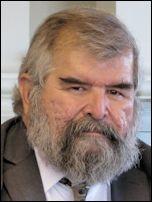
Lester Ordway
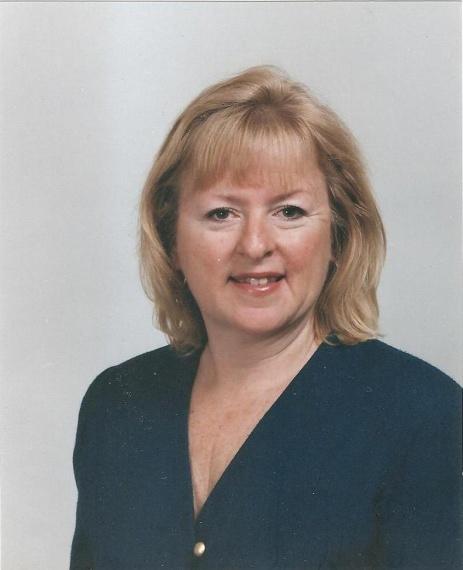
Pam Smith
Comments are no longer available on this story