
WESTBROOK – As the Westbrook School Department has ramped up discussions on youth substance use, professionals like Claire Schroeder of the Opportunity Alliance make a difference in framing the conversation between students and adults.
Schroeder, a coordinator for the Alliance’s Communities Promoting Health Coalition, has been working in Westbrook through the Westbrook Communities that Care coalition, a group dedicated to positive youth development and preventing youth substance use, and was one of two facilitators in a public forum earlier this month on the Westbrook School Department’s athletic code of conduct policy. Recent events involving student drinking have created a rift at Westbrook High School regarding the handling of discipline based on the school’s athletic policies. The incident resulted in an independent report that recommended broad community forums, the first of which was held on March 3. The next one is scheduled for Tuesday, March 25.
Schroeder began working for the Opportunity Alliance in 2011 as a tobacco prevention coordinator. Her work emphasized policy change and increasing education, and she worked closely with municipalities to create policies for smoke-free parks and recreation areas.
In the spring of last year, the Opportunity Alliance’s Communities Promoting Health Coalition was awarded a mentoring grant through Drug Free Communities to mentor the Westbrook Communities that Care coalition from the fall of 2013 to the fall of 2015. While the initiative has only been under way for four months, Schroeder believes the recent public discussions have sparked a “productive dialogue” surrounding youth substance use.
The American Journal recently caught up with Schroeder, and asked her about the progress, difficulties, and successes of her work in Westbrook so far:
Q:The Opportunity Alliance does a lot of its work in Cumberland County. How does the Opportunity Alliance work with Westbrook?
A: The Opportunity Alliance does an immense amount of work in Westbrook through a range of programs. Communities Promoting Health Coalition is just one component of the OA’s work in Westbrook, and it focuses on public health. Our public health work includes physical activity and nutrition, SNAP (Supplemental Nutritional Assistance Program) education, tobacco-free policy work and the Rivers Region Drug Free Communities work.
Q: How was the Westbrook Communities that Care coalition formed? How does it relate to your work with the Opportunity Alliance – or are they the same?
A: In the fall of 2009 the United Way of Greater Portland, the Westbrook School Department and the city of Westbrook came together to form the Westbrook Children’s Project and its governing body, the Westbrook Children’s Cabinet. The Westbrook Children’s Project’s mission is: “We envision a community that is prepared for a prosperous future by supporting all young people in Westbrook from cradle to career.”
This group established Westbrook Communities that Care, based on data, analysis and review of effective evidence-based programs that address the challenges unique to this community. WCTC hired its first 20-hour a week employee in July 2011. Westbrook Communities that Care is an evidence-based national model proven to reduce problem adolescent behaviors and support positive youth development. In 2013, it set specific goals regarding student behavior that emphasized a decrease in youth substance use. They also received money to focus on this through the Drug Free Communities grant and the mentorship of Communities Promoting Health Coalitions’ Rivers Region Steering Committee. I was hired to support this work in November 2013.
Q: What are some of the coalition’s successes so far in Westbrook?
A: In many ways the emphasis of my work the past four months has been to work with the coalition to deepen existing partnerships throughout the community, broaden the involvement of community partnerships and increase the coalition’s capacity and readiness to address the issue of youth substance use. Youth substance use can be a divisive and difficult issue to address in any community, so it is essential that the coalition be able to come together to model and learn about the most effective ways to address this issue.
There is no singular thing that I would point to which is solely the work of Westbrook Communities that Care, but that is the nature of this work. All of our work is done in partnership and collaboration, which sets us up for long-term, sustainable success in decreasing youth substance use.
I also recognize we live in a culture where people want to see quick change, so at this point I think our biggest success is being able to develop a coalition with diverse membership from school staff to parents to youth serving organizations and local businesses. I think Westbrook Communities that Care is a vibrant, committed group of community members.
Q: What do you think is the biggest challenge of youth substance use education?
A: That people want quick change. We also often overemphasize youth programming and initiatives directed just at young people, and forget to look at the larger culture and community that our young people are growing up within. Adults have a great deal of power in young people’s lives, so in order to decrease youth substance use we have to address the larger environment. This includes pop culture, media messages, issues in surrounding towns, family and school culture, policies and practices at the local and state level, law enforcement, retail practices, etc. It is essential that we equip adults throughout the community with the tools, knowledge and skills to practice prevention.
Q: Following the student suspension controversy, how has the conversation changed surrounding youth substance use in Westbrook?
A: It has brought the conversation into the public eye. Often there is a lot of stigma, shame, avoidance and denial around youth substance use, but it’s an issue that plagues all communities, rich and poor, urban and rural. Westbrook schools, parents and community members are now having a conversation about this very important issue. People are mobilized to make a difference.
Q: Tell me about your collaboration with Nicole Manganelli of the Unity Project. How has it affected the work being done in Westbrook?
A: Through Westbrook Communities that Care’s partnership and work with Nicole Manganelli, we have been able to model the way we do our work. Nicole and Unity Project’s emphasis is on prevention of bias behavior and WCTC’s work is on prevention of substance use, and yet we both know these two behaviors often overlap and intersect. Throughout our work together we have focused on the overall importance of supporting youth to be healthy by changing the environment and practices that surround them.
Q: How have parent comments from the March 3 forum influenced your work? What about comments from students?
A: I think opportunities for people to give voice to these issues are really useful when it can be done in a productive and forward-looking way. I think parents, teachers, administration and students spoke thoughtfully about the enormity of this issue. I also think we need to continue to focus on what we know works, communicate what we know works with the larger community and give community members ongoing opportunities to engage with the strategies that we know to be effective. No one parent or student can speak for the whole community, but together all of these voices can inform decisions.
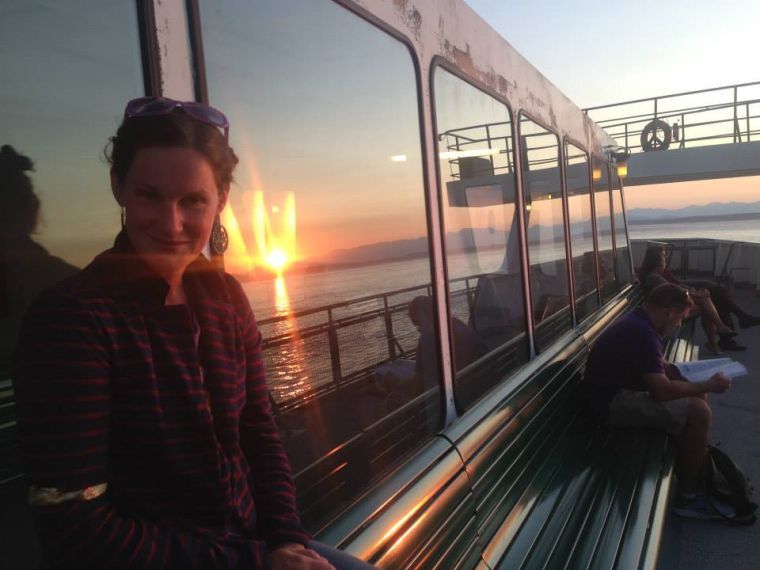 Claire Schroeder
Comments are no longer available on this story